-
Articles/Ads
Article Untitled ← Page 2 of 2 Article GRAND LODGE SEALS OF THE "ANCIENTS." Page 1 of 1 Article GRAND LODGE SEALS OF THE "ANCIENTS." Page 1 of 1
Note: This text has been automatically extracted via Optical Character Recognition (OCR) software.
Ar00200
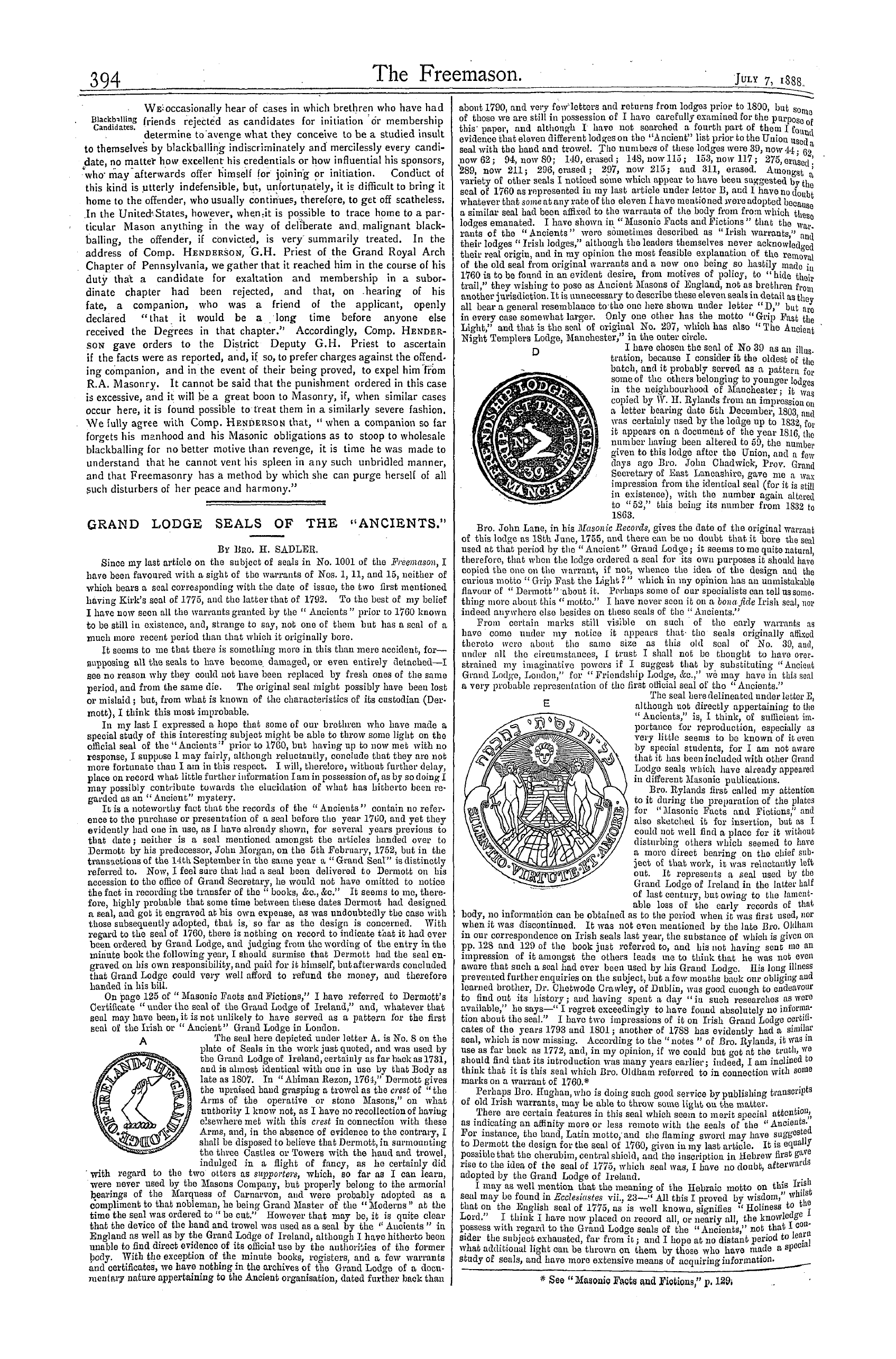
WE * 'occasionally hear of cases in which brethren who have had Blackballing fr ; encis rejected as candidates for initiation or membership Candidates . ¦ . . ' . . , . , determine to avenge what they conceive to be a studied insult to themselves by blackballing indiscriminately and mercilessly every candidate , no matter how excellent his credentials or how influential his sponsors ,
who" may afterwards offer himself for joining or initiation . Conduct of this kind is utterly indefensible , but , unfortunately , it is difficult to bring it home to the offender , who usually continues , therefore , to get off scatheless . In the United'States , however , whentit is possible to trace home to a particular Mason anything in the way of deliberate and , malignant
blackballing , the offender , if convicted , is very summarily treated . In the address of Comp . HENDERSON , G . H . Priest of the Grand Royal Arch Chapter of Pennsylvania , we gather that it reached him in the course of his duty that a candidate for exaltation and membership in a subordinate chapter had been rejected , and that , on . hearing of his
fate , a companion , who was a friend of the applicant , openly declared " that it would be a long time before anyone else received the Degrees in that chapter . " Accordingly , Comp . HENDERSON gave orders to the District Deputy G . H . Priest to ascertain if the facts were as reported , and , if so , to prefer charges against the
offending companion , and in the event of their being proved , to expel him from R . A . Masonry . It cannot be said that the punishment ordered in this case is excessive , and it will be a great boon to Masonry , if , when similar cases occur here , it is found possible to treat them in a similarly severe fashion . We fully agree with Comp . HENDERSON that , " when a companion so far
forgets his manhood and his Masonic obligations as to stoop to wholesale blackballing for no better motive than revenge , it is time he was made to understand that he cannot vent his spleen in any such unbridled manner , and that Freemasonry has a method by which she can purge herself of all such disturbers of her peace and harmony . "
Grand Lodge Seals Of The "Ancients."
GRAND LODGE SEALS OF THE "ANCIENTS . "
By BRO . H . SADLER . Since my last article on the subject of seals in No . 1001 of the Freemason , I have been favoured with a sight of the warrants of Nos . 1 , 11 , and 15 , neither of which bears a seal corresponding with the date of issue , the two first mentioned having Kirk's seal of 1775 , and the latter that of 1792 . To the best of my belief I have now seen all the warrants granted by the " Ancients " prior to 1760 known to be still iti existence , and , strange to say , nob one of them hut has a seal of a
much more recent period than that which it originally bore . It seems to me that there is something more in this than mere accident , forsupposing all the seals to have become damaged , or even entirely detached—I see no reason why they could not have been replaced by fresh ones of the same period , and from the same die . The original seal inigbt possibly have been lost or mislaid ; but , from what is known of the characteristics of its custodian ( Dermott ) . I think this most improbable .
In my last I expressed a hope that some of our brethren who have made a special study of this interesting subject might be able to throw some light on the official seal o £ the "Ancients" prior to 1760 , but having up to now met with no response , I suppose 1 may fairly , although reluctantly , conclude that they are not more fortunate than I am in this respect . I will , therefore , without further delay , place on record what little further information I am in possession of , as by so doing I may possibly contribute towards the elucidation of what has hitherto been regarded as an "Ancient" mystery .
It is a noteworthy fact tbafc the records of the " Ancients" oontain no reference to the purchase or presentation of a seal before the year 1700 , and yet they evidently had one in use , as I have already shown , for several years previous to that date ; neither is a seal mentioned amongst the articles handed over to Dermott by his predecessor , John Morgan , on the 5 th February , 1752 , but in the transactions of the 14 th September in the same year a " Grand Seal" is distinctly
referred to . Now , I feel sure that had a seal been delivered to Dermott on bis accession to the office of Grand Secretary , he would not have omitted to notice the fact in recording the transfer of the " books , & c , & c . " It seems to me , therefore , highly probable that some time between these dates Dermoct had designed n seal , and got it engraved at his own expense , as was undoubtedly the case with those subsequently adopted , that is , so far as the design is concerned . With
regard to the seal of 1760 , there is nothing on record to indicate that it had ever been ordered by Grand Lodge , and judging from the wording of the entry in the minute book the following year , I should surmise that Dermott had the seal engraved on his own responsibility , and paid for it himself , but afterwards concluded that Grand Lodge could very well afford to refund the money , and therefore banded in his bill .
On page 125 of Masonic Facts and Fictions , " I have referred to Dermott ' s Certificate " under the seal of the Grand Lodge of Ireland , " and , whatever that seal may have been , it is not unlikely to have served as a pattern for the first seal of the Irish or " Ancient" Grand Lodge in London .
The seal here depicted under letter A . is No . 8 on the plate of Seals in the work just quoted , and was used by the Grand Lodge of Ireland , certainly as far hack as 1731 , and is almost identical with one in use by that Body as late as 1807 . In " Ahiman Itezon , 1764 , " Dermott gives the upraised hand grasping a trowel as the crest of " the
Arms of the operative or stone Masons , on what authority 1 know not , as I have no recollection of having elsewhere met with this crest in connection with these Arms , and , in the absence of evidence to the contrary , I shall be disposed to believe that Dermott , in surmounting the three Castles or Towers with the hand and trowel , indulged in a flight of fancy , as he certainly did
with regard to the two otters as supporters , which , so far as I can learn , were never used by the Masons Company , but properly belong to the armorial bearings of the Marquess of Carnarvon , and were probably adopted as a compliment to that nobleman , he being Grand Master of the "Moderns" at the time the seal was ordered to " be cut . " However that may be , it is quite clear
that the device of the hand and trowel was used as a seal by the " Ancients " in England as well as by the Grand Lodge of Ireland , although I have hitherto been unable to find direct evidence of its official use by the authorities of the former body . With the exception of _ the minute books , registers , and a few warrants and certificates , we have nothing in the archives of the Grand Lodge of a documentary nature appertaining to the Ancient organisation , dated further back than
Grand Lodge Seals Of The "Ancients."
about 1790 , and very few'letters and returns from lodges prior to 1800 , but sorrm of those we are still in possession of I have carefully examined for the purpose nP this' paper , and although I have not searched a fourth part of them I f 0 lm , evidence that eleven different lodges on the "Ancient" list prior to the Union used a seal with the hand and trowel . The numbers of these lodges were 39 , now 44 . 2 now 62 ; 94 , now 80 ; 140 , erased ; 148 , now 115 ; 153 , now 117 ; 275 , erased
' 289 , now 211 ; 296 , erased ; 297 , now 215 ; and 311 , erased . Amongst a variety of other seals I noticed some which appear to have been suggested by the seal of 1760 as represented in my last article under letter B , and I have no doubt whatever that some at any rate of the eleven I have mentioned were adopted because a similar seal had been affixed to the warrauts of the body from from which theso lodges emanated . I have shown in "Masonic Facts and Fictions" that the war
rants of the " Ancients" were sometimes described as "Irish warrants , " i their lodges " Irish lodges , " although the leaders themselves never acknowledg ed their real origin , and in my opinion the most feasible explanation of the removal of the old seal from original warrants and a new one being so hastil y made iu 1760 is to be found in an evident desire , from motives of policy , to "hide thoir trail , " they wishing to pose as Ancient Masons of England , not as brethren from
another jurisdiction . It is unnecessary to describe these eleven seals in detail as they all bear a general resemblance tothe one here shown under letter "D , " but aro in every case somewhat larger . Only one other has the motto " Grip Fast the Light , " and that is the seal of original No . 297 , which has also " The Ancient Night Templers Lodge , Manchester , " in the outer circle . rj I have choseii the seal of No 39 as an £ 11
ustration , because I consider it the oldest of the batch , and it probably served as a pattern for some of the others belonging to younger lodges in the neighbourhood of Manchester ; it was copied by W . H . Rylands from an impression on a letter bearing date 5 th December , 1803 , ami was certainly used by the lodge up to 1832 for
it appears on a document of the year 1816 the number having been altered to 59 , the number given to this lodge after the Union , and a few days ago Bro . John Chadwick , Prov . Grand Secretary of East Lancashire , gave me a was impression from the identical seal ( for it is still in existence ) , with the number again altered to " 52 , " this beiug its nnmber from 1832 to 1 S 63 .
Bro . John Lane , in his Masonic Records , gives the date of the original warrant of this lodge as 18 th June , 1755 , and there can be no doubt that , it bore the seal used at that period by the " Ancient" Grand Lodge ; it seems to me quite natural therefore , that when the lodge ordered a seal for its own purposes it should have
copied the one on the warrant , if not , whence the idea of the design and the curious motto " Grip Fast the Light ? " which in my opinion has an unmistakable flavour of " Dermott" about it . Perhaps some of our specialists can tell us something more about this " motto . " I have never soon it on a bona fide Irish seal , nor indeed anywhere else besides on theso seals of the "Ancients . "
From certain marks still visible on such of the early warrants as have come under my notice it appears that- the seals originally affixed thereto were about the same size as this old seal of No . 39 , and , under all the circumstances , I trust I shall not be thought to have overstrained my imaginative powers if I suggest that by substituting "Ancient Grand Lodge , London , " for " Friendship Lodge , & c , " Ave may have in this seal a very probable representation of the first official seal of the "Ancients . "
The seal here delineated under letter E , although not directly appertaining to the " Ancients , " is , I think , of sufficient importance for reproduction , especially as very little seems to be known of it even by special students , for I am not aware
that it has been included with other Grand Lodge seals which have already appeared in different Masonic publications . Bro . Rylands first called my attention to it during the preparation of the plates for "Masonic Facts and Fictions , " and also sketched it for insertion , but as I
could not well find a place for it without disturbing others which seemed to have a more direct bearing on the chief subject of that work , it was reluctantly left out . It represents a seal used by the Grand Lodge of Ireland in the latter half of last century , but owing to the lamentable loss of the early records of that
body , no information can be obtained as to the period when it was first used , nor when it was discontinued . It was not even mentioned by the late Bro . Oldham in our correspondence on Irish seals last year , the substance of which is given on pp . 128 and 129 of the book just referred to , and his not having sent me an impression of it amongst the others leads me to think that he was not even aware that such a seal had ever been used by his Grand Lodge . His long illness
prevented further enquiries on the subject , but a few months back our oblig ing and learned brother , Dr . Chetvvode Crawley , of Dublin , was good enough to endeavour to find out its history ; and having spent a clay "iu such researches as wore available , " he says— " I regret exceedingly to have found absolutely no information about the seal . " I have two impressions of it on Irish Grand Lodge
certificates of the years 1793 and 1801 ; another of 1788 has evidently had a similar seal , which is now missing . According to the " notes " of Bro . Rylands , it was in use as far back as 1772 , and , in my opinion , if we could but got at the truth , we should find that its introduction was many years earlier ; indeed , I am inclined to think that it is this seal which Bro . Oldham referred to in connection with some marks on a warrant of 1760 . *
Perhaps Bro . Hughan . who is doing such good service by publishing transcrip t 8 of old Irish warrants , may be able to throw some light on the matter . There are certain features in this seal which seem to merit special attention ^ as indicating an affinity more or less remote with the Eeals of the "Ancients .
For instance , the band , Latin motto , ' and die flaming sword may have suggested to Dermott the design for the seal of 1760 , given in my last article . It is equally possible that the cherubim , central shield , and the inscription in Hebrew first gave rise to the idea of the seal of 1775 , which seal was , I have no doubt , afterward adopted by the Grand Lodge of Ireland . T . ,
I may as well mention that the meaning of the Hebraic motto on this Ins seal may be found in Ecclesiustes vii ., 23— " All this I proved by wisdom , " wmisc that on the English seal of 1775 , as is well known , signifies " Holiness to tn Lord . " I think I have now placed on record all , or nearly all , the knowledge possess with regard to the Grand Lodge seals of the " Ancients , " not that I « ° ^ aider the subject exhausted , far from it ; and I hope at no distant period to lea what additional light can be thrown on them by those who have made a spec study of seals , and have more extensive means of acquiring information .








Note: This text has been automatically extracted via Optical Character Recognition (OCR) software.
Ar00200
WE * 'occasionally hear of cases in which brethren who have had Blackballing fr ; encis rejected as candidates for initiation or membership Candidates . ¦ . . ' . . , . , determine to avenge what they conceive to be a studied insult to themselves by blackballing indiscriminately and mercilessly every candidate , no matter how excellent his credentials or how influential his sponsors ,
who" may afterwards offer himself for joining or initiation . Conduct of this kind is utterly indefensible , but , unfortunately , it is difficult to bring it home to the offender , who usually continues , therefore , to get off scatheless . In the United'States , however , whentit is possible to trace home to a particular Mason anything in the way of deliberate and , malignant
blackballing , the offender , if convicted , is very summarily treated . In the address of Comp . HENDERSON , G . H . Priest of the Grand Royal Arch Chapter of Pennsylvania , we gather that it reached him in the course of his duty that a candidate for exaltation and membership in a subordinate chapter had been rejected , and that , on . hearing of his
fate , a companion , who was a friend of the applicant , openly declared " that it would be a long time before anyone else received the Degrees in that chapter . " Accordingly , Comp . HENDERSON gave orders to the District Deputy G . H . Priest to ascertain if the facts were as reported , and , if so , to prefer charges against the
offending companion , and in the event of their being proved , to expel him from R . A . Masonry . It cannot be said that the punishment ordered in this case is excessive , and it will be a great boon to Masonry , if , when similar cases occur here , it is found possible to treat them in a similarly severe fashion . We fully agree with Comp . HENDERSON that , " when a companion so far
forgets his manhood and his Masonic obligations as to stoop to wholesale blackballing for no better motive than revenge , it is time he was made to understand that he cannot vent his spleen in any such unbridled manner , and that Freemasonry has a method by which she can purge herself of all such disturbers of her peace and harmony . "
Grand Lodge Seals Of The "Ancients."
GRAND LODGE SEALS OF THE "ANCIENTS . "
By BRO . H . SADLER . Since my last article on the subject of seals in No . 1001 of the Freemason , I have been favoured with a sight of the warrants of Nos . 1 , 11 , and 15 , neither of which bears a seal corresponding with the date of issue , the two first mentioned having Kirk's seal of 1775 , and the latter that of 1792 . To the best of my belief I have now seen all the warrants granted by the " Ancients " prior to 1760 known to be still iti existence , and , strange to say , nob one of them hut has a seal of a
much more recent period than that which it originally bore . It seems to me that there is something more in this than mere accident , forsupposing all the seals to have become damaged , or even entirely detached—I see no reason why they could not have been replaced by fresh ones of the same period , and from the same die . The original seal inigbt possibly have been lost or mislaid ; but , from what is known of the characteristics of its custodian ( Dermott ) . I think this most improbable .
In my last I expressed a hope that some of our brethren who have made a special study of this interesting subject might be able to throw some light on the official seal o £ the "Ancients" prior to 1760 , but having up to now met with no response , I suppose 1 may fairly , although reluctantly , conclude that they are not more fortunate than I am in this respect . I will , therefore , without further delay , place on record what little further information I am in possession of , as by so doing I may possibly contribute towards the elucidation of what has hitherto been regarded as an "Ancient" mystery .
It is a noteworthy fact tbafc the records of the " Ancients" oontain no reference to the purchase or presentation of a seal before the year 1700 , and yet they evidently had one in use , as I have already shown , for several years previous to that date ; neither is a seal mentioned amongst the articles handed over to Dermott by his predecessor , John Morgan , on the 5 th February , 1752 , but in the transactions of the 14 th September in the same year a " Grand Seal" is distinctly
referred to . Now , I feel sure that had a seal been delivered to Dermott on bis accession to the office of Grand Secretary , he would not have omitted to notice the fact in recording the transfer of the " books , & c , & c . " It seems to me , therefore , highly probable that some time between these dates Dermoct had designed n seal , and got it engraved at his own expense , as was undoubtedly the case with those subsequently adopted , that is , so far as the design is concerned . With
regard to the seal of 1760 , there is nothing on record to indicate that it had ever been ordered by Grand Lodge , and judging from the wording of the entry in the minute book the following year , I should surmise that Dermott had the seal engraved on his own responsibility , and paid for it himself , but afterwards concluded that Grand Lodge could very well afford to refund the money , and therefore banded in his bill .
On page 125 of Masonic Facts and Fictions , " I have referred to Dermott ' s Certificate " under the seal of the Grand Lodge of Ireland , " and , whatever that seal may have been , it is not unlikely to have served as a pattern for the first seal of the Irish or " Ancient" Grand Lodge in London .
The seal here depicted under letter A . is No . 8 on the plate of Seals in the work just quoted , and was used by the Grand Lodge of Ireland , certainly as far hack as 1731 , and is almost identical with one in use by that Body as late as 1807 . In " Ahiman Itezon , 1764 , " Dermott gives the upraised hand grasping a trowel as the crest of " the
Arms of the operative or stone Masons , on what authority 1 know not , as I have no recollection of having elsewhere met with this crest in connection with these Arms , and , in the absence of evidence to the contrary , I shall be disposed to believe that Dermott , in surmounting the three Castles or Towers with the hand and trowel , indulged in a flight of fancy , as he certainly did
with regard to the two otters as supporters , which , so far as I can learn , were never used by the Masons Company , but properly belong to the armorial bearings of the Marquess of Carnarvon , and were probably adopted as a compliment to that nobleman , he being Grand Master of the "Moderns" at the time the seal was ordered to " be cut . " However that may be , it is quite clear
that the device of the hand and trowel was used as a seal by the " Ancients " in England as well as by the Grand Lodge of Ireland , although I have hitherto been unable to find direct evidence of its official use by the authorities of the former body . With the exception of _ the minute books , registers , and a few warrants and certificates , we have nothing in the archives of the Grand Lodge of a documentary nature appertaining to the Ancient organisation , dated further back than
Grand Lodge Seals Of The "Ancients."
about 1790 , and very few'letters and returns from lodges prior to 1800 , but sorrm of those we are still in possession of I have carefully examined for the purpose nP this' paper , and although I have not searched a fourth part of them I f 0 lm , evidence that eleven different lodges on the "Ancient" list prior to the Union used a seal with the hand and trowel . The numbers of these lodges were 39 , now 44 . 2 now 62 ; 94 , now 80 ; 140 , erased ; 148 , now 115 ; 153 , now 117 ; 275 , erased
' 289 , now 211 ; 296 , erased ; 297 , now 215 ; and 311 , erased . Amongst a variety of other seals I noticed some which appear to have been suggested by the seal of 1760 as represented in my last article under letter B , and I have no doubt whatever that some at any rate of the eleven I have mentioned were adopted because a similar seal had been affixed to the warrauts of the body from from which theso lodges emanated . I have shown in "Masonic Facts and Fictions" that the war
rants of the " Ancients" were sometimes described as "Irish warrants , " i their lodges " Irish lodges , " although the leaders themselves never acknowledg ed their real origin , and in my opinion the most feasible explanation of the removal of the old seal from original warrants and a new one being so hastil y made iu 1760 is to be found in an evident desire , from motives of policy , to "hide thoir trail , " they wishing to pose as Ancient Masons of England , not as brethren from
another jurisdiction . It is unnecessary to describe these eleven seals in detail as they all bear a general resemblance tothe one here shown under letter "D , " but aro in every case somewhat larger . Only one other has the motto " Grip Fast the Light , " and that is the seal of original No . 297 , which has also " The Ancient Night Templers Lodge , Manchester , " in the outer circle . rj I have choseii the seal of No 39 as an £ 11
ustration , because I consider it the oldest of the batch , and it probably served as a pattern for some of the others belonging to younger lodges in the neighbourhood of Manchester ; it was copied by W . H . Rylands from an impression on a letter bearing date 5 th December , 1803 , ami was certainly used by the lodge up to 1832 for
it appears on a document of the year 1816 the number having been altered to 59 , the number given to this lodge after the Union , and a few days ago Bro . John Chadwick , Prov . Grand Secretary of East Lancashire , gave me a was impression from the identical seal ( for it is still in existence ) , with the number again altered to " 52 , " this beiug its nnmber from 1832 to 1 S 63 .
Bro . John Lane , in his Masonic Records , gives the date of the original warrant of this lodge as 18 th June , 1755 , and there can be no doubt that , it bore the seal used at that period by the " Ancient" Grand Lodge ; it seems to me quite natural therefore , that when the lodge ordered a seal for its own purposes it should have
copied the one on the warrant , if not , whence the idea of the design and the curious motto " Grip Fast the Light ? " which in my opinion has an unmistakable flavour of " Dermott" about it . Perhaps some of our specialists can tell us something more about this " motto . " I have never soon it on a bona fide Irish seal , nor indeed anywhere else besides on theso seals of the "Ancients . "
From certain marks still visible on such of the early warrants as have come under my notice it appears that- the seals originally affixed thereto were about the same size as this old seal of No . 39 , and , under all the circumstances , I trust I shall not be thought to have overstrained my imaginative powers if I suggest that by substituting "Ancient Grand Lodge , London , " for " Friendship Lodge , & c , " Ave may have in this seal a very probable representation of the first official seal of the "Ancients . "
The seal here delineated under letter E , although not directly appertaining to the " Ancients , " is , I think , of sufficient importance for reproduction , especially as very little seems to be known of it even by special students , for I am not aware
that it has been included with other Grand Lodge seals which have already appeared in different Masonic publications . Bro . Rylands first called my attention to it during the preparation of the plates for "Masonic Facts and Fictions , " and also sketched it for insertion , but as I
could not well find a place for it without disturbing others which seemed to have a more direct bearing on the chief subject of that work , it was reluctantly left out . It represents a seal used by the Grand Lodge of Ireland in the latter half of last century , but owing to the lamentable loss of the early records of that
body , no information can be obtained as to the period when it was first used , nor when it was discontinued . It was not even mentioned by the late Bro . Oldham in our correspondence on Irish seals last year , the substance of which is given on pp . 128 and 129 of the book just referred to , and his not having sent me an impression of it amongst the others leads me to think that he was not even aware that such a seal had ever been used by his Grand Lodge . His long illness
prevented further enquiries on the subject , but a few months back our oblig ing and learned brother , Dr . Chetvvode Crawley , of Dublin , was good enough to endeavour to find out its history ; and having spent a clay "iu such researches as wore available , " he says— " I regret exceedingly to have found absolutely no information about the seal . " I have two impressions of it on Irish Grand Lodge
certificates of the years 1793 and 1801 ; another of 1788 has evidently had a similar seal , which is now missing . According to the " notes " of Bro . Rylands , it was in use as far back as 1772 , and , in my opinion , if we could but got at the truth , we should find that its introduction was many years earlier ; indeed , I am inclined to think that it is this seal which Bro . Oldham referred to in connection with some marks on a warrant of 1760 . *
Perhaps Bro . Hughan . who is doing such good service by publishing transcrip t 8 of old Irish warrants , may be able to throw some light on the matter . There are certain features in this seal which seem to merit special attention ^ as indicating an affinity more or less remote with the Eeals of the "Ancients .
For instance , the band , Latin motto , ' and die flaming sword may have suggested to Dermott the design for the seal of 1760 , given in my last article . It is equally possible that the cherubim , central shield , and the inscription in Hebrew first gave rise to the idea of the seal of 1775 , which seal was , I have no doubt , afterward adopted by the Grand Lodge of Ireland . T . ,
I may as well mention that the meaning of the Hebraic motto on this Ins seal may be found in Ecclesiustes vii ., 23— " All this I proved by wisdom , " wmisc that on the English seal of 1775 , as is well known , signifies " Holiness to tn Lord . " I think I have now placed on record all , or nearly all , the knowledge possess with regard to the Grand Lodge seals of the " Ancients , " not that I « ° ^ aider the subject exhausted , far from it ; and I hope at no distant period to lea what additional light can be thrown on them by those who have made a spec study of seals , and have more extensive means of acquiring information .