-
Articles/Ads
Article UNITED GRAND LODGE. ← Page 2 of 3 Article UNITED GRAND LODGE. Page 2 of 3 →
Note: This text has been automatically extracted via Optical Character Recognition (OCR) software.
United Grand Lodge.
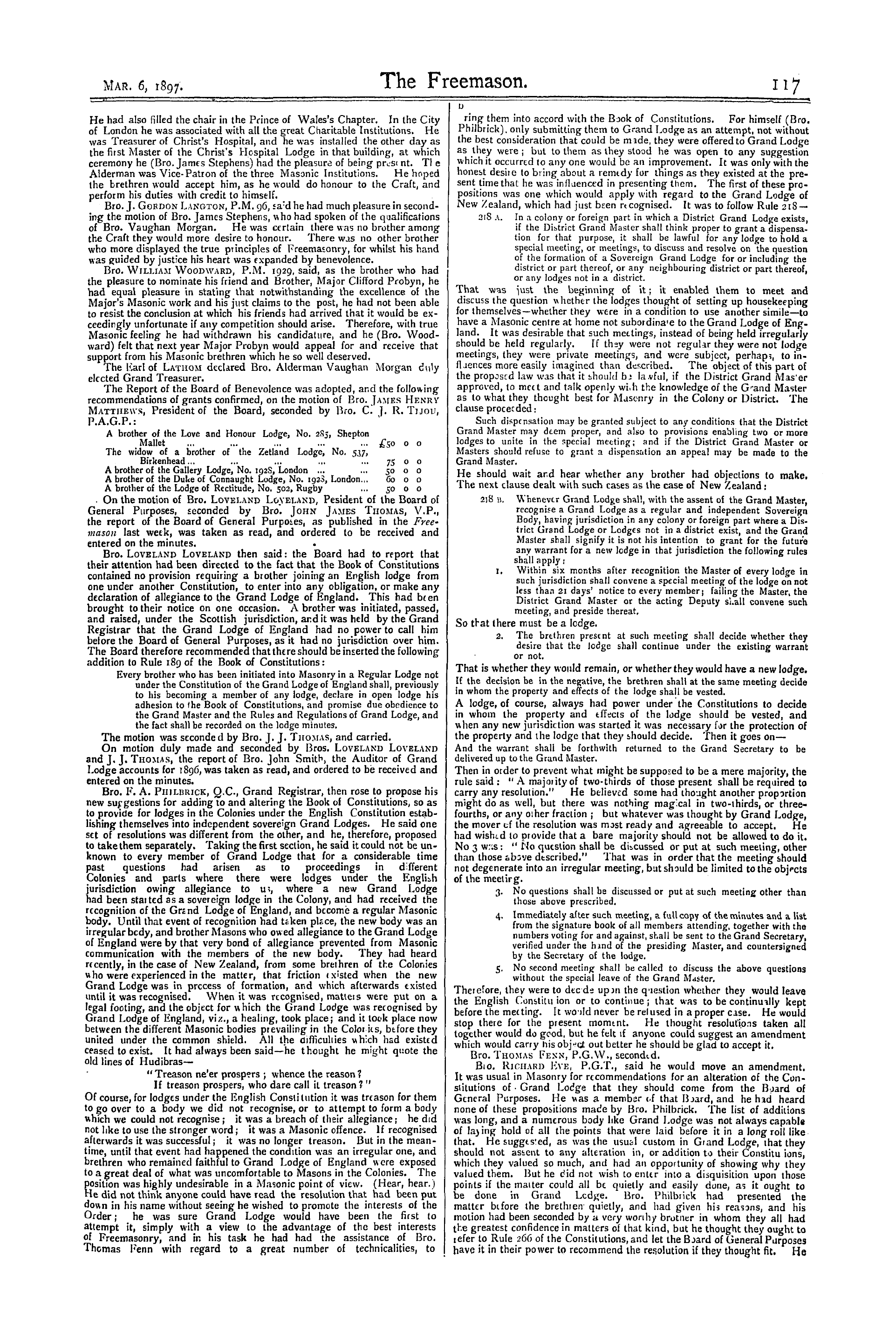
He had also filled the chair in the Prince of Wales ' s Chapter . In the City of London he was associated with all the great Charitable Institutions . He was Treasurer of Christ ' s Hospital , and he was installed the other day as the first Master of the Christ ' s Hospital Lodge in that building , at which ceremony he ( Bro . James Stephens ) had the pleasure of being prcs < nt . Tl e Alderman was Vice-Patron of the three Masonic Institutions . He hoped the brethren would accept him , as he would do honour to the Craft , and
perform his duties with credit to himself . Bro . J . GORDON LANGTON , P . M . 96 , sa d he had much pleasure in seconding the motion of Bro . James Stephens , who had spoken of the qualifications of Bro . Vaughan Morgan . He was certain there was no brother among the Craft they would more desire to honour . There was no other brother who more displayed the true principles of Freemasonry , for whilst his hand was guided by justice his heart was expanded by benevolence .
Bro . WILLIAM WOODWARD , P . M . 1929 , said , as the brother who had the pleasure to nominate his friend and Brother , Major Clifford Probyn , he had equal pleasure in stating lhat notwithstanding the excellence of the Major ' s Masonic work and his just claims to the post , he had not been able to resist the conclusion at which his friends had arrived that it would be
exceedingly unfortunate if any competition should arise . Therefore , with true Masonic feeling he had withdrawn his candidature , and he ( Bro . Woodward ) felt that next year Major Probyn would appeal for and receive that support from his Masonic brethren which he so well deserved . The Earl of LATHOM declared Bro . Alderman Vaughan Morgan duly elected Grand Treasurer .
The Report of the Board of Benevolence was adopted , ar . d the following recommendations of grants confirmed , on the motion of Bro . J AMES HENRV MATTHEWS , President of the Board , seconded by Bro . C J . R . TIJOU , P . A . G . P .:
A brother of the Love and Honour Lodge , No . 2 S 5 , Shepton Mallet ... ... ... ... ... £ 50 o o The widow of a brother of the Zetland Lodge , No . 537 , Birkenhead ... ... ... ... ... 75 0 o A brother of the Gallery Lodge , No . 192 S , London ... ... 50 o o A brother of the Duke of Connaught Lodge , No . igiS , London .,. 60 o o
A brother of the Lodge of Rectitude , No . 502 , Rugby ... 50 o o . On the motion of Bro . LOVELAND LOVELAND , Pesident of the Board of General Purposes , seconded by Bro . J J AMES THOMAS , V . P ., the report of the Board of General Purposes , as published in the Freemason last week , was taken as read , and ordered to be received and entered on the minutes .
Bro . LOVELAND LOVELAND then said : the Board had to report lhat their attention had been directed to the fact that the Book of Constitutions contained no provision requiring a brother joining an English lodge from one under another Constitution , to enter into any obligation , or make any declaration of allegiance to the Grand Lodge of England . This had been brought to their notice on one occasion . A brother was initiated , passed ,
and raised , under the Scottish jurisdiction , and it was held by the Grand Registrar that the Grand Lodge of England had no power to call him before the Board of General Purposes , as it had no jurisdiction over him . The Board therefore recommended that there should be inserted the following addition to Rule 189 of the Book of Constitutions : Every brother who has been initiated into Masonry in a Regular Lodge not
under the Constitution of the Grand Lodge of England shall , previously to his becoming a member of any lodge , declare in open lodge his adhesion to the Book of Constitutions , and promise due obedience to the Grand Master and the Rules and Regulations of Grand Lodge , and the fact shall be recorded on the lodge minutes .
The motion was seconded by Bro . J . J . THOMAS , and carried . On motion duly made and seconded by Bros . LOVELAND LOVELAND and J . J . THOMAS , the report of Bro . John Smith , the Auditor of Grand Lodge accounts for 1896 , was taken as read , and ordered to be received and entered on the minutes .
Bro . F . A . PHILBRICK , Q . C , Grand Registrar , then rose to propose his new suggestions for adding to and altering the Book of Constitutions , so as to provide for lodges in the Colonies under the English Constitution establishing themselves into independent sovereign Grand Lodges . He said one set of resolutions was different from the other , and he , therefore , proposed to take them separately . Taking the first section , he said it could not be
unknown to every member of Grand Lodge that for a considerable time past questions had arisen as to proceedings in different Colonies and parts where there were lodges under the English jurisdiction owing allegiance to u ; , where a new Grand Lodge had been started as a sovereign lodge in the Colony , and had received the recognition of the Grand Lodge of England , and become a regular Masonic
body . Until that event of recognition had taken pUce , the new body was an irregular bedy , and brother Masons who owed allegiance to the Grand Lodge of England were by that very bond of allegiance prevented from Masonic communication with the members of the new body . They had heard recently , in the case of New Zealand , from some brelhren of the Colonies who were experienced in the matter , that friction existed when the new
Grand Lodge was in prccess of formation , ar . d which afterwards existed until it was recognised . When it was recognised , matteis were put on a legal footing , and the object for which the Grand Lodge was recognised by Grand Lodge of England , viz ., a healing , took place ; and it took place now between the different Masonic bodies prevailing in the Coloi its , before they united under the common shield . All the difficulties which had existed
ceased to exist . It had always been said—he thought he might quote the old lines of Hudibras" Treason ne ' er prospers ; whence the reason ? If treason prospers , who dare call it treason ? " Of course , for lodges under the English Constitution it was treason for them to go over to a body we did not recognise , or to attempt to form a body which we could not recognise ; it was a breach of their allegiance ; he did
not like to use the stronger word ; it was a Masonic offence . If recognised afterwards it was successful ; it was no longer treason . But in the meantime , until that event had happened the condition was an irregular one , and brethren who remained faithful to Grand Lodge of England were exposed to a great deal of what was uncomfortable to Masons in the Colonies . The position was highly undesirable in a Masonic point of view . ( Hear , hear . )
He did not think anyone could have read the resolution that had been put down in his name without seeing he wished to promote the interests of the Order ; he was sure Grand Lodge would have been the first to attempt it , simply with a view to the advantage of the best interests of Freemasonry , and in his task he had had the assistance of Bro . Thomas Fenn with regard to a great number of technicalities , to
United Grand Lodge.
ring them into accord with the Book of Constitutions . For himself ( Bro . Philbrick ) , only submitting them to Grand Lodge as an attempt , not without the best consideration that could be m ide , they were offered to Grand Lodge as they were ; but to them as they stood he was open to any suggestion which it occurred to any one would be an improvement . It was only with the honest desire to bring about a remedy for things as they existed at the
present time that he was influenced in presenting them . The first of these propositions was one which would apply with regard to the Grand Lodge of New Zealand , which had just been recognised . It was to follow Rule 2 tS — 21 S A . In . 1 colony or foreign part in which a District Grand Lodge exists , if the District Grand Master shall think proper to grant a
dispensation for that purpose , it shall be lawful for any lodge to hold a special meeting , or meetings , to discuss and resolve on the question of the formation of a Sovereign Grand Lodge for or including the district or part thereof , or any neighbouring district or part thereof , or any lodges not in a district .
That w ^ s j ust the beginning of it ; it enabled them to meet and discuss the question whether the lodges thought of setting up housekeeping for themselves—whether they were in a condition to use another simile—to have a Masonic centre at home not subordina'e to the Grand Lodge of England . It was desirable that such meetings , instead of being held irregularly should be held regularly . If they were not regular they were not lodge
meetings , they were private meetings , and were subject , perhaps , to infUences more easily imagined thau described . The object of this part of the proposed law was that it should bj la . vful , if the District Grand Mas ' er approved , to meet and talk openly wi , h the knowledge of the G ** and Master as to what they thought best for Masonry in the Colony or District . The clause proceeded :
Such dispensation may be granted subject to any conditions that the District Grand Master may deem proper , and also to provisions enabling two or more lodges to unite in the special meeting ; and if the District Grand Master or Masters should refuse to grant a dispensation an appeal may be made to the Grand Master .
He should wait ar . d hear whether any brother had objections to make , The next clause dealt with such cases as the case of New Zealand : 218 11 . Whenever Grand Lodge shall , with the assent of the Grand Master , recognise a Grand Lodge as a regular and independent Sovereign Body , having jurisdiction in any colony or foreign part where a District Grand Lodge or Lodges not in a district existand the Grand
, Master shall signify it is not his intention to grant for the future any warrant for a new lodge in that jurisdiction the following rules shall apply 1 1 . Within six months after recognition the Master of every lodge in such jurisdiction shall convene a special meeting of the lodge on not
less than 21 days' notice to every member ; failing the Master , the District Grand Master or the acting Deputy si . all convene such meeting , and preside thereat . So that there must be a lodge . 2 . The brethren present at such meeting shall decide whether they desire that the lodge shall continue under the existing warrant or not .
That is whether they would remain , or whether they would have a new lodge . If the decision be in the negative , the brethren shall at the same meeting decide in whom the property and effects of the lodge shall be vested . A lodge , of course , always had power under the Constitutions to decide in whom the property and effects of the lodge should be vested , and when any new jurisdiction was started it was necessary far the protection of
the property and the lodge that they should decide . Then it goes on—And the warrant shall be forthwith returned to the Grand Secretary to be delivered up to the Grand Master . Then in order to prevent what might be supposed to be a mere majority , the rule said : " A majoiity of two-thirds of those present shall be required to carry any resolution . " He believed some had thought another proportion
might do as well , but there was nothing magical in two-thirds , or threefourths , or any oiher fraction ; but whatever was thought by Grand Lodge , the mover cf the resolution was most ready and agreeable to accept . He had wistud to provide that a bare majority should not be allowed to do it . No 3 wr ' . s : " No question shall be discussed or put at such meeting , other
than those above described . " That was in order that the meeting should not degenerate into an irregular meeting , but should be limited tothe objects of the meetirg . 3 . No questions shall be discussed or put at such meeting other than those above prescribed .
4 . Immediately after such meeting , a full copy of the minutes and a list from the signature book of all members attending , together with the numbers voting for and against , shall be sent to the Grand Secretary , verified under the hind of the presiding Master , and countersigned by the Secretary of the lodge .
5 . No second meeting shall be called to discuss the above questions without the special leave of the Grand Master , Therefore , they were to decde upon the question whether they would leave the English Constitu ion or to continue ; that was to be continuill y kept
before the meeting . It woild never be refused in a proper case . He would stop there for the present moment . He thought resolutions taken all together would do good , but he felt if anyone could suggest an amendment which would carry hisobj- 'iit out better he should be glad to accept it . Bro . THOMAS FENN , P . G . W ., seconded .
Bio . RICHARD HVE , P . G . T ., said he would move an amendment . It was usual in Masonry for recommendations for an alteration of the Constitutions of •Grand Lodge that they should come from the Board of General Purposes . He was a member t . f that Board , and he had heard none of these propositions made by Bro . Philbrick . The list of additions was long , and a numerous body like Grand Lodge was not always capable
of lading hold of all the points that were laid before it in a long roll like that . He sugges'ed , as was the usual custom in Grand Lodge , that they should not assent to any alteration in , or addition to their Constitu ions , which they valued so much , and had an opportunity of showing why they valued them . But he did not wish to enter into a disquisition upon those points if the maiter could all be quietly and easily done , as it ought to
be done in Grand Ledge . Bro . Philbrick had presented the matter before the brethien quietly , and had given his reasons , and his motion had been seconded by a very wonhy brotner in whom they all had the greatest confidence in matters of that kind , but he thought they ought to iefer to Rule 266 of the Constitutions , and let the Board of General Purposes have it in their power to recommend the resolution if they thought fit . He







Note: This text has been automatically extracted via Optical Character Recognition (OCR) software.
United Grand Lodge.
He had also filled the chair in the Prince of Wales ' s Chapter . In the City of London he was associated with all the great Charitable Institutions . He was Treasurer of Christ ' s Hospital , and he was installed the other day as the first Master of the Christ ' s Hospital Lodge in that building , at which ceremony he ( Bro . James Stephens ) had the pleasure of being prcs < nt . Tl e Alderman was Vice-Patron of the three Masonic Institutions . He hoped the brethren would accept him , as he would do honour to the Craft , and
perform his duties with credit to himself . Bro . J . GORDON LANGTON , P . M . 96 , sa d he had much pleasure in seconding the motion of Bro . James Stephens , who had spoken of the qualifications of Bro . Vaughan Morgan . He was certain there was no brother among the Craft they would more desire to honour . There was no other brother who more displayed the true principles of Freemasonry , for whilst his hand was guided by justice his heart was expanded by benevolence .
Bro . WILLIAM WOODWARD , P . M . 1929 , said , as the brother who had the pleasure to nominate his friend and Brother , Major Clifford Probyn , he had equal pleasure in stating lhat notwithstanding the excellence of the Major ' s Masonic work and his just claims to the post , he had not been able to resist the conclusion at which his friends had arrived that it would be
exceedingly unfortunate if any competition should arise . Therefore , with true Masonic feeling he had withdrawn his candidature , and he ( Bro . Woodward ) felt that next year Major Probyn would appeal for and receive that support from his Masonic brethren which he so well deserved . The Earl of LATHOM declared Bro . Alderman Vaughan Morgan duly elected Grand Treasurer .
The Report of the Board of Benevolence was adopted , ar . d the following recommendations of grants confirmed , on the motion of Bro . J AMES HENRV MATTHEWS , President of the Board , seconded by Bro . C J . R . TIJOU , P . A . G . P .:
A brother of the Love and Honour Lodge , No . 2 S 5 , Shepton Mallet ... ... ... ... ... £ 50 o o The widow of a brother of the Zetland Lodge , No . 537 , Birkenhead ... ... ... ... ... 75 0 o A brother of the Gallery Lodge , No . 192 S , London ... ... 50 o o A brother of the Duke of Connaught Lodge , No . igiS , London .,. 60 o o
A brother of the Lodge of Rectitude , No . 502 , Rugby ... 50 o o . On the motion of Bro . LOVELAND LOVELAND , Pesident of the Board of General Purposes , seconded by Bro . J J AMES THOMAS , V . P ., the report of the Board of General Purposes , as published in the Freemason last week , was taken as read , and ordered to be received and entered on the minutes .
Bro . LOVELAND LOVELAND then said : the Board had to report lhat their attention had been directed to the fact that the Book of Constitutions contained no provision requiring a brother joining an English lodge from one under another Constitution , to enter into any obligation , or make any declaration of allegiance to the Grand Lodge of England . This had been brought to their notice on one occasion . A brother was initiated , passed ,
and raised , under the Scottish jurisdiction , and it was held by the Grand Registrar that the Grand Lodge of England had no power to call him before the Board of General Purposes , as it had no jurisdiction over him . The Board therefore recommended that there should be inserted the following addition to Rule 189 of the Book of Constitutions : Every brother who has been initiated into Masonry in a Regular Lodge not
under the Constitution of the Grand Lodge of England shall , previously to his becoming a member of any lodge , declare in open lodge his adhesion to the Book of Constitutions , and promise due obedience to the Grand Master and the Rules and Regulations of Grand Lodge , and the fact shall be recorded on the lodge minutes .
The motion was seconded by Bro . J . J . THOMAS , and carried . On motion duly made and seconded by Bros . LOVELAND LOVELAND and J . J . THOMAS , the report of Bro . John Smith , the Auditor of Grand Lodge accounts for 1896 , was taken as read , and ordered to be received and entered on the minutes .
Bro . F . A . PHILBRICK , Q . C , Grand Registrar , then rose to propose his new suggestions for adding to and altering the Book of Constitutions , so as to provide for lodges in the Colonies under the English Constitution establishing themselves into independent sovereign Grand Lodges . He said one set of resolutions was different from the other , and he , therefore , proposed to take them separately . Taking the first section , he said it could not be
unknown to every member of Grand Lodge that for a considerable time past questions had arisen as to proceedings in different Colonies and parts where there were lodges under the English jurisdiction owing allegiance to u ; , where a new Grand Lodge had been started as a sovereign lodge in the Colony , and had received the recognition of the Grand Lodge of England , and become a regular Masonic
body . Until that event of recognition had taken pUce , the new body was an irregular bedy , and brother Masons who owed allegiance to the Grand Lodge of England were by that very bond of allegiance prevented from Masonic communication with the members of the new body . They had heard recently , in the case of New Zealand , from some brelhren of the Colonies who were experienced in the matter , that friction existed when the new
Grand Lodge was in prccess of formation , ar . d which afterwards existed until it was recognised . When it was recognised , matteis were put on a legal footing , and the object for which the Grand Lodge was recognised by Grand Lodge of England , viz ., a healing , took place ; and it took place now between the different Masonic bodies prevailing in the Coloi its , before they united under the common shield . All the difficulties which had existed
ceased to exist . It had always been said—he thought he might quote the old lines of Hudibras" Treason ne ' er prospers ; whence the reason ? If treason prospers , who dare call it treason ? " Of course , for lodges under the English Constitution it was treason for them to go over to a body we did not recognise , or to attempt to form a body which we could not recognise ; it was a breach of their allegiance ; he did
not like to use the stronger word ; it was a Masonic offence . If recognised afterwards it was successful ; it was no longer treason . But in the meantime , until that event had happened the condition was an irregular one , and brethren who remained faithful to Grand Lodge of England were exposed to a great deal of what was uncomfortable to Masons in the Colonies . The position was highly undesirable in a Masonic point of view . ( Hear , hear . )
He did not think anyone could have read the resolution that had been put down in his name without seeing he wished to promote the interests of the Order ; he was sure Grand Lodge would have been the first to attempt it , simply with a view to the advantage of the best interests of Freemasonry , and in his task he had had the assistance of Bro . Thomas Fenn with regard to a great number of technicalities , to
United Grand Lodge.
ring them into accord with the Book of Constitutions . For himself ( Bro . Philbrick ) , only submitting them to Grand Lodge as an attempt , not without the best consideration that could be m ide , they were offered to Grand Lodge as they were ; but to them as they stood he was open to any suggestion which it occurred to any one would be an improvement . It was only with the honest desire to bring about a remedy for things as they existed at the
present time that he was influenced in presenting them . The first of these propositions was one which would apply with regard to the Grand Lodge of New Zealand , which had just been recognised . It was to follow Rule 2 tS — 21 S A . In . 1 colony or foreign part in which a District Grand Lodge exists , if the District Grand Master shall think proper to grant a
dispensation for that purpose , it shall be lawful for any lodge to hold a special meeting , or meetings , to discuss and resolve on the question of the formation of a Sovereign Grand Lodge for or including the district or part thereof , or any neighbouring district or part thereof , or any lodges not in a district .
That w ^ s j ust the beginning of it ; it enabled them to meet and discuss the question whether the lodges thought of setting up housekeeping for themselves—whether they were in a condition to use another simile—to have a Masonic centre at home not subordina'e to the Grand Lodge of England . It was desirable that such meetings , instead of being held irregularly should be held regularly . If they were not regular they were not lodge
meetings , they were private meetings , and were subject , perhaps , to infUences more easily imagined thau described . The object of this part of the proposed law was that it should bj la . vful , if the District Grand Mas ' er approved , to meet and talk openly wi , h the knowledge of the G ** and Master as to what they thought best for Masonry in the Colony or District . The clause proceeded :
Such dispensation may be granted subject to any conditions that the District Grand Master may deem proper , and also to provisions enabling two or more lodges to unite in the special meeting ; and if the District Grand Master or Masters should refuse to grant a dispensation an appeal may be made to the Grand Master .
He should wait ar . d hear whether any brother had objections to make , The next clause dealt with such cases as the case of New Zealand : 218 11 . Whenever Grand Lodge shall , with the assent of the Grand Master , recognise a Grand Lodge as a regular and independent Sovereign Body , having jurisdiction in any colony or foreign part where a District Grand Lodge or Lodges not in a district existand the Grand
, Master shall signify it is not his intention to grant for the future any warrant for a new lodge in that jurisdiction the following rules shall apply 1 1 . Within six months after recognition the Master of every lodge in such jurisdiction shall convene a special meeting of the lodge on not
less than 21 days' notice to every member ; failing the Master , the District Grand Master or the acting Deputy si . all convene such meeting , and preside thereat . So that there must be a lodge . 2 . The brethren present at such meeting shall decide whether they desire that the lodge shall continue under the existing warrant or not .
That is whether they would remain , or whether they would have a new lodge . If the decision be in the negative , the brethren shall at the same meeting decide in whom the property and effects of the lodge shall be vested . A lodge , of course , always had power under the Constitutions to decide in whom the property and effects of the lodge should be vested , and when any new jurisdiction was started it was necessary far the protection of
the property and the lodge that they should decide . Then it goes on—And the warrant shall be forthwith returned to the Grand Secretary to be delivered up to the Grand Master . Then in order to prevent what might be supposed to be a mere majority , the rule said : " A majoiity of two-thirds of those present shall be required to carry any resolution . " He believed some had thought another proportion
might do as well , but there was nothing magical in two-thirds , or threefourths , or any oiher fraction ; but whatever was thought by Grand Lodge , the mover cf the resolution was most ready and agreeable to accept . He had wistud to provide that a bare majority should not be allowed to do it . No 3 wr ' . s : " No question shall be discussed or put at such meeting , other
than those above described . " That was in order that the meeting should not degenerate into an irregular meeting , but should be limited tothe objects of the meetirg . 3 . No questions shall be discussed or put at such meeting other than those above prescribed .
4 . Immediately after such meeting , a full copy of the minutes and a list from the signature book of all members attending , together with the numbers voting for and against , shall be sent to the Grand Secretary , verified under the hind of the presiding Master , and countersigned by the Secretary of the lodge .
5 . No second meeting shall be called to discuss the above questions without the special leave of the Grand Master , Therefore , they were to decde upon the question whether they would leave the English Constitu ion or to continue ; that was to be continuill y kept
before the meeting . It woild never be refused in a proper case . He would stop there for the present moment . He thought resolutions taken all together would do good , but he felt if anyone could suggest an amendment which would carry hisobj- 'iit out better he should be glad to accept it . Bro . THOMAS FENN , P . G . W ., seconded .
Bio . RICHARD HVE , P . G . T ., said he would move an amendment . It was usual in Masonry for recommendations for an alteration of the Constitutions of •Grand Lodge that they should come from the Board of General Purposes . He was a member t . f that Board , and he had heard none of these propositions made by Bro . Philbrick . The list of additions was long , and a numerous body like Grand Lodge was not always capable
of lading hold of all the points that were laid before it in a long roll like that . He sugges'ed , as was the usual custom in Grand Lodge , that they should not assent to any alteration in , or addition to their Constitu ions , which they valued so much , and had an opportunity of showing why they valued them . But he did not wish to enter into a disquisition upon those points if the maiter could all be quietly and easily done , as it ought to
be done in Grand Ledge . Bro . Philbrick had presented the matter before the brethien quietly , and had given his reasons , and his motion had been seconded by a very wonhy brotner in whom they all had the greatest confidence in matters of that kind , but he thought they ought to iefer to Rule 266 of the Constitutions , and let the Board of General Purposes have it in their power to recommend the resolution if they thought fit . He