-
Articles/Ads
Article Untitled Page 1 of 1 Article THE MULTIPLICITY OF OFFENCES IN AMERICAN MASONRY. Page 1 of 2 Article THE MULTIPLICITY OF OFFENCES IN AMERICAN MASONRY. Page 1 of 2 →
Note: This text has been automatically extracted via Optical Character Recognition (OCR) software.
Ar00102
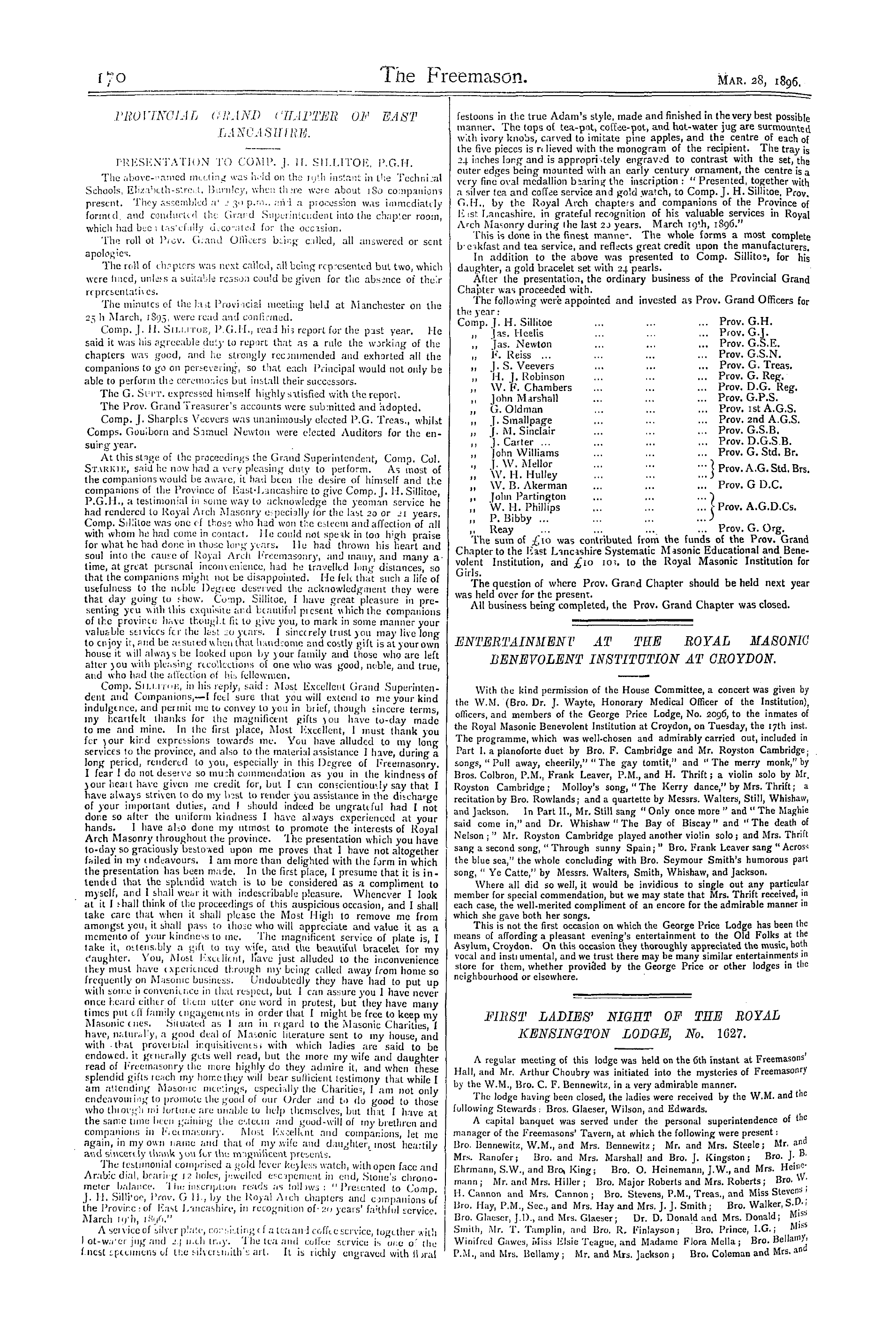
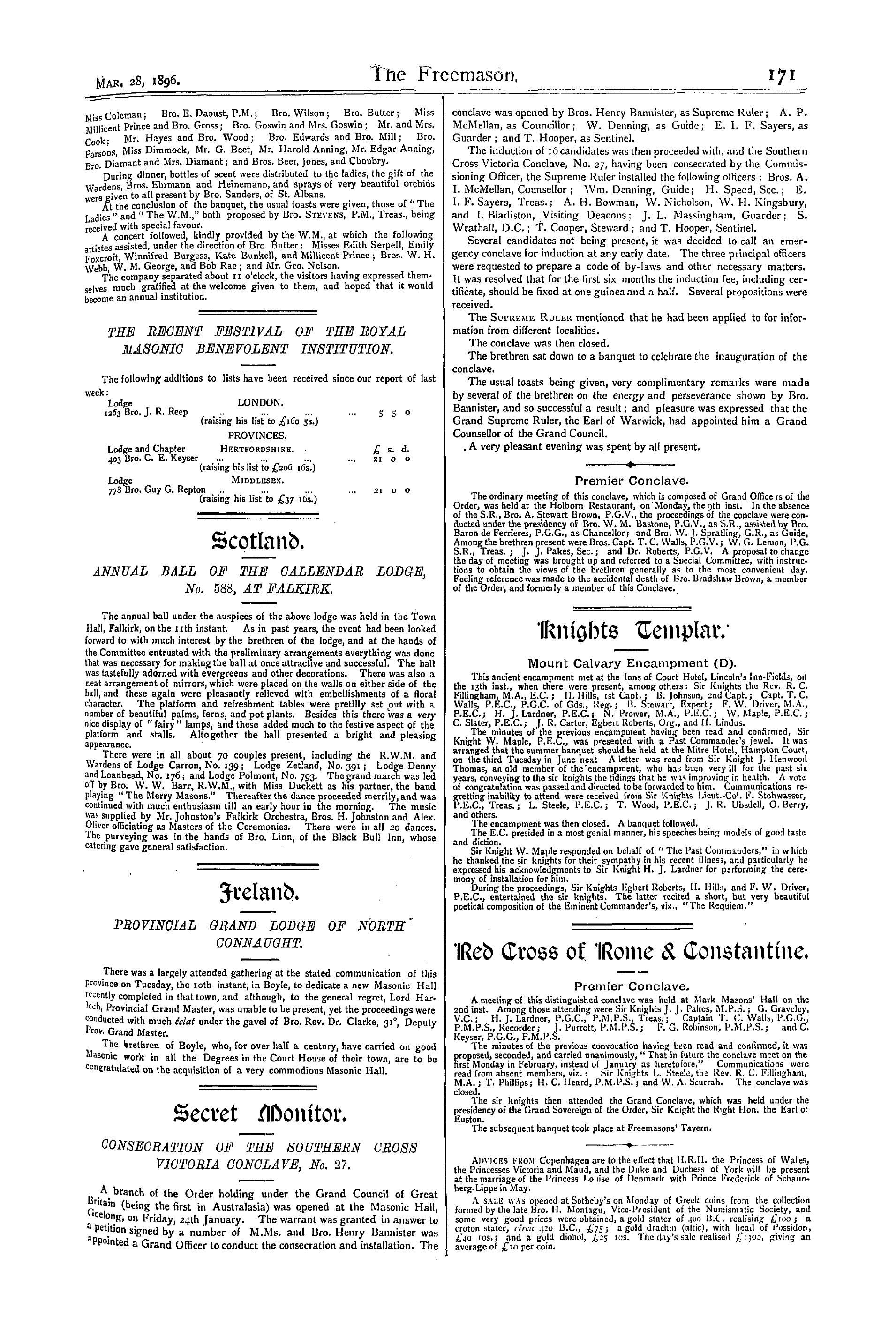
CONTENTS . PAGE . The Multiplicity of Offences in American Masonry ... ... 1 C 7 Freemasonry in Norfolk ... ... ... ... ... 16 S Consecration of Baring Lodge , No . 2602 , at Cromer ... ... ... iCy Provincial Grand Chapter of East Lancashire ... ... ... ... 170 Entertainment at the Royal Masonic Benevolent Instifution at Croydon ... 170 First Ladies'Night of the Royal Kensington Lodge , No . 1 ( 127 ... ... 170
The Recent Festival of the Royal Masonic Benevolent Institution ... ... 171 Annual Ball of the Callendar Lodge , No . 5 SS , at FalleirU ... ... ... 171 Provincial Grand Lodge of North Connaught ... ... ... ... 171 Secret Monitor ... ... ... ... ... ¦••171 Knights Templar ... ... ... ... ... ... 171 Red Cross of Rome and Constantine ... ... ... ... 171
Masonic Notes ... ... •¦•... ¦¦••¦ - U 3 Lodge and Chapter of Instruction ... ... ... ... ... 174 Cralt Masonry ... ... ... ... •-. •¦¦ 1 7-I Royal Arch ... ... ... ... ... ••••••177 Obituary ... ... ... ¦••¦ - •¦•••••177 Masonic and General Tidings ... ... ... ... ... 17 S
The Multiplicity Of Offences In American Masonry.
THE MULTIPLICITY OF OFFENCES IN AMERICAN MASONRY .
One of the most marvellous things about latter-day American Masonry is the facility with which offences are created . Our Craft , like every other Society which possesses a more or less elaborate organisation , stands in need of something in the nature
of a code of laws for its decent government . But thc princip les of Freemasonry are so clear , and its attributes characterised b y such exceptional simplicity ; the meetings of its principal and subordinate bodies are so few in number , and the purposes for
which they are held so obviously innocent of all harm , that reason and common sense alike appear to suggest lhat , provided the rules and regulations which are necessary to the maintenance of order , the appointment of officers , the payment of those
contributions which are necessary to the maintenance of the bod ) corporate , and thc working of our ceremonial are dul y observed , there is nothing of whicii a Grand or private lodge need concern itself to take any cognisance . Our American brethren , however ,
appear to be of a different opinion . Jn some of their jurisdicdictions even the most trivial matters are deemed wei ghty enough to be dealt with b y the laws of Masonry . We have just ui'cn favoured with a copy of the Proceedings of the Grand
bod ge of Tennessee , at its 82 nd annual communication , at A ' ashville , in the month of January last , and , while wc readil y concede that the volume contains a mass of sound information
and much that is calculated to elicit from the readers of its pages ¦ i strong feeling of admiration for our Tennessee brethren , there ls also much in it which appears to be utterl y beyond tlie scope ° ' l ' reemasonry as we understand it . Taking mainly the Grand
Masters address for our guide , we lind among the score of Official Rulings" whicii hc delivered during the past , we lind tne following , which , from an English Mason ' s point of view , would appear to be based on matters the most
puerile . According to No . 4 , two brethren had a fi g ht , were "' sciplined by their lodge , and were awarded a certain punishment . They appealed to Grand Lodge , but their appeal was dismissed . "After punishment was inflicted , both demanded
'limits , saying hard things about their treatment b y the Subordinate and Grand Lodee , and refusing to be reconciled . " However , u . lod ge refused the dimits , and was " directed to disci pline "' ' brethren for their insubordination and slander . " In the Sth c , lse > thc Grand Lodge ruled that " A Lodge may disci pline a . ^ ber for making , or selling whisky , or brandy , or for any
faction of the moral law ; " from which some people mi g ht themselves justified in deducing that making or . selling HM < y , 0 r brand y , is " an infraction of the moral law . " In 'll , ( Jlher case ( No . 18 ) , it was -decided that "if a Mason pleads
The Multiplicity Of Offences In American Masonry.
thc Statute of limitation to a boml fide debt , or in the language ol the Brother making the question , ' pleads honest debt out-of date ' , ' and thus avoids payment , he is a proper subject for Masonic disci pline . Masons cannot a // ' on / / , / be i / is / iones / Y
even il tlie laws of our country do in some instances permit it . In the rgth case , we are seriously told thai " A Mason who is charged with an assault on a Master Mason , and confesses that he committed the assault , but pleads that he did not know that the
person assaulted was a Mason , is guilty of a Masonic offence , unless ( he assault was justifiable under the civil law . " The want of knowledge of the fact that the assailed was a Mason mi g ht be considered in mitigation of punishment , but that a Masonic
offence in this case was committed the then Grand Master of Tennessee appears to have had no doubt whatever , and he ruled in accordance with his opinion . In tin ; . last case of all ( No . 20 ) ,
he ruled that " Slander , ' perpetrated in the heat of political debate , ' is a Masonic offence . To traduce the good name of a Brother under any circumstances whatever is a grave' . Masonic offence , and should receiver prompt punishment . "
The decisions we have tpiotcd are those whicii appear to us to be the most extraordinary , on tin : common ground lhat they , one and all of them , relate to matters with which Masonry has no business whatever lo concern itself . What matters it to a
lodge of Freemasons as such that two of its members had a dispute , and after a few harsh words proceed to exchange a few hard blows ? If the dispute and light occurred in lodge , then we can understand thc W . M . intervening and ordering them to
leave the lodge ; instantl y ; and in the event ol " ( heir selling his authority at eleliance , it would In- his bounden duly lu bring the matier to the notice of Grand Lodge , or rather to the (' ummillee or Board in Tennessee , which most nearly corresponds wilh our
Boanl ol General Purposes . Bul if the squabble incurred outside the lodge—let us snv , in the ordinary course : of squabbles—¦ the : proper tiling for ( . lie lodge to tlo , in our opinion , is lo leave it alone , onl y taking care that the squabblers do not engage in
their differences during the time the lotlge is in session . Again , as regards thc making or selling of whisk y or brandy , while we yield to none in our respect for what are known as "
Temperance principles , wc take leave to point out that a man is not guilty of any offence who makes or sells that which the laws of the country he is a citizen of or resides in sanctions his making or selling ; anel when a Grand Masier or Grantl Lotlge : —takes
upon himsc'll to elecide that that is an offence against Masonry which is sanctioned bv the law of ( he Nla ' e , he is not only setting himself above tin : law , but he is acting ti /'/ nt ¦;¦// : •. ;; ht : is dt : cieling in a matter witb which be has no cunivrn whatever .
So , likewise , with tin : other cases , the assault on a Master Mason in ignorance : of the man ' s . Masonic status ; the slander in the heat of political argument ; and the plea of the : statute of limitations ior not
paving a just and / mud / ide debt ¦¦— these are Diallers which , as we have aln : adv saiel , are entirely beyond tbe scope ol Freemasonry . All it seems fo us Lhat a loelge is able to elo is to take all possible precaution again .-. ! accepting as members
those : who b y their ae : ls outside the lodge , ( hat is to say , 111 everv day life , are likel y to bring Masonry into disrepute . ll is yery undesirable tbat a bulge shoultl number amoug .-a its members men ol a quarrelsome ; tlisposititm , wh'i in Iheir intercourse' with
their Icllownien are : unable to get on without having recourse to fisticuffs in orde-r to emphasise iheir opinions . I lu se are the class of people' against tlie admission ol whom the most eminent members of our () rde : r in Fneland make a point of




Note: This text has been automatically extracted via Optical Character Recognition (OCR) software.
Ar00102
CONTENTS . PAGE . The Multiplicity of Offences in American Masonry ... ... 1 C 7 Freemasonry in Norfolk ... ... ... ... ... 16 S Consecration of Baring Lodge , No . 2602 , at Cromer ... ... ... iCy Provincial Grand Chapter of East Lancashire ... ... ... ... 170 Entertainment at the Royal Masonic Benevolent Instifution at Croydon ... 170 First Ladies'Night of the Royal Kensington Lodge , No . 1 ( 127 ... ... 170
The Recent Festival of the Royal Masonic Benevolent Institution ... ... 171 Annual Ball of the Callendar Lodge , No . 5 SS , at FalleirU ... ... ... 171 Provincial Grand Lodge of North Connaught ... ... ... ... 171 Secret Monitor ... ... ... ... ... ¦••171 Knights Templar ... ... ... ... ... ... 171 Red Cross of Rome and Constantine ... ... ... ... 171
Masonic Notes ... ... •¦•... ¦¦••¦ - U 3 Lodge and Chapter of Instruction ... ... ... ... ... 174 Cralt Masonry ... ... ... ... •-. •¦¦ 1 7-I Royal Arch ... ... ... ... ... ••••••177 Obituary ... ... ... ¦••¦ - •¦•••••177 Masonic and General Tidings ... ... ... ... ... 17 S
The Multiplicity Of Offences In American Masonry.
THE MULTIPLICITY OF OFFENCES IN AMERICAN MASONRY .
One of the most marvellous things about latter-day American Masonry is the facility with which offences are created . Our Craft , like every other Society which possesses a more or less elaborate organisation , stands in need of something in the nature
of a code of laws for its decent government . But thc princip les of Freemasonry are so clear , and its attributes characterised b y such exceptional simplicity ; the meetings of its principal and subordinate bodies are so few in number , and the purposes for
which they are held so obviously innocent of all harm , that reason and common sense alike appear to suggest lhat , provided the rules and regulations which are necessary to the maintenance of order , the appointment of officers , the payment of those
contributions which are necessary to the maintenance of the bod ) corporate , and thc working of our ceremonial are dul y observed , there is nothing of whicii a Grand or private lodge need concern itself to take any cognisance . Our American brethren , however ,
appear to be of a different opinion . Jn some of their jurisdicdictions even the most trivial matters are deemed wei ghty enough to be dealt with b y the laws of Masonry . We have just ui'cn favoured with a copy of the Proceedings of the Grand
bod ge of Tennessee , at its 82 nd annual communication , at A ' ashville , in the month of January last , and , while wc readil y concede that the volume contains a mass of sound information
and much that is calculated to elicit from the readers of its pages ¦ i strong feeling of admiration for our Tennessee brethren , there ls also much in it which appears to be utterl y beyond tlie scope ° ' l ' reemasonry as we understand it . Taking mainly the Grand
Masters address for our guide , we lind among the score of Official Rulings" whicii hc delivered during the past , we lind tne following , which , from an English Mason ' s point of view , would appear to be based on matters the most
puerile . According to No . 4 , two brethren had a fi g ht , were "' sciplined by their lodge , and were awarded a certain punishment . They appealed to Grand Lodge , but their appeal was dismissed . "After punishment was inflicted , both demanded
'limits , saying hard things about their treatment b y the Subordinate and Grand Lodee , and refusing to be reconciled . " However , u . lod ge refused the dimits , and was " directed to disci pline "' ' brethren for their insubordination and slander . " In the Sth c , lse > thc Grand Lodge ruled that " A Lodge may disci pline a . ^ ber for making , or selling whisky , or brandy , or for any
faction of the moral law ; " from which some people mi g ht themselves justified in deducing that making or . selling HM < y , 0 r brand y , is " an infraction of the moral law . " In 'll , ( Jlher case ( No . 18 ) , it was -decided that "if a Mason pleads
The Multiplicity Of Offences In American Masonry.
thc Statute of limitation to a boml fide debt , or in the language ol the Brother making the question , ' pleads honest debt out-of date ' , ' and thus avoids payment , he is a proper subject for Masonic disci pline . Masons cannot a // ' on / / , / be i / is / iones / Y
even il tlie laws of our country do in some instances permit it . In the rgth case , we are seriously told thai " A Mason who is charged with an assault on a Master Mason , and confesses that he committed the assault , but pleads that he did not know that the
person assaulted was a Mason , is guilty of a Masonic offence , unless ( he assault was justifiable under the civil law . " The want of knowledge of the fact that the assailed was a Mason mi g ht be considered in mitigation of punishment , but that a Masonic
offence in this case was committed the then Grand Master of Tennessee appears to have had no doubt whatever , and he ruled in accordance with his opinion . In tin ; . last case of all ( No . 20 ) ,
he ruled that " Slander , ' perpetrated in the heat of political debate , ' is a Masonic offence . To traduce the good name of a Brother under any circumstances whatever is a grave' . Masonic offence , and should receiver prompt punishment . "
The decisions we have tpiotcd are those whicii appear to us to be the most extraordinary , on tin : common ground lhat they , one and all of them , relate to matters with which Masonry has no business whatever lo concern itself . What matters it to a
lodge of Freemasons as such that two of its members had a dispute , and after a few harsh words proceed to exchange a few hard blows ? If the dispute and light occurred in lodge , then we can understand thc W . M . intervening and ordering them to
leave the lodge ; instantl y ; and in the event ol " ( heir selling his authority at eleliance , it would In- his bounden duly lu bring the matier to the notice of Grand Lodge , or rather to the (' ummillee or Board in Tennessee , which most nearly corresponds wilh our
Boanl ol General Purposes . Bul if the squabble incurred outside the lodge—let us snv , in the ordinary course : of squabbles—¦ the : proper tiling for ( . lie lodge to tlo , in our opinion , is lo leave it alone , onl y taking care that the squabblers do not engage in
their differences during the time the lotlge is in session . Again , as regards thc making or selling of whisk y or brandy , while we yield to none in our respect for what are known as "
Temperance principles , wc take leave to point out that a man is not guilty of any offence who makes or sells that which the laws of the country he is a citizen of or resides in sanctions his making or selling ; anel when a Grand Masier or Grantl Lotlge : —takes
upon himsc'll to elecide that that is an offence against Masonry which is sanctioned bv the law of ( he Nla ' e , he is not only setting himself above tin : law , but he is acting ti /'/ nt ¦;¦// : •. ;; ht : is dt : cieling in a matter witb which be has no cunivrn whatever .
So , likewise , with tin : other cases , the assault on a Master Mason in ignorance : of the man ' s . Masonic status ; the slander in the heat of political argument ; and the plea of the : statute of limitations ior not
paving a just and / mud / ide debt ¦¦— these are Diallers which , as we have aln : adv saiel , are entirely beyond tbe scope ol Freemasonry . All it seems fo us Lhat a loelge is able to elo is to take all possible precaution again .-. ! accepting as members
those : who b y their ae : ls outside the lodge , ( hat is to say , 111 everv day life , are likel y to bring Masonry into disrepute . ll is yery undesirable tbat a bulge shoultl number amoug .-a its members men ol a quarrelsome ; tlisposititm , wh'i in Iheir intercourse' with
their Icllownien are : unable to get on without having recourse to fisticuffs in orde-r to emphasise iheir opinions . I lu se are the class of people' against tlie admission ol whom the most eminent members of our () rde : r in Fneland make a point of