-
Articles/Ads
Article THE REGENT SCHOOL ELECTIONS. ← Page 2 of 2 Article LODGE OFFICERS. Page 1 of 2 Article LODGE OFFICERS. Page 1 of 2 →
Note: This text has been automatically extracted via Optical Character Recognition (OCR) software.
The Regent School Elections.
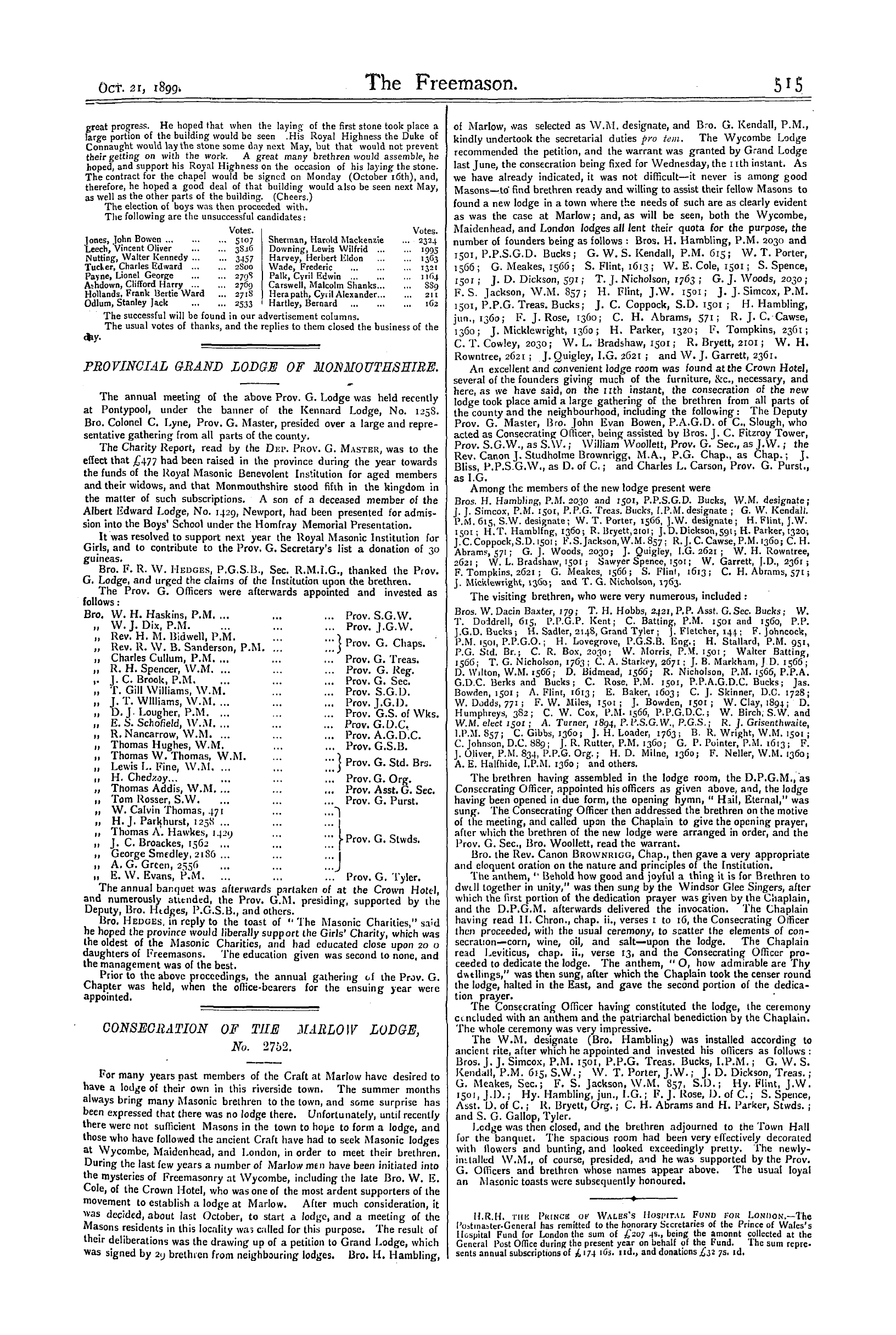
lads from Buckinghamshire being close up with 54 86 votes , another London candidate taking the 15 th place , with 5479 votes , the North Wales boy the 16 th , with 5207 votes , and a London lad the last place , "with 5157 votes . The highest
unsuccessful candidate , who hailed from the Eastern Division of South Wales , scored 5107 votes , of which 1990 stood to his credit from the last two elections , and was thus only 50 votes inferior to the lowest successful . Two London candidates came
next , with 3 846 and 3457 votes respectively , and as both of them had at starting upwards of 2000 votes to the good , they might have been expected to win places . There were six of the remaining boys who polled between 2000 and 3000 votes , and
four who had between 1000 and 2000 , but there were only three who scored less than 1000 . The total votes , & c , brought forward reached 15 , 905 , and the total issued for the election 132 , 527 ,
giving a grand total available of 148 , 432 , but the new votes that passed the Scrutineers were 121 , 20 5 , so that 11 , 322 were unused or spoiled .
There is one matter about which we may congratulate ourselves , namely , that our appeal in behalf of the last cases at both elections has proved successful , the two girls and the four boys ,
who were in this predicament , having all succeeded in winning p laces . We trust that similar good fortune may await the future appeals we may have to make .
Lodge Officers.
LODGE OFFICERS .
NO . V . —THE DEACONS .
[ COMMUNICATED . ! When the newly-installed Worshipful Master responds in suitable and felicitous terms to the toast of his health , the proposal of which is one of the principal items on the agenda of the fourth degree , it is customary for him to observe that it
is only the assistance and co-operation of his officers which can make his year of office successful . From the Worshipful Master ' s point of view , a successful year means plenty of candidates , and the ceremonies faultlessly performed . It is natural , therefore , that when making the observations aforesaid , his
thoughts should turn towards the Deacons . However capable the Worshipful Master and Wardens may be , the ceremonial work of the lodge must suffer if the Deacons be slovenly and incompetent . Their place in the lodge room , at or near the right of the two principal officers , sufficiently indicates the value
of the assistance they are expected to render to those who are responsible for the order and seemJiness ol the proceedings . The Deacons are two in number , Senior and Junior . As with the Wardens , this distinction ceases after the year of office . The Tunior Deacon has charge of the candidates for initiation , and in
this respect , having regard to the importance of first impressions , his duty is in no way less honourable than any entrusted to the Senior Deacon . The latter usually takes charge of candidates for the Second Degree , and in the final ceremony both are called upon to assist . The jewel of office is a dove carrying an
olive branch . The reference is , of course , to Genesis viii ., 11 , but the applicability is not obvious . An olive branch is the emblem of peace , and Bro . Woodford , in " Kcnning ' s Cyclopaedia , " says it is , therefore , characteristic of their office , but , unfortunately , he does not supply tlie intermediate reasoning .
The wand is more intelligible , that being the generally accepted badge of a messenger . When first instituted , the jewels of Senior and Junior Deacons were the sun and moon respectively , and Mackey adds the square and compasses . Deacons are first heard of in Acts ?¦/ ., / . The " daily ministration" is
there spoken of ( Sia / com ' a ) , and the word buiicovo < i thus came to mean minister , and in the period referred to , the Deacons were those to whom was confided the duty of sick visiting and almsgiving . In the ordinal of the English church this duty is
subordinated to the spiritual functions which are now associated with the office . It may be interesting to note that those originally appointed are never actually called Deacons in the N . T .
De . ncons are also appointed by several Nonconformist churches , and their functions approximate more nearly to the original meaning of the word , and the corresponding office in the English church would be that of sydesiiiau ( synodsman ) . So much for the origin and meaning of the title .
In Freemasonry the Deacons , in addition to their important duties concerned with candidates , collect the alms and perform other subordinate offices , such as preparing for the ballot , and , with the Director of Ceremonies ( who should also be provided
Lodge Officers.
with a wand ) , they are the only brethren permitted to move about the lodge during work . In many lodges they are the only brethren ever permitted to trespass on the square pavement , the movements of all other brethren being along the sidesrectangularly , in fact . The tracing boards and other
accessories of the several Degrees are under the control of the Deacons , although unfortunately the Tyler is generally left to look after this part of the work . Distinguished visitors to the lodge are generally received by the Deacons , who accompany them , with crossed wands , to the place cf honour on the right
of the Master . There is one matter which we take the liberty of impressing upon the Senior Deacon particularly . It may be regarded as small , but it is important as being connected with the landmarks of the Order . A solemn and important question is addressed to the candidate for initiation by the Worshipful
Master at the very outset of his reception . The reply to that question should never be prompted . The inquiry itself leads up to the expected reply , and following on the solemn appeal which has preceded it , a short pause , would , in the great
majority of instances , ensure a satisfactory , and , indeed , the only and proper admission . Unless the acknowledgment be spontaneous , there is no evidence of that deep-seated reverence and dependence which alone renders a candidate suitable for admission to the Order . A prompted reply is worthless .
There are also other instances where the Deacons are very fond of prompting . Before admission to a superior Degree a candidate is called upon to give some evidence of his acquaintance with the Degree he has already received , to this end , the Worshipful Master addresses questions to him , extracted from
the Lectures . 'I he candidate ' s proposer and seconder are supposed to have given him the requisite preliminary instruction , and prompting should not be necessary . In some cases , however , prompting is a necessity . The candidate cannot be expected to retain all that has been entrusted to him in such a
manner as to ensure satisfactory results to the examination conducted by the Wardens . In the First Degree and Second Degree this examination takes place twice , viz ., on the same
evening as that on which the Degree has been conferred , and again preliminary to the conferment of a higher Degree . The Deacons may very suitably be in evidence on the former occasion ; on the latter the candidate ' s answers ought to be
spontaneous . Since the reverence and good order of the ceremonies depend so much upon the Deacons , they ought , one may say , to be thoroughly well drilled , and , among other things , should understand the relationship in which they stand to one another .
A proper appreciation of this point will prevent all lussiness , and will also prevent them from getting in one another ' s way The Senior Deacon ' s duty , according to the ritual , is " to await the return of the Junior Deacon . '" This is rather an ambiguous way of putting a very simple fact ; translated into common
every-day English , it means " not to get into the Junior Deacon s way . " For instance , the Junior Deacon will take the ballot-box to be proved in the S . and W ., and then give it up to the Senior Deacon , who will take it for the final verdict of approval or otherwise in the E , after which he will return it to his brother
officer , who will dispose of it . In the perambulations the candidate will be conducted for the first time by the J . D ., and for the second by the S . D ., and after that by both together . Nothing conduces more to reverence and solemnity than quietness and order , and these can only be secured b y the Deacons working together in perfect accord .
rhe Deacons will probably stand in need of instruction . They should make it a first charge on their time to be present at all rehearsals and lodges of instruction . Whilst they are the immediate assistants of the Worshipful Master and Senior Warden , they are , in practice , liable to be called upon to assist
the Director of Ceremonies , and if he be , as he ought to be , a wise and experienced officer , they will do well to get all the advice and instruction they can from him . More than other brethren the Deacons should visit other lodges . Article 149 of the Book of Constitutions enjoins visitation on the part ot the
Master and Wardens " in order that the same usages and customs may be observed throughout the Craft , and a good understanding cultivated amongst Freemasons . " There is , therefore , no actual injunction as regards Deacons visiting , but certainly common sense enjoins the advisability of the practice . The
writer has seen , for instance , four different methods of advancing to the East in the 2 ° in various English and Colonial lodges ; and the only point common to the four have been that the candidate ultimately arrives at the East ! There
must be a correct way , ol course , though the writer wouia presume to say which of the four—if any—it was . But if an error creep into the working of a lodge , that error has not only every chance of being perpetuated , but of being fruitful and multiplying . Hence we say that the Deacons





Note: This text has been automatically extracted via Optical Character Recognition (OCR) software.
The Regent School Elections.
lads from Buckinghamshire being close up with 54 86 votes , another London candidate taking the 15 th place , with 5479 votes , the North Wales boy the 16 th , with 5207 votes , and a London lad the last place , "with 5157 votes . The highest
unsuccessful candidate , who hailed from the Eastern Division of South Wales , scored 5107 votes , of which 1990 stood to his credit from the last two elections , and was thus only 50 votes inferior to the lowest successful . Two London candidates came
next , with 3 846 and 3457 votes respectively , and as both of them had at starting upwards of 2000 votes to the good , they might have been expected to win places . There were six of the remaining boys who polled between 2000 and 3000 votes , and
four who had between 1000 and 2000 , but there were only three who scored less than 1000 . The total votes , & c , brought forward reached 15 , 905 , and the total issued for the election 132 , 527 ,
giving a grand total available of 148 , 432 , but the new votes that passed the Scrutineers were 121 , 20 5 , so that 11 , 322 were unused or spoiled .
There is one matter about which we may congratulate ourselves , namely , that our appeal in behalf of the last cases at both elections has proved successful , the two girls and the four boys ,
who were in this predicament , having all succeeded in winning p laces . We trust that similar good fortune may await the future appeals we may have to make .
Lodge Officers.
LODGE OFFICERS .
NO . V . —THE DEACONS .
[ COMMUNICATED . ! When the newly-installed Worshipful Master responds in suitable and felicitous terms to the toast of his health , the proposal of which is one of the principal items on the agenda of the fourth degree , it is customary for him to observe that it
is only the assistance and co-operation of his officers which can make his year of office successful . From the Worshipful Master ' s point of view , a successful year means plenty of candidates , and the ceremonies faultlessly performed . It is natural , therefore , that when making the observations aforesaid , his
thoughts should turn towards the Deacons . However capable the Worshipful Master and Wardens may be , the ceremonial work of the lodge must suffer if the Deacons be slovenly and incompetent . Their place in the lodge room , at or near the right of the two principal officers , sufficiently indicates the value
of the assistance they are expected to render to those who are responsible for the order and seemJiness ol the proceedings . The Deacons are two in number , Senior and Junior . As with the Wardens , this distinction ceases after the year of office . The Tunior Deacon has charge of the candidates for initiation , and in
this respect , having regard to the importance of first impressions , his duty is in no way less honourable than any entrusted to the Senior Deacon . The latter usually takes charge of candidates for the Second Degree , and in the final ceremony both are called upon to assist . The jewel of office is a dove carrying an
olive branch . The reference is , of course , to Genesis viii ., 11 , but the applicability is not obvious . An olive branch is the emblem of peace , and Bro . Woodford , in " Kcnning ' s Cyclopaedia , " says it is , therefore , characteristic of their office , but , unfortunately , he does not supply tlie intermediate reasoning .
The wand is more intelligible , that being the generally accepted badge of a messenger . When first instituted , the jewels of Senior and Junior Deacons were the sun and moon respectively , and Mackey adds the square and compasses . Deacons are first heard of in Acts ?¦/ ., / . The " daily ministration" is
there spoken of ( Sia / com ' a ) , and the word buiicovo < i thus came to mean minister , and in the period referred to , the Deacons were those to whom was confided the duty of sick visiting and almsgiving . In the ordinal of the English church this duty is
subordinated to the spiritual functions which are now associated with the office . It may be interesting to note that those originally appointed are never actually called Deacons in the N . T .
De . ncons are also appointed by several Nonconformist churches , and their functions approximate more nearly to the original meaning of the word , and the corresponding office in the English church would be that of sydesiiiau ( synodsman ) . So much for the origin and meaning of the title .
In Freemasonry the Deacons , in addition to their important duties concerned with candidates , collect the alms and perform other subordinate offices , such as preparing for the ballot , and , with the Director of Ceremonies ( who should also be provided
Lodge Officers.
with a wand ) , they are the only brethren permitted to move about the lodge during work . In many lodges they are the only brethren ever permitted to trespass on the square pavement , the movements of all other brethren being along the sidesrectangularly , in fact . The tracing boards and other
accessories of the several Degrees are under the control of the Deacons , although unfortunately the Tyler is generally left to look after this part of the work . Distinguished visitors to the lodge are generally received by the Deacons , who accompany them , with crossed wands , to the place cf honour on the right
of the Master . There is one matter which we take the liberty of impressing upon the Senior Deacon particularly . It may be regarded as small , but it is important as being connected with the landmarks of the Order . A solemn and important question is addressed to the candidate for initiation by the Worshipful
Master at the very outset of his reception . The reply to that question should never be prompted . The inquiry itself leads up to the expected reply , and following on the solemn appeal which has preceded it , a short pause , would , in the great
majority of instances , ensure a satisfactory , and , indeed , the only and proper admission . Unless the acknowledgment be spontaneous , there is no evidence of that deep-seated reverence and dependence which alone renders a candidate suitable for admission to the Order . A prompted reply is worthless .
There are also other instances where the Deacons are very fond of prompting . Before admission to a superior Degree a candidate is called upon to give some evidence of his acquaintance with the Degree he has already received , to this end , the Worshipful Master addresses questions to him , extracted from
the Lectures . 'I he candidate ' s proposer and seconder are supposed to have given him the requisite preliminary instruction , and prompting should not be necessary . In some cases , however , prompting is a necessity . The candidate cannot be expected to retain all that has been entrusted to him in such a
manner as to ensure satisfactory results to the examination conducted by the Wardens . In the First Degree and Second Degree this examination takes place twice , viz ., on the same
evening as that on which the Degree has been conferred , and again preliminary to the conferment of a higher Degree . The Deacons may very suitably be in evidence on the former occasion ; on the latter the candidate ' s answers ought to be
spontaneous . Since the reverence and good order of the ceremonies depend so much upon the Deacons , they ought , one may say , to be thoroughly well drilled , and , among other things , should understand the relationship in which they stand to one another .
A proper appreciation of this point will prevent all lussiness , and will also prevent them from getting in one another ' s way The Senior Deacon ' s duty , according to the ritual , is " to await the return of the Junior Deacon . '" This is rather an ambiguous way of putting a very simple fact ; translated into common
every-day English , it means " not to get into the Junior Deacon s way . " For instance , the Junior Deacon will take the ballot-box to be proved in the S . and W ., and then give it up to the Senior Deacon , who will take it for the final verdict of approval or otherwise in the E , after which he will return it to his brother
officer , who will dispose of it . In the perambulations the candidate will be conducted for the first time by the J . D ., and for the second by the S . D ., and after that by both together . Nothing conduces more to reverence and solemnity than quietness and order , and these can only be secured b y the Deacons working together in perfect accord .
rhe Deacons will probably stand in need of instruction . They should make it a first charge on their time to be present at all rehearsals and lodges of instruction . Whilst they are the immediate assistants of the Worshipful Master and Senior Warden , they are , in practice , liable to be called upon to assist
the Director of Ceremonies , and if he be , as he ought to be , a wise and experienced officer , they will do well to get all the advice and instruction they can from him . More than other brethren the Deacons should visit other lodges . Article 149 of the Book of Constitutions enjoins visitation on the part ot the
Master and Wardens " in order that the same usages and customs may be observed throughout the Craft , and a good understanding cultivated amongst Freemasons . " There is , therefore , no actual injunction as regards Deacons visiting , but certainly common sense enjoins the advisability of the practice . The
writer has seen , for instance , four different methods of advancing to the East in the 2 ° in various English and Colonial lodges ; and the only point common to the four have been that the candidate ultimately arrives at the East ! There
must be a correct way , ol course , though the writer wouia presume to say which of the four—if any—it was . But if an error creep into the working of a lodge , that error has not only every chance of being perpetuated , but of being fruitful and multiplying . Hence we say that the Deacons