-
Articles/Ads
Article CONSECRATION OF THE BRIXTON LODGE, No. 1949. ← Page 2 of 2 Article MASONIC HISTORY AND HISTORIANS. Page 1 of 1 Article MASONIC HISTORY AND HISTORIANS. Page 1 of 1 Article WHY MASONS DO NOT READ MASONIC LITERATURE. Page 1 of 1
Note: This text has been automatically extracted via Optical Character Recognition (OCR) software.
Consecration Of The Brixton Lodge, No. 1949.
sidcralion in denying - himself the only evening he hael in thc week for hi nisei I . Bro . Oil . H . SiiAiiwr . i . i . CLIIRKE , in reply , said he had to find fault with the W . M . for mentioning him only , when lie would really have been unable lo do his work if lie had not had the assistance of the other brethren . Those brethren were very distinguished in the Order , and
without their assistance he could have clone nothing whatever , in that loage he had mentioned how pleased he was to he present and take pari in thc consecration . Some year .-. , ago he believed there had been a desire to have a Brixton lotlge , anel a drlinguislicel brother not a hundred miles away from him felt a little sore that a warrant was not granted . However , the popularity of Masonry ami the number of the brethren increased , and therelore the present warrant was granted . Although a warrant was not grained for
lhe lodge some years ago , lie wished , most heartily , success lo the Brixton Lodge / He knew that success was assured , because the lodge was started liy good men and true , who had . v their head a brother who had gone through the chair of another lodge . 1 le would now leave a subject per .- ; in a I to Lim .-elf and ask the brethren to drink "Tin Health of the W . M ., " a Mason of much experience , who had already ably filled the W . M . ' s chair . He was , therefore . ' well filled lo assume the direction of ibis lodge , and he would guide lhe ship lo every po-.- - . ible success .
The W . M . reply ing , said the brethren of ibis lodge had come before the Craft lo make a local lodge in the flourishing suburbs of Brixion . By the last returns of Lambeth p . iri-h the population of Brixton Ward was more than ( i . vo . n . It would like three or four provincial towns lo make Mich a population . Thi ., too , w . i : on . ' v a district of London . 1 le therelore did not think thev were ten .. eg in introducing lo the genllenien an
opportunity of receiving the pp . vile-gcs of bn . emasonry . Freemasonry was to most . Mason . -, what ihev made it , and to ihe Brixton Lodge it was what the founders made it . It depended on the brethren present what the luturc of the lodge should be . For hi- , mvii part he nt ver introduced inlo Freemasonry a gentleman whom he cci-idereil unlit to be introduced inlo his own house . He could look be !; 1 . 1 ' . ! .. •members introduced by hiniselt inlo Freemasonry ,
and he was not ashamed of lln-ni . I le had no -, cr done il to increase the funds of the lodge but bec . m-e he thought Ihey would become irue Mason- ; and an honour to the t rati . thi ; lodge was saric-d with seven , every one of whom was a good man . and a good worker of the (' rail , and would introduce thoe only v . he . wen . anxious to join such mc n . . and would bt : willing to assist in the i -iu-r of ib . ir . iy . without which ihey were told thcir
decd ; we :.- nothing worth . Stoning as thev did with such a S . W ., they l . lighl bc assured lh . it cli . uiiv would be the watchword of the lodge , and he would a-k the fount ! .-rs not in tlio lir .-t year only , but in future years , when ll . ev I ' , our 0 : 1 -- ' . efi bv Mt ¦)> I" ihe chair of the W . M . to do their very be-t to -i-li-it oood men . not Localise they waie what wire called good
fellow ., but beoau-e th-v w > . uld carry out lhe principles of Masonry in anil ont of the l .. dgi \ that lite v . or' . d might -co that Masonry was not merely a name . H . _ lui-li-d that oil tlu-e princip le , lhe lodge would get into a nourishing condition , and lhal il \ oeild do all it i ould for the Ch . u ities of the Order . Bro -.. II . M \' .-ie ,, Ti I' .:: ) it , noil Al u lo \ v replied to t ' . ie to . 'e . t of "The Yisiiors . " Bro . HIIK' . . I > . M \ i ; -i ! M . I ., SAW , in the enure of his reply to the toast ol " 'I'h : ( JUicer , " s . tid he v .. g . obliged to conies that he w . ii uot only a young , but a nn -t incapable M . i-on , b . tt he yi .-nturcd toasu .-rl , on behalf of ' him- elf and the other oilier- ; , that v . ha ' , thev lucked ill ability they would
endeavour I > make up in . •'pplic .-itimi , and loyally Mipport the W . M . in his de ire t J mike lhe 1 ' . i i .: l- oi Lodge not onl y a - ucce-s , and ac . 'tdit to Mason : ) -, but a helper c if the great ( caritable I n-titutioiv . of lhe Order . Since he had become a Mi on be had had ruining but honours showered on him . ll hatl been a \ ,-rv gr .-. il piivih-ge lo him to have lo serve three times within three- year , I > tho-a- tare ¦¦ great ( haritie ,, but a still greater privilege to have lhe mean _ entru 1 . 1 lo linn lobeiome three lii . ii s Yice-Palrcin ol
those In aitutioi . Thi- vi ar , if he had the power to serve the oliiee again three lime ; by ihr . ¦ : i . i three | .-1 ; e-g b , •hoped the brethren would accept it a > an earie- i of hi ; d ¦ ire lo ob erve the tme princip les of Freemasonry to the b .-. t ol iiis humble ability . I in : other olli . - er al o replied : and lite Tyler ' s toast closed the proceeding-. The lo l-. e w ' . ' is fii . r . i l : ' . ' i by Bro . ( i .-orge Kennin :: ' .
Masonic History And Historians.
MASONIC HISTORY AND HISTORIANS .
I' . V MASONIC .. TUIKNT . 1 have often u e I lhe word "hi ope .. all : ing , " which was originally an expression of . Sidney Nini h ' -. aud I v . nltur . lo think lhat no truer descriptive epithet ever wa ; my--. in d fur lunt h of our normal Masonic hi-iory . ll is dimply a
treading in lie- - one step ; — a rcpoliuon , " u-tpie . ad nauseam' —il sometimes with a : ew- iui . agi : n'ive i-mbelli- hnieiit •of the same slateinent , calmly and deliberately . In Smith ' -. " Po list Companion " for 17 , ^ 1 appear .-., in the li-. i uf lodge , " No . 0- ; , a lodge al Si . Knok's-hill , near ( . 'hiche : ter . in Sussex , 11 : 10 : ; i year , vi / ., Tuc-d ; y in I ' . a . tcr w eek , con . timled in lhe reign of Julius Cesar . ' "
J lit cnlrv , ou thr i ' a .. c of it , ha ' , ' -o much inhere-ill absurdity thai it is of iour .. e unhis . tr . ric . al , though , " per ' < -, " curiously enough , as often happens , lucre is probably . . o .. v /_•;. / . ' . :. ' . 7 , Tli- annual ux ling i ; probably the commemoration of an Annual ( iiiild A' -einlil ) , and putting - , Iv ... and I wo log ether , such as the monumental in-cription oi lhe "Collegium Fabriiruni "' preservetl at Goodwood , and
illustrated and explained by tin- well-known dale in the " Philosophical Transactions . " vol . . •,.:, p . ;' , <)! , we know lhat it is no :-. ! retch of lhe imaginalion in cretiiling a relic in this e-nli \ of a Poniam ' •' Sodaiitas , " " Fraternitas , " or "Collegium and Opiliiium , " which afl erwards was transformed into a mcdi . ov . al guild , which , though it : bared lhe fate of all such Guilds in their legal deper ion and plunder in 1 l'idw . \ 'L , vet , like others , lingered on
in another for ai nnd under another name . ' Ar . dsT- en , in i ) , v , incorporated in his 1 7-1 . 3 history a full account of the pre-1717 Masonry ,--- ' . ' , hcrover hegol . it . fro . 11 ; and lie alludes to die Duke of Richmond , a- Master of a lodge at Chichester , coming to the annual assembl y and being oi . o-cn (' rand . Master . See aho Constitutions 17 S 4 , Northwick P- 10- ' ........
'i'he author of " Multa Pnuei , " gives the Grand Mastership of thc Dnkc of Richmond a . t 1 ( 105 . I may observe lhat in I 7 ( 1 . 3 the lodge at St . Kook ' sliill seems not in existence , unless , indeed , it be the same with the lodge whicli meets on the third Wednesday al the Dolp hin , al Chichester . Now I mention these facts to point out the diificuliy we are still in as regards
Masonic History And Historians.
Masonic history . Alas , all ishaze and doubt ! If any contemporaneous records exist of this lodge at St . Rook ' s-hill , we might decide one or two important points ; firstly , how in lhe beginning of the eighteenth century a mediaeval , perhaps a Roman Guild lingered ' on ; and secondly , how far the current history of English Freemasonry is correct at that period as to the Grand Mastership of the Duke of Richmond in 1605 , 1697 , or 1698 , and the Deputy Grand Mastership of Sir Christopher ' Wren .
It is just possible that documents exist at Goodwood , or traces might there bc found , of the Grand Mastership of thc Dukeof Richmond , which would lighten a very obscure chapter of our Masonic annals . It is noteworthy , to say the least of it , that notwithstanding- the treatise of the learned
Musgrave , the earliest evidence of the Roman Collegia is still to be found at Goodwood , which , as I said before , has been exhaustively treated b y Gale , and an account of which is to be found in Mason ' s " Goodwood . " Some of my ingenious student confreres may perhaps hel p in the elucidation of this interesting and historical question .
Why Masons Do Not Read Masonic Literature.
WHY MASONS DO NOT READ MASONIC LITERATURE .
" Masons , as a rule , do not read Masonic literature , " said a prominent Mason lo us some time since , and while there has been a decided advance within the last few years , yet it must be admitted , however disagreable such an admission may be lo the zealous , enthusiastic , earnest Mason , that there is much truth in the remark .
But wh y is il thus ' . ' The live physician who desires to keep up with the profession takes and reads the medical journals of the day . The lawyer who holds his position must read the reports , digests , decisions , and opinions of his time . I'he politician has lo keep himself posted up on political economy , and the science of government as laid down by the great leaders of thought of lhe period , and in brief , oach one who would keep pace with the limes , no mailer in whit business or profession , must read the current literature bearing upon his particular business .
\\ eare emphatically a reading people , and growing more and more so each year . The small cost ol books and periodicals of the day has placed tin-, luxury in the reach of the poor as well as the rich , so that now no man can plead poverty as an excuse for not keeping himself well informed . But to reach this point of general reading has required an clTort , and right here is ihe secret wh y . Masons do not read Masonic papers . 1 here is comoarativelv no elfoti on thn n-ii-t nf time inlim-n a ,,,., ; , , _ . . „
instruct th . ir less inlormcd brethren to urge upon them the necessity of reading Masonic journals . Xo Master of a lodge should consider his duty done until he has made an effort to induce the members over which he has been called to preside to take and read Masonic periodicals . Think how much more intelligentl y questions could be discussed and disposed of , and how interesting each meeting would be if each member were well up in the questions whicli c inliiiuallv arise in every lodon . Tho frateiniiv unnbl
increase in interest and build upon a solid , substantial foundation , and enter upon an era of prosperity never before known and hardl y dreamed of . The decisions which Grand Mailers are called upon to repeat year after year would rapidly diminish iu number , and general harmony prevail . Will not ihe odicers of the lodges in this jurisdiction make an effort in this direction ' . ' We hope so . —Mystic Tie .
M \ STKR MASOX ' .--The 3 rd degree of Symbolic or Craft Masonry , and as such , alike in its exalted position in Masonic ceremonial , and its intcrc-iing ritual , greatl y regarded by all Freemasons . When we come to look into its hiiiory and archaology , we are met by difficulties . Archa-ologically much obscurity still rests ' on thc earlier history of the Master Mason ' s degree . For some time in the last century the Master ' s Lodges were entirely separate from the Apprentice Grade , nnd I mlnw . Kfnm ir .
have hatl a Masters' Ledge attached lo lliem , but entirely distinct , as Lodges of Inslruclion now are . In those days of careless minutes , in all probability no minutes at all were kept of the Masters' Lodges , and hence our paucity of details and information . Some have thought that Master Masons ( the actual Master Masons ) were ori ginally those to whom were entrusted the secrets of the 'Jul degree : othars have heldlil .-n I . " \ V
, Shaw , and in which opinion we concur , that the Royal Arch Grade represent- , the peculiar secret of the actual Master Masons . Of course , we need hardly add that the present arrangement and terminology of our speculative ritual h not actually older than probabl y about 1720 . If the Sloane MS . be a 1 ; th century MS ., as wc believe it to be , it probably
icprcsi'iils the riluali . - . m of the societies of Freemasons mentioned by Plot and joined by Ashmole . If it be only early 1 S 1 I 1 , and which it is no doubt as to chirography . it at any rate sends us ' back to very early 1 Sth century j its actual dale being about 1715 as lo handwriting and paper , but earlier " as lo phraseology . By that M . S . the division of Apprentice , F ' cllow , and Master , was known . Our earliest actual recognition of the Master Mason is , we
apprehend , the Charges so called , or General Regulations rather , of 1721 . 3 . We reject the statement lhat the grade was concocted in 1719 by Desaguliers , jut as we disavow the authority of Denvott . Indeed , Dermott ' s evidence proves too much , and so proves nothing , —because if no 3 rd degree existed , how did he become in possession of one V Thc truth is , lhat his words are only the bombastic expressions of a charlatan vaunting his spurious wares . We
leave out ol the question here the actual evidence of the Constitutions , as the terms Masters and F ' ellows seem to be more generic terms than anything else , and we base our belief rather on the words of the Sloane AIS ., to prove a pro-ei ghteenth century existence , inasmuch as wc believe that somehow the legend of Hiram is a Iegond of the operative Guilds . The Scottish minutes , in our opinion , lo use a homely saying , " cut both ways , " as while thev give us minutes onlv of the hirst Deoa-m ( .-unmiil tlir > vt-. ll .- ni <<__ n _ - _ - ,. _<_ »
and seem to admit here and there separate meeting of ' " ' Masters , " which was probably the case . We have so lar no actual lodge minutes earlier than those of thc Alnwick Lodge , and from , them and the " Swalwell" Lodge , which go up to 1725 , it is clear that we have to deal in England with great sparseness and carelessness , and irregularity of minutes So late as 1730 the Master' Lodge was a distinct body , of which no known minutes exist , and we have in this , probably , thc explanation of ihe diffirnlnr u . lnVI , A ,- _ -l ,. r ..
ologieal students find in laying down any hard and fast line on the subject . As lar as our studies have gone , we believe in the antiquity of the Third Degree , though we b y no means shut our eyes to the lact that time and changes may have materially affected both the phraseology of the ritual and the corresponding features of the Third Degree . —Kenning ' s Cyclopaedia of Freemasonrv .





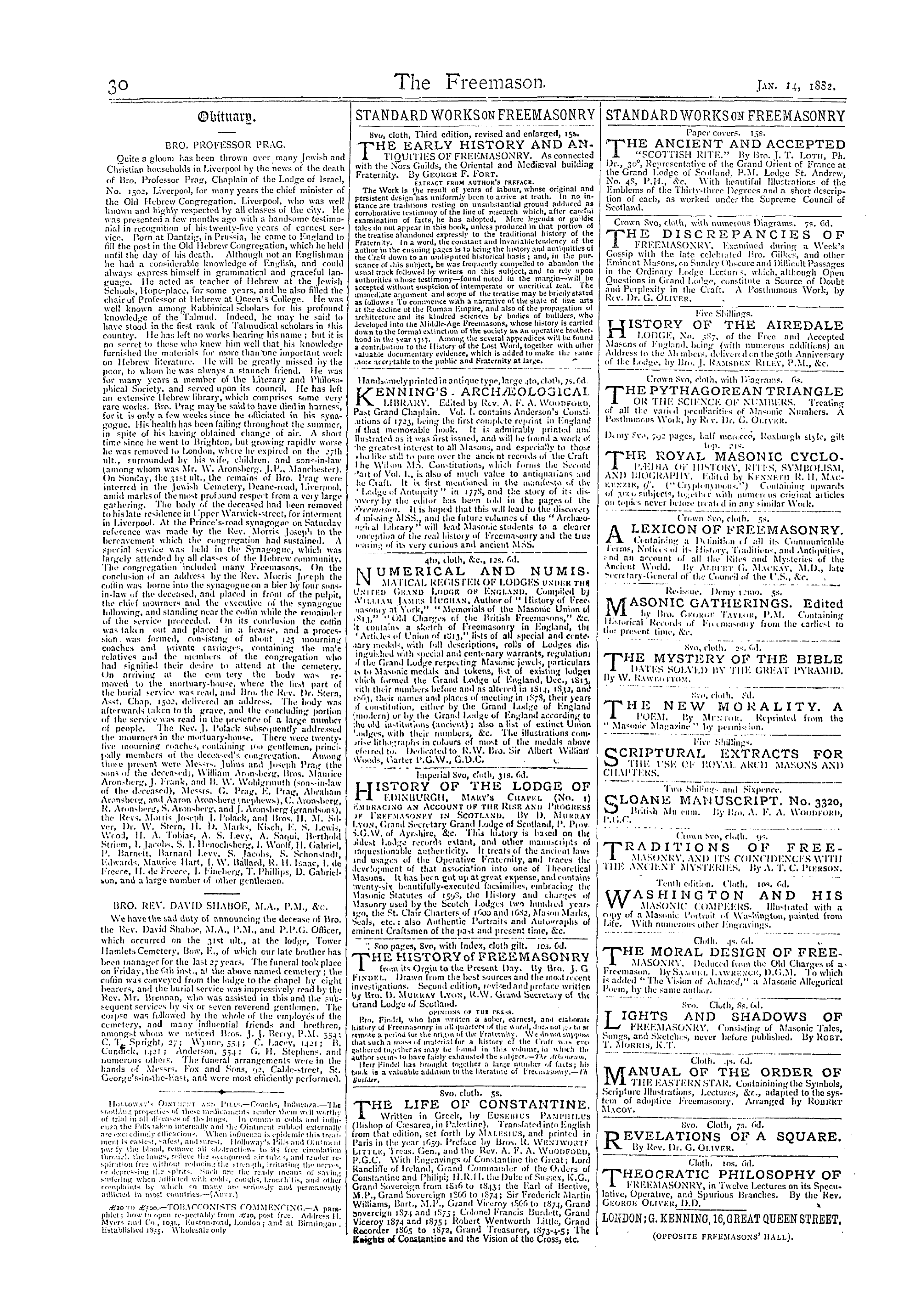
Note: This text has been automatically extracted via Optical Character Recognition (OCR) software.
Consecration Of The Brixton Lodge, No. 1949.
sidcralion in denying - himself the only evening he hael in thc week for hi nisei I . Bro . Oil . H . SiiAiiwr . i . i . CLIIRKE , in reply , said he had to find fault with the W . M . for mentioning him only , when lie would really have been unable lo do his work if lie had not had the assistance of the other brethren . Those brethren were very distinguished in the Order , and
without their assistance he could have clone nothing whatever , in that loage he had mentioned how pleased he was to he present and take pari in thc consecration . Some year .-. , ago he believed there had been a desire to have a Brixton lotlge , anel a drlinguislicel brother not a hundred miles away from him felt a little sore that a warrant was not granted . However , the popularity of Masonry ami the number of the brethren increased , and therelore the present warrant was granted . Although a warrant was not grained for
lhe lodge some years ago , lie wished , most heartily , success lo the Brixton Lodge / He knew that success was assured , because the lodge was started liy good men and true , who had . v their head a brother who had gone through the chair of another lodge . 1 le would now leave a subject per .- ; in a I to Lim .-elf and ask the brethren to drink "Tin Health of the W . M ., " a Mason of much experience , who had already ably filled the W . M . ' s chair . He was , therefore . ' well filled lo assume the direction of ibis lodge , and he would guide lhe ship lo every po-.- - . ible success .
The W . M . reply ing , said the brethren of ibis lodge had come before the Craft lo make a local lodge in the flourishing suburbs of Brixion . By the last returns of Lambeth p . iri-h the population of Brixton Ward was more than ( i . vo . n . It would like three or four provincial towns lo make Mich a population . Thi ., too , w . i : on . ' v a district of London . 1 le therelore did not think thev were ten .. eg in introducing lo the genllenien an
opportunity of receiving the pp . vile-gcs of bn . emasonry . Freemasonry was to most . Mason . -, what ihev made it , and to ihe Brixton Lodge it was what the founders made it . It depended on the brethren present what the luturc of the lodge should be . For hi- , mvii part he nt ver introduced inlo Freemasonry a gentleman whom he cci-idereil unlit to be introduced inlo his own house . He could look be !; 1 . 1 ' . ! .. •members introduced by hiniselt inlo Freemasonry ,
and he was not ashamed of lln-ni . I le had no -, cr done il to increase the funds of the lodge but bec . m-e he thought Ihey would become irue Mason- ; and an honour to the t rati . thi ; lodge was saric-d with seven , every one of whom was a good man . and a good worker of the (' rail , and would introduce thoe only v . he . wen . anxious to join such mc n . . and would bt : willing to assist in the i -iu-r of ib . ir . iy . without which ihey were told thcir
decd ; we :.- nothing worth . Stoning as thev did with such a S . W ., they l . lighl bc assured lh . it cli . uiiv would be the watchword of the lodge , and he would a-k the fount ! .-rs not in tlio lir .-t year only , but in future years , when ll . ev I ' , our 0 : 1 -- ' . efi bv Mt ¦)> I" ihe chair of the W . M . to do their very be-t to -i-li-it oood men . not Localise they waie what wire called good
fellow ., but beoau-e th-v w > . uld carry out lhe principles of Masonry in anil ont of the l .. dgi \ that lite v . or' . d might -co that Masonry was not merely a name . H . _ lui-li-d that oil tlu-e princip le , lhe lodge would get into a nourishing condition , and lhal il \ oeild do all it i ould for the Ch . u ities of the Order . Bro -.. II . M \' .-ie ,, Ti I' .:: ) it , noil Al u lo \ v replied to t ' . ie to . 'e . t of "The Yisiiors . " Bro . HIIK' . . I > . M \ i ; -i ! M . I ., SAW , in the enure of his reply to the toast ol " 'I'h : ( JUicer , " s . tid he v .. g . obliged to conies that he w . ii uot only a young , but a nn -t incapable M . i-on , b . tt he yi .-nturcd toasu .-rl , on behalf of ' him- elf and the other oilier- ; , that v . ha ' , thev lucked ill ability they would
endeavour I > make up in . •'pplic .-itimi , and loyally Mipport the W . M . in his de ire t J mike lhe 1 ' . i i .: l- oi Lodge not onl y a - ucce-s , and ac . 'tdit to Mason : ) -, but a helper c if the great ( caritable I n-titutioiv . of lhe Order . Since he had become a Mi on be had had ruining but honours showered on him . ll hatl been a \ ,-rv gr .-. il piivih-ge lo him to have lo serve three times within three- year , I > tho-a- tare ¦¦ great ( haritie ,, but a still greater privilege to have lhe mean _ entru 1 . 1 lo linn lobeiome three lii . ii s Yice-Palrcin ol
those In aitutioi . Thi- vi ar , if he had the power to serve the oliiee again three lime ; by ihr . ¦ : i . i three | .-1 ; e-g b , •hoped the brethren would accept it a > an earie- i of hi ; d ¦ ire lo ob erve the tme princip les of Freemasonry to the b .-. t ol iiis humble ability . I in : other olli . - er al o replied : and lite Tyler ' s toast closed the proceeding-. The lo l-. e w ' . ' is fii . r . i l : ' . ' i by Bro . ( i .-orge Kennin :: ' .
Masonic History And Historians.
MASONIC HISTORY AND HISTORIANS .
I' . V MASONIC .. TUIKNT . 1 have often u e I lhe word "hi ope .. all : ing , " which was originally an expression of . Sidney Nini h ' -. aud I v . nltur . lo think lhat no truer descriptive epithet ever wa ; my--. in d fur lunt h of our normal Masonic hi-iory . ll is dimply a
treading in lie- - one step ; — a rcpoliuon , " u-tpie . ad nauseam' —il sometimes with a : ew- iui . agi : n'ive i-mbelli- hnieiit •of the same slateinent , calmly and deliberately . In Smith ' -. " Po list Companion " for 17 , ^ 1 appear .-., in the li-. i uf lodge , " No . 0- ; , a lodge al Si . Knok's-hill , near ( . 'hiche : ter . in Sussex , 11 : 10 : ; i year , vi / ., Tuc-d ; y in I ' . a . tcr w eek , con . timled in lhe reign of Julius Cesar . ' "
J lit cnlrv , ou thr i ' a .. c of it , ha ' , ' -o much inhere-ill absurdity thai it is of iour .. e unhis . tr . ric . al , though , " per ' < -, " curiously enough , as often happens , lucre is probably . . o .. v /_•;. / . ' . :. ' . 7 , Tli- annual ux ling i ; probably the commemoration of an Annual ( iiiild A' -einlil ) , and putting - , Iv ... and I wo log ether , such as the monumental in-cription oi lhe "Collegium Fabriiruni "' preservetl at Goodwood , and
illustrated and explained by tin- well-known dale in the " Philosophical Transactions . " vol . . •,.:, p . ;' , <)! , we know lhat it is no :-. ! retch of lhe imaginalion in cretiiling a relic in this e-nli \ of a Poniam ' •' Sodaiitas , " " Fraternitas , " or "Collegium and Opiliiium , " which afl erwards was transformed into a mcdi . ov . al guild , which , though it : bared lhe fate of all such Guilds in their legal deper ion and plunder in 1 l'idw . \ 'L , vet , like others , lingered on
in another for ai nnd under another name . ' Ar . dsT- en , in i ) , v , incorporated in his 1 7-1 . 3 history a full account of the pre-1717 Masonry ,--- ' . ' , hcrover hegol . it . fro . 11 ; and lie alludes to die Duke of Richmond , a- Master of a lodge at Chichester , coming to the annual assembl y and being oi . o-cn (' rand . Master . See aho Constitutions 17 S 4 , Northwick P- 10- ' ........
'i'he author of " Multa Pnuei , " gives the Grand Mastership of thc Dnkc of Richmond a . t 1 ( 105 . I may observe lhat in I 7 ( 1 . 3 the lodge at St . Kook ' sliill seems not in existence , unless , indeed , it be the same with the lodge whicli meets on the third Wednesday al the Dolp hin , al Chichester . Now I mention these facts to point out the diificuliy we are still in as regards
Masonic History And Historians.
Masonic history . Alas , all ishaze and doubt ! If any contemporaneous records exist of this lodge at St . Rook ' s-hill , we might decide one or two important points ; firstly , how in lhe beginning of the eighteenth century a mediaeval , perhaps a Roman Guild lingered ' on ; and secondly , how far the current history of English Freemasonry is correct at that period as to the Grand Mastership of the Duke of Richmond in 1605 , 1697 , or 1698 , and the Deputy Grand Mastership of Sir Christopher ' Wren .
It is just possible that documents exist at Goodwood , or traces might there bc found , of the Grand Mastership of thc Dukeof Richmond , which would lighten a very obscure chapter of our Masonic annals . It is noteworthy , to say the least of it , that notwithstanding- the treatise of the learned
Musgrave , the earliest evidence of the Roman Collegia is still to be found at Goodwood , which , as I said before , has been exhaustively treated b y Gale , and an account of which is to be found in Mason ' s " Goodwood . " Some of my ingenious student confreres may perhaps hel p in the elucidation of this interesting and historical question .
Why Masons Do Not Read Masonic Literature.
WHY MASONS DO NOT READ MASONIC LITERATURE .
" Masons , as a rule , do not read Masonic literature , " said a prominent Mason lo us some time since , and while there has been a decided advance within the last few years , yet it must be admitted , however disagreable such an admission may be lo the zealous , enthusiastic , earnest Mason , that there is much truth in the remark .
But wh y is il thus ' . ' The live physician who desires to keep up with the profession takes and reads the medical journals of the day . The lawyer who holds his position must read the reports , digests , decisions , and opinions of his time . I'he politician has lo keep himself posted up on political economy , and the science of government as laid down by the great leaders of thought of lhe period , and in brief , oach one who would keep pace with the limes , no mailer in whit business or profession , must read the current literature bearing upon his particular business .
\\ eare emphatically a reading people , and growing more and more so each year . The small cost ol books and periodicals of the day has placed tin-, luxury in the reach of the poor as well as the rich , so that now no man can plead poverty as an excuse for not keeping himself well informed . But to reach this point of general reading has required an clTort , and right here is ihe secret wh y . Masons do not read Masonic papers . 1 here is comoarativelv no elfoti on thn n-ii-t nf time inlim-n a ,,,., ; , , _ . . „
instruct th . ir less inlormcd brethren to urge upon them the necessity of reading Masonic journals . Xo Master of a lodge should consider his duty done until he has made an effort to induce the members over which he has been called to preside to take and read Masonic periodicals . Think how much more intelligentl y questions could be discussed and disposed of , and how interesting each meeting would be if each member were well up in the questions whicli c inliiiuallv arise in every lodon . Tho frateiniiv unnbl
increase in interest and build upon a solid , substantial foundation , and enter upon an era of prosperity never before known and hardl y dreamed of . The decisions which Grand Mailers are called upon to repeat year after year would rapidly diminish iu number , and general harmony prevail . Will not ihe odicers of the lodges in this jurisdiction make an effort in this direction ' . ' We hope so . —Mystic Tie .
M \ STKR MASOX ' .--The 3 rd degree of Symbolic or Craft Masonry , and as such , alike in its exalted position in Masonic ceremonial , and its intcrc-iing ritual , greatl y regarded by all Freemasons . When we come to look into its hiiiory and archaology , we are met by difficulties . Archa-ologically much obscurity still rests ' on thc earlier history of the Master Mason ' s degree . For some time in the last century the Master ' s Lodges were entirely separate from the Apprentice Grade , nnd I mlnw . Kfnm ir .
have hatl a Masters' Ledge attached lo lliem , but entirely distinct , as Lodges of Inslruclion now are . In those days of careless minutes , in all probability no minutes at all were kept of the Masters' Lodges , and hence our paucity of details and information . Some have thought that Master Masons ( the actual Master Masons ) were ori ginally those to whom were entrusted the secrets of the 'Jul degree : othars have heldlil .-n I . " \ V
, Shaw , and in which opinion we concur , that the Royal Arch Grade represent- , the peculiar secret of the actual Master Masons . Of course , we need hardly add that the present arrangement and terminology of our speculative ritual h not actually older than probabl y about 1720 . If the Sloane MS . be a 1 ; th century MS ., as wc believe it to be , it probably
icprcsi'iils the riluali . - . m of the societies of Freemasons mentioned by Plot and joined by Ashmole . If it be only early 1 S 1 I 1 , and which it is no doubt as to chirography . it at any rate sends us ' back to very early 1 Sth century j its actual dale being about 1715 as lo handwriting and paper , but earlier " as lo phraseology . By that M . S . the division of Apprentice , F ' cllow , and Master , was known . Our earliest actual recognition of the Master Mason is , we
apprehend , the Charges so called , or General Regulations rather , of 1721 . 3 . We reject the statement lhat the grade was concocted in 1719 by Desaguliers , jut as we disavow the authority of Denvott . Indeed , Dermott ' s evidence proves too much , and so proves nothing , —because if no 3 rd degree existed , how did he become in possession of one V Thc truth is , lhat his words are only the bombastic expressions of a charlatan vaunting his spurious wares . We
leave out ol the question here the actual evidence of the Constitutions , as the terms Masters and F ' ellows seem to be more generic terms than anything else , and we base our belief rather on the words of the Sloane AIS ., to prove a pro-ei ghteenth century existence , inasmuch as wc believe that somehow the legend of Hiram is a Iegond of the operative Guilds . The Scottish minutes , in our opinion , lo use a homely saying , " cut both ways , " as while thev give us minutes onlv of the hirst Deoa-m ( .-unmiil tlir > vt-. ll .- ni <<__ n _ - _ - ,. _<_ »
and seem to admit here and there separate meeting of ' " ' Masters , " which was probably the case . We have so lar no actual lodge minutes earlier than those of thc Alnwick Lodge , and from , them and the " Swalwell" Lodge , which go up to 1725 , it is clear that we have to deal in England with great sparseness and carelessness , and irregularity of minutes So late as 1730 the Master' Lodge was a distinct body , of which no known minutes exist , and we have in this , probably , thc explanation of ihe diffirnlnr u . lnVI , A ,- _ -l ,. r ..
ologieal students find in laying down any hard and fast line on the subject . As lar as our studies have gone , we believe in the antiquity of the Third Degree , though we b y no means shut our eyes to the lact that time and changes may have materially affected both the phraseology of the ritual and the corresponding features of the Third Degree . —Kenning ' s Cyclopaedia of Freemasonrv .