-
Articles/Ads
Article A HISTORY OF THE HIGH GRADES AND FRENCH FREEMASONRY. Page 1 of 1 Article A HISTORY OF THE HIGH GRADES AND FRENCH FREEMASONRY. Page 1 of 1 Article MASONIC HISTORY AND HISTORIANS. Page 1 of 2 →
Note: This text has been automatically extracted via Optical Character Recognition (OCR) software.
A History Of The High Grades And French Freemasonry.
A HISTORY OF THE HIGH GRADES AND FRENCH FREEMASONRY .
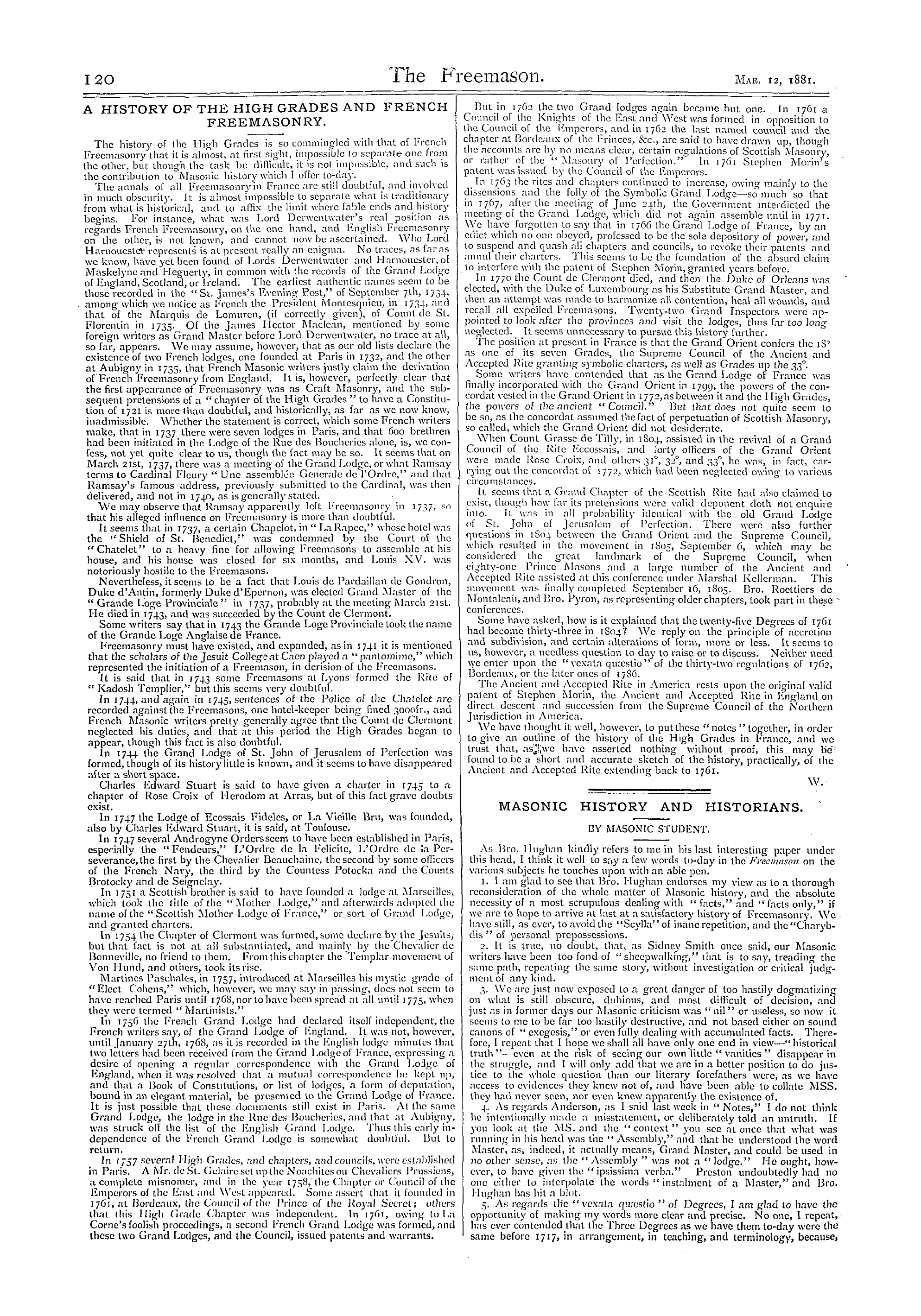
The history of thc Hig h Grades i . s so commingled with that of l'rcnch Freemasonry that it is almost , at first sight , impossible to separate one from thc other , but though thc task be difficult , it is not impossible , and such is the contribution to Masonic history which I offer to-day . The annals of all Freemasonry in France are still doubtful , and involved in much obscurity . It is almost impossible to separate what is traditionary
from what is historical , and to affix thc limit where fable ends and history begins . For instance , what was Lord Dcrwentwater ' s real position as regards French Freemasonry , on the onc hand , and English Freemasonry on the other , is not known , and cannot now be ascertained . Who Lord HarnoueslcV represents is at present really an enigma . No traces , as far as we know , have yet been found of Lords Dcrwcntwatcr and Harnouester , of
Maskelyne and Heguerty , in common with the records of thc Grand Lodge of England , Scotland , or Ireland . The earliest authentic names seem to be those recorded in the "St . James ' s Evening Post , " of September 7 th , 1 734 , . among which we notice as French the President Montesquieu , in 1 734 , and that of thc Marquis de Lomurcn , ( if correctly given ) , of Count de St . Florcntin in 1735 . Of the James Hector Maclean , mentioned by some
foreign writers as Grand Master before Lord Dcrwcntwatcr , no trace at all , so far , appears . We may assume , however , that as our old lists declare the existence of two French lodges , one founded at Paris in 1732 , ancl the other at Aubigny in 1735 , that French Masonic writers justly claim thc derivation of French Freemasonry from England . It is , however , perfectly clear that the first appearance of Freemasonry was as Craft Masonry , and thc
subsequent pretensions of a " chapter of the High Grades " to have a Constitution of 1721 is more than doubtful , and historically , as far as we now know , inadmissible . Whether the statement is correct , which some French writers make , that in 1737 there were seven lodges in Paris , and that 600 brethren had been initiated in thc Lodge of the Rue des Boucheries alone , is , wc confess , not yet quite clear to us , though the fact may be so . It seems that on
March 21 st , 1737 , there was a meeting- of the Grand Lodge , or what Ramsay terms to Cardinal Floury " Line assemblee Genomic de I'Ordre , " and that Ramsay ' s famous address , previously submitted to the Cardinal , was then delivered , and not in 1740 , as is generally stated . We may observe that Ramsay apparently left Freemasonry in 1737 , so that his alleged influence on Freemasonry is more than doubtful .
It seems that in 1737 , a certain Chapclot , in " LaRapee , " whose hotel was the "Shield of St . Benedict , " was condemned by thc Court of thc "Chatelet" to a heavy fine for allowing Freemasons to assemble at his house , and his house was closed for six months , and Louis XV . was notoriously hostile to the Freemasons . Nevertheless , it seems to be a fact that Louis de Pardaillan de Gondron ,
Duke d'Antin , formerly Duke d'Epernon , was elected Grand Master of the " Grande Loge Provinciale" in 1737 , probably at the meeting March 21 st . He died in 1743 , and was succeeded by the Count de Clermont . Some writers say that in 1743 the Grande Loge Provinciale took the name of the Grande Loge Anglaise de France . Freemasonry must have existed , and expanded , as in 1741 it is mentioned
that the scholars of the Jesuit College at Caen played n " pantomime , " which represented the initiation of a Freemason , in derision of the Freemasons . It is said that in 1743 some Freemasons al Lyons formed the Rite of " Kadosh Templier , " but this seems very doubtful . In 1 744 , and again in 1745 , sentences of the Police of the Chatelet are recorded against the Freemasons , one hotel-keeper being fined 3 ooofr ., and French Masonic writers pretty generally agree that thc Count de Clermont
neglected his duties , and that at this period the High Grades began to appear , though this fact is also doubtful . In 1 744 the Grand Lodge of St . John of Jerusalem of Perfection was formed , though of its history little is known , and it seems to have disappeared after a short space . Charles Edward Stuart is said to have given a charter in 1 745 to a chapter of Rose Croix of Herodom at Arras , but of this fact grave doubts
exist . In 1747 the Lodge of Ecossais Fidelcs , or La Vieillc Bru , was founded , also by Charles Edward Stuart , it is said , at Toulouse . In 1747 several Androgyne Ordersseem to have been established in Paris , especially the "Fendeurs , " L'Ordre de la Felicitc , L'Ordre de la Perseverance , the first by the Chevalier Beauchaine , thc second by some officers
of the French Navy , the third by the Countess Potocka and the Counts Brotocky and de Seignelay . In 1751 a Scottish ' brother is said to have founded a lodge at Marseilles , which took the title ofthe "Mother Lodge , " and afterwards adopted the name of the " Scottish Mother Lodge of France , " or sort of Grand Lodge , and p- i-antcd charters .
In 1754 thc Chapter of Clermont wns formed , some declare by the Jesuits , but that fact is not at all substantiated , and mainly by the Chevalier de Bonneville , no friend to them . From this chapter the Templar movement of Von Hund , and others , look its rise . Marlines Paschales , in 1 757 , introduced at Marseilles his mystic grade of "Elect Cohens , " which , however , we may say in passing , docs not seem to
have reached Pans until 1768 , 1101-to have been spread at all until 1775 , when they were termed " Marlinisls . " In 175 6 the French Grand Lodge hail declared itself independent , the French writers say , of the Grand Lodgeof England . It was not , however , until January 27 th , 17 68 , as it is recorded in the English lodge minutes that two letters had been received from the Grand Lodgeof France , expressing a desire of opening a regular correspondence with the Grand LoJgc of
lingland , when it was resolved that a mutual correspondence be kept up , and that a Book of Constitutions , or list of lodges , a form of deputation , bound in an elegant material , be presented to the Grand Lodge of France . It is just possible that these documents still exist in Paris . At thc same Grand Lodge , the lodge in the Rue des Boucheries , antl that at Aubigny , was struck off the list of the English Grand Lodge . Thus this early independence of the French Grand Lodge is somewhat doubtful . But to return .
In 1757 several High Grades , and chapters , and councils , were established in Paris . A Mr . deSt . Gelaircset upthe Noachitesou Chevaliers Prussiens , a complete misnomer , and in thc year 1 758 , the Chapter or Council of the Emperors of the East and West appeared . Some assert that it founded in 1761 , al Bordeaux , the Council of the Prince of the Royal Secret ; others that this High Grade Chapter was independent . In 1761 , owing to La Corne ' s foolish proceedings , a second French Grand Lodge was formed , and these two Grand Lodges , and the Council , issued patents and warrants .
A History Of The High Grades And French Freemasonry.
But in 1762 the two Grand lod ges again became but one . In 1761 a Councilof thc Knights of thc East and " West was formed in opposition to the Council of thc Emperors , and in 1762 the last named council and the chapter at Bordeaux of thc Princes , & c , arc said to have drawn up , though thc accounts arc liy no means clear , certain regulations of Scottish Masonry , or rather of the "Masonry of Perfection . " " In 1761 Stephen Morin ' s
patent was issued by thc Council of thc Emperors . In 1763 the rites and chapters continued to increase , owing mainly to the dissensions and the folly of thc Symbolic Grand Lodge—so much so that in 1767 , after the meeting of June 24 th , the Government interdicted the meeting of thc Grand Lodge , which did not again assemble until in 1771 . We have forgotten lo say that in 1766 thc Grand Lodge of Franceby an
, edict which no onc obeyed , professed to be the sole depository of power , and to suspend and quash all chapters and councils , to revoke their patents and annul their charters . This seems to be thc foundation of thc absurd claim to interfere with thc patent of Stephen Morin , granted years before . In 1770 thc Count dc Clermont died , and then the Duke of Orleans was elected , with the Duke of Luxembourg as his Substitute Grand Master , and
then an attempt was made to harmonize all contention , heal all wounds , and recall all expelled Freemasons . Twenty-two Grand Inspectors were appointed to look after tho provinces ancl visit thc lodges , thus far too long neglected . It seems unnecessary to pursue this history further . Thc position at present in France is that the Grand Orient confers the lS * as onc of its seven Grades , thc Supreme Council of the Ancient and
Accepted Rite graining sj-mboiic charters , as well as Grades up the 33 ° . Some writers have contended that as the Grand Lodge of France was finally incorporated with thc Grand Orient in 1799 , the powers of the concordat vested in thc Grand Orient in I 772 , as between it and thc Hi gh Grades , the powers of thc nncicnt "Council . " But that does not quite seem to be so , as the concordat assumed the fact of perpetuation of Scottish Masonry ,
so called , which the Grand Orient did not desiderate . When Count Grassc de Tilly , in 1804 , assisted in the revival ot a Grand Council of the Rite Eccossais , and forty officers of the Grand Orient were made Rose Croix , and olhcrs 31 , 32 , and 33 ° , he was , in fact , carrying out thc concordat of 1772 , which had been neglected owing to various circumstances .
It seems that a Grand Chapter of the Scottish Rite had also claimed to exist , though how far its pretensions were valid deponent doth not enquire into . It was in all probability identical with thc old Grand Lodge of St . John of Jerusalem of Perfection . There were also further qucslions in 1804 between thc Grand Orient and the Supreme Council , which resulted in the movement in 1 S 05 , September 6 , which may be
considered the great landmark of thc Supreme Council , when eighty-one Prince Masons and a large number of the Ancient and Accepted Rite assisted at this conference under Marshal Kellerman . This movement was finally completed September 16 , 1 S 05 . Bro . Roettiers de Montalcaii , and Bro . Pyron , as representing older chapters , took part in these * - conferences .
Some have asked , how is it explained that the twenty-five Degrees of 1761 had become thirty-three in 1 S 04 V We reply on the principle of accretion and subdivision , and certain alterations of form , more or less . It seems to us , however , a needless question to day to raise or to discuss . Neither need we enter upon the "vcxata qurcstio" of thc thirty-two regulations of 1762 , Bordeaux , or the later ones of 178 G .
The Ancient and Accepted Rite in America rests upon the original valid patent of Stephen Morin , the Ancient and Accepted Rite in England on direct descent and succession from thc Supreme Council of the Northern Jurisdiction in America . We have thought it well , however , to put these " notes " together , in order
to give an outline of the history of the High Grades in France , and wc trust that , as ^ we have asserted nothing without proof , this may be found to be a short and accurate sketch of the history , practically , of the Ancient and Accepted Rite extending back to 1761 . W .
Masonic History And Historians.
MASONIC HISTORY AND HISTORIANS .
BY MASONIC STUDENT . As Bro , Hughan kindl y refers to me in his last interesting paper under this head , I think it well to say a few words to-day in the Freemason on the various subjects he touches upon with an able pen . 1 . I am glad to see that Bro . Hughan endorses my view as to a thorough reconsideration of the whole matter of Masonic history , and the absolute necessity of a most scrupulous dealing with " facts , " and "facts only" if
, we are to hope to arrive at last at a satisfactory history of Freemasonry . We ¦ have still , as ever , to avoid the "Scylla" of inane repetition , and the "Charybdis " of personal prepossessions . 2 . It is true , no doubt , that , as Sidney Smith once said , our Masonic writers have been too fond of "sheepwalking , " that is to say , treading the same path , repeating the same story , without investigation or critical
judgment of any kind . 3 . We are just now exposed to a great danger of too hastily dogmatizing on what is still obscure , dubious , ancl most difficult of decision , and just as in former days our Masonic criticism was " nil" or useless , so now it seems to me to be far too hastil y destructive , and not based either on sound canons of " exegesis , " or even fully dealing with accumulated facts .
Therefore , I repeat that I hope we shall all have only one end in view— " historical truth "—even atthe risk of seeing our own little " vanities " disappear in thc struggle , and I will only add that we are in a better position to do justice to thc whole question than our literary forefathers were , as we have access lo evidences they knew not of , and have been able to collate MSS . they had never seen , nor even knew apparently the existence of .
4 . As regards Anderson , as I said last week in " Notes , " I do not think hc intentionally made a misstatement , or deliberately told an untruth . If you look at the MS . and the " context " you sec at once that what was running in his head was the " Assembly , " and that hc understood the word Master , as , indeed , it actuall y means , Grand Master , and could be used in no other sense , as the " Assembly " wns not a " lodge . " He ought ,
however , to have given the " ipsissima verba . " Preston undoubtedly had no one cither to interpolate the words " instalment of a Master , " and Bro . Hughan has hit a blot . 5 . As regards tlie " ve . vata qux-slio " of Degrees , I am glad to have thc opportunity of making my words more clear and precise . No one , I repeat , has ever contended that the Three Degrees as we have them to-day were the same before 1717 , in arrangement , in teaching , and terminology , because ,




Note: This text has been automatically extracted via Optical Character Recognition (OCR) software.
A History Of The High Grades And French Freemasonry.
A HISTORY OF THE HIGH GRADES AND FRENCH FREEMASONRY .
The history of thc Hig h Grades i . s so commingled with that of l'rcnch Freemasonry that it is almost , at first sight , impossible to separate one from thc other , but though thc task be difficult , it is not impossible , and such is the contribution to Masonic history which I offer to-day . The annals of all Freemasonry in France are still doubtful , and involved in much obscurity . It is almost impossible to separate what is traditionary
from what is historical , and to affix thc limit where fable ends and history begins . For instance , what was Lord Dcrwentwater ' s real position as regards French Freemasonry , on the onc hand , and English Freemasonry on the other , is not known , and cannot now be ascertained . Who Lord HarnoueslcV represents is at present really an enigma . No traces , as far as we know , have yet been found of Lords Dcrwcntwatcr and Harnouester , of
Maskelyne and Heguerty , in common with the records of thc Grand Lodge of England , Scotland , or Ireland . The earliest authentic names seem to be those recorded in the "St . James ' s Evening Post , " of September 7 th , 1 734 , . among which we notice as French the President Montesquieu , in 1 734 , and that of thc Marquis de Lomurcn , ( if correctly given ) , of Count de St . Florcntin in 1735 . Of the James Hector Maclean , mentioned by some
foreign writers as Grand Master before Lord Dcrwcntwatcr , no trace at all , so far , appears . We may assume , however , that as our old lists declare the existence of two French lodges , one founded at Paris in 1732 , ancl the other at Aubigny in 1735 , that French Masonic writers justly claim thc derivation of French Freemasonry from England . It is , however , perfectly clear that the first appearance of Freemasonry was as Craft Masonry , and thc
subsequent pretensions of a " chapter of the High Grades " to have a Constitution of 1721 is more than doubtful , and historically , as far as we now know , inadmissible . Whether the statement is correct , which some French writers make , that in 1737 there were seven lodges in Paris , and that 600 brethren had been initiated in thc Lodge of the Rue des Boucheries alone , is , wc confess , not yet quite clear to us , though the fact may be so . It seems that on
March 21 st , 1737 , there was a meeting- of the Grand Lodge , or what Ramsay terms to Cardinal Floury " Line assemblee Genomic de I'Ordre , " and that Ramsay ' s famous address , previously submitted to the Cardinal , was then delivered , and not in 1740 , as is generally stated . We may observe that Ramsay apparently left Freemasonry in 1737 , so that his alleged influence on Freemasonry is more than doubtful .
It seems that in 1737 , a certain Chapclot , in " LaRapee , " whose hotel was the "Shield of St . Benedict , " was condemned by thc Court of thc "Chatelet" to a heavy fine for allowing Freemasons to assemble at his house , and his house was closed for six months , and Louis XV . was notoriously hostile to the Freemasons . Nevertheless , it seems to be a fact that Louis de Pardaillan de Gondron ,
Duke d'Antin , formerly Duke d'Epernon , was elected Grand Master of the " Grande Loge Provinciale" in 1737 , probably at the meeting March 21 st . He died in 1743 , and was succeeded by the Count de Clermont . Some writers say that in 1743 the Grande Loge Provinciale took the name of the Grande Loge Anglaise de France . Freemasonry must have existed , and expanded , as in 1741 it is mentioned
that the scholars of the Jesuit College at Caen played n " pantomime , " which represented the initiation of a Freemason , in derision of the Freemasons . It is said that in 1743 some Freemasons al Lyons formed the Rite of " Kadosh Templier , " but this seems very doubtful . In 1 744 , and again in 1745 , sentences of the Police of the Chatelet are recorded against the Freemasons , one hotel-keeper being fined 3 ooofr ., and French Masonic writers pretty generally agree that thc Count de Clermont
neglected his duties , and that at this period the High Grades began to appear , though this fact is also doubtful . In 1 744 the Grand Lodge of St . John of Jerusalem of Perfection was formed , though of its history little is known , and it seems to have disappeared after a short space . Charles Edward Stuart is said to have given a charter in 1 745 to a chapter of Rose Croix of Herodom at Arras , but of this fact grave doubts
exist . In 1747 the Lodge of Ecossais Fidelcs , or La Vieillc Bru , was founded , also by Charles Edward Stuart , it is said , at Toulouse . In 1747 several Androgyne Ordersseem to have been established in Paris , especially the "Fendeurs , " L'Ordre de la Felicitc , L'Ordre de la Perseverance , the first by the Chevalier Beauchaine , thc second by some officers
of the French Navy , the third by the Countess Potocka and the Counts Brotocky and de Seignelay . In 1751 a Scottish ' brother is said to have founded a lodge at Marseilles , which took the title ofthe "Mother Lodge , " and afterwards adopted the name of the " Scottish Mother Lodge of France , " or sort of Grand Lodge , and p- i-antcd charters .
In 1754 thc Chapter of Clermont wns formed , some declare by the Jesuits , but that fact is not at all substantiated , and mainly by the Chevalier de Bonneville , no friend to them . From this chapter the Templar movement of Von Hund , and others , look its rise . Marlines Paschales , in 1 757 , introduced at Marseilles his mystic grade of "Elect Cohens , " which , however , we may say in passing , docs not seem to
have reached Pans until 1768 , 1101-to have been spread at all until 1775 , when they were termed " Marlinisls . " In 175 6 the French Grand Lodge hail declared itself independent , the French writers say , of the Grand Lodgeof England . It was not , however , until January 27 th , 17 68 , as it is recorded in the English lodge minutes that two letters had been received from the Grand Lodgeof France , expressing a desire of opening a regular correspondence with the Grand LoJgc of
lingland , when it was resolved that a mutual correspondence be kept up , and that a Book of Constitutions , or list of lodges , a form of deputation , bound in an elegant material , be presented to the Grand Lodge of France . It is just possible that these documents still exist in Paris . At thc same Grand Lodge , the lodge in the Rue des Boucheries , antl that at Aubigny , was struck off the list of the English Grand Lodge . Thus this early independence of the French Grand Lodge is somewhat doubtful . But to return .
In 1757 several High Grades , and chapters , and councils , were established in Paris . A Mr . deSt . Gelaircset upthe Noachitesou Chevaliers Prussiens , a complete misnomer , and in thc year 1 758 , the Chapter or Council of the Emperors of the East and West appeared . Some assert that it founded in 1761 , al Bordeaux , the Council of the Prince of the Royal Secret ; others that this High Grade Chapter was independent . In 1761 , owing to La Corne ' s foolish proceedings , a second French Grand Lodge was formed , and these two Grand Lodges , and the Council , issued patents and warrants .
A History Of The High Grades And French Freemasonry.
But in 1762 the two Grand lod ges again became but one . In 1761 a Councilof thc Knights of thc East and " West was formed in opposition to the Council of thc Emperors , and in 1762 the last named council and the chapter at Bordeaux of thc Princes , & c , arc said to have drawn up , though thc accounts arc liy no means clear , certain regulations of Scottish Masonry , or rather of the "Masonry of Perfection . " " In 1761 Stephen Morin ' s
patent was issued by thc Council of thc Emperors . In 1763 the rites and chapters continued to increase , owing mainly to the dissensions and the folly of thc Symbolic Grand Lodge—so much so that in 1767 , after the meeting of June 24 th , the Government interdicted the meeting of thc Grand Lodge , which did not again assemble until in 1771 . We have forgotten lo say that in 1766 thc Grand Lodge of Franceby an
, edict which no onc obeyed , professed to be the sole depository of power , and to suspend and quash all chapters and councils , to revoke their patents and annul their charters . This seems to be thc foundation of thc absurd claim to interfere with thc patent of Stephen Morin , granted years before . In 1770 thc Count dc Clermont died , and then the Duke of Orleans was elected , with the Duke of Luxembourg as his Substitute Grand Master , and
then an attempt was made to harmonize all contention , heal all wounds , and recall all expelled Freemasons . Twenty-two Grand Inspectors were appointed to look after tho provinces ancl visit thc lodges , thus far too long neglected . It seems unnecessary to pursue this history further . Thc position at present in France is that the Grand Orient confers the lS * as onc of its seven Grades , thc Supreme Council of the Ancient and
Accepted Rite graining sj-mboiic charters , as well as Grades up the 33 ° . Some writers have contended that as the Grand Lodge of France was finally incorporated with thc Grand Orient in 1799 , the powers of the concordat vested in thc Grand Orient in I 772 , as between it and thc Hi gh Grades , the powers of thc nncicnt "Council . " But that does not quite seem to be so , as the concordat assumed the fact of perpetuation of Scottish Masonry ,
so called , which the Grand Orient did not desiderate . When Count Grassc de Tilly , in 1804 , assisted in the revival ot a Grand Council of the Rite Eccossais , and forty officers of the Grand Orient were made Rose Croix , and olhcrs 31 , 32 , and 33 ° , he was , in fact , carrying out thc concordat of 1772 , which had been neglected owing to various circumstances .
It seems that a Grand Chapter of the Scottish Rite had also claimed to exist , though how far its pretensions were valid deponent doth not enquire into . It was in all probability identical with thc old Grand Lodge of St . John of Jerusalem of Perfection . There were also further qucslions in 1804 between thc Grand Orient and the Supreme Council , which resulted in the movement in 1 S 05 , September 6 , which may be
considered the great landmark of thc Supreme Council , when eighty-one Prince Masons and a large number of the Ancient and Accepted Rite assisted at this conference under Marshal Kellerman . This movement was finally completed September 16 , 1 S 05 . Bro . Roettiers de Montalcaii , and Bro . Pyron , as representing older chapters , took part in these * - conferences .
Some have asked , how is it explained that the twenty-five Degrees of 1761 had become thirty-three in 1 S 04 V We reply on the principle of accretion and subdivision , and certain alterations of form , more or less . It seems to us , however , a needless question to day to raise or to discuss . Neither need we enter upon the "vcxata qurcstio" of thc thirty-two regulations of 1762 , Bordeaux , or the later ones of 178 G .
The Ancient and Accepted Rite in America rests upon the original valid patent of Stephen Morin , the Ancient and Accepted Rite in England on direct descent and succession from thc Supreme Council of the Northern Jurisdiction in America . We have thought it well , however , to put these " notes " together , in order
to give an outline of the history of the High Grades in France , and wc trust that , as ^ we have asserted nothing without proof , this may be found to be a short and accurate sketch of the history , practically , of the Ancient and Accepted Rite extending back to 1761 . W .
Masonic History And Historians.
MASONIC HISTORY AND HISTORIANS .
BY MASONIC STUDENT . As Bro , Hughan kindl y refers to me in his last interesting paper under this head , I think it well to say a few words to-day in the Freemason on the various subjects he touches upon with an able pen . 1 . I am glad to see that Bro . Hughan endorses my view as to a thorough reconsideration of the whole matter of Masonic history , and the absolute necessity of a most scrupulous dealing with " facts , " and "facts only" if
, we are to hope to arrive at last at a satisfactory history of Freemasonry . We ¦ have still , as ever , to avoid the "Scylla" of inane repetition , and the "Charybdis " of personal prepossessions . 2 . It is true , no doubt , that , as Sidney Smith once said , our Masonic writers have been too fond of "sheepwalking , " that is to say , treading the same path , repeating the same story , without investigation or critical
judgment of any kind . 3 . We are just now exposed to a great danger of too hastily dogmatizing on what is still obscure , dubious , ancl most difficult of decision , and just as in former days our Masonic criticism was " nil" or useless , so now it seems to me to be far too hastil y destructive , and not based either on sound canons of " exegesis , " or even fully dealing with accumulated facts .
Therefore , I repeat that I hope we shall all have only one end in view— " historical truth "—even atthe risk of seeing our own little " vanities " disappear in thc struggle , and I will only add that we are in a better position to do justice to thc whole question than our literary forefathers were , as we have access lo evidences they knew not of , and have been able to collate MSS . they had never seen , nor even knew apparently the existence of .
4 . As regards Anderson , as I said last week in " Notes , " I do not think hc intentionally made a misstatement , or deliberately told an untruth . If you look at the MS . and the " context " you sec at once that what was running in his head was the " Assembly , " and that hc understood the word Master , as , indeed , it actuall y means , Grand Master , and could be used in no other sense , as the " Assembly " wns not a " lodge . " He ought ,
however , to have given the " ipsissima verba . " Preston undoubtedly had no one cither to interpolate the words " instalment of a Master , " and Bro . Hughan has hit a blot . 5 . As regards tlie " ve . vata qux-slio " of Degrees , I am glad to have thc opportunity of making my words more clear and precise . No one , I repeat , has ever contended that the Three Degrees as we have them to-day were the same before 1717 , in arrangement , in teaching , and terminology , because ,