-
Articles/Ads
Article THE GIRLS' SCHOOL ELECTION. ← Page 2 of 2 Article THE RIGHTS OF MINORITIES UNDER ARTICLE 219. Page 1 of 1 Article THE RIGHTS OF MINORITIES UNDER ARTICLE 219. Page 1 of 1
Note: This text has been automatically extracted via Optical Character Recognition (OCR) software.
The Girls' School Election.
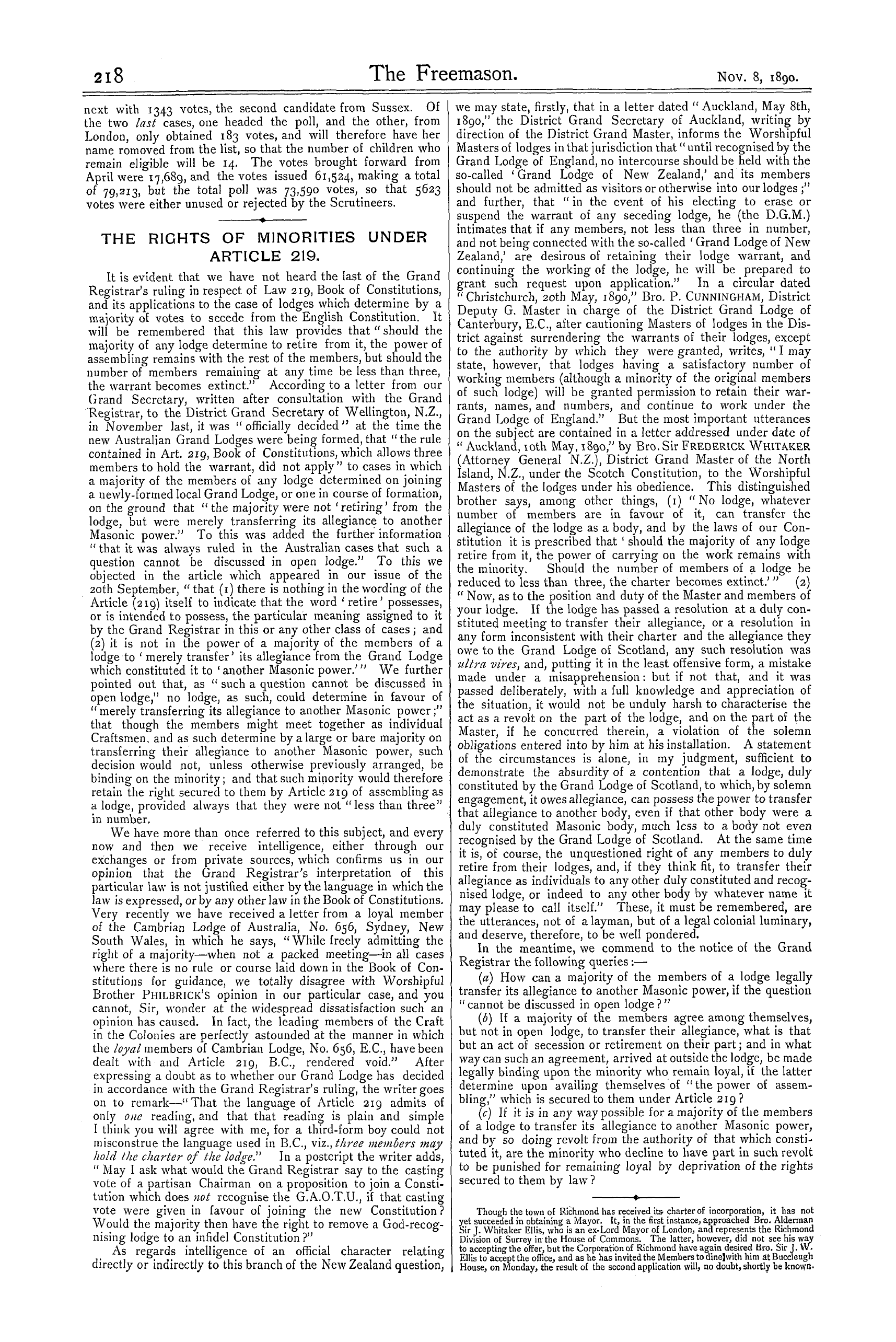
next with 1343 votes , the second candidate from Sussex . Of the two last cases , one headed the poll , and the other , from London , only obtained 18 3 votes , and will therefore have her name removed from the list , so that the number of children who
remain eligible will be 14 . The votes brought forward from April were 17 , 689 , and the votes issued 61 , 524 , making a total of 79 , 213 , but the total poll was 73 , 590 votes , so that 5623 votes were either unused or rejected by the Scrutineers .
The Rights Of Minorities Under Article 219.
THE RIGHTS OF MINORITIES UNDER ARTICLE 219 .
It is evident that we have not heard the last of the Grand Registrar ' s ruling in respect of Law 219 , Book of Constitutions , and its applications to the case of lodges which determine by a majority of votes to secede from the English Constitution . It will be remembered that this law provides that " should the
majority of any lodge determine to retire from it , the power of assembling remains with the rest of the members , but should the number of members remaining at any time be less than three , the warrant becomes extinct . " According to a letter from our Grand Secretary , written after consultation with the Grand
Registrar , to the District Grand Secretary of Wellington , N . Z ., in November last , it was " officially decided ' at the time the new Australian Grand Lodges were being formed , that " the rule contained in Art . 219 , Book of Constitutions , which allows three members to hold the warrant , did not apply" to cases in which
a majority of the members of any lodge determined on joining a newly-formed local Grand Lodge , or one in course of formation , on the ground that "the majority were not ' retiring' from the lodge , but were merely transferring its allegiance to another Masonic power . " To this was added the further information
" that it was always ruled in the Australian cases that such a question cannot be discussed in open lodge . " To this we objected in the article which appeared in our issue of the 20 th September , " that ( 1 ) there is nothing in the wording of the Article ( 219 ) itself to indicate that the word ' retire' possesses ,
or is intended to possess , the particular meaning assigned to it by the Grand Registrar in this or any other class of cases ; and ( 2 ) it is not in the power of a majority of the members of a lodge to ' merely transfer' its allegiance from the Grand Lodge which constituted it to ' another Masonic power . '" We further
pointed out that , as " such a question cannot be discussed in open lodge , " no lodge , as such , could determine in favour of " merely transferring its allegiance to another Masonic power ;" that though the members might meet together as individual Craftsmen , and as such determine by a large or bare majority on
transferring their allegiance to another Masonic power , such decision would not , unless otherwise previously arranged , be binding on the minority ; and that such minority would therefore retain the right secured to them by Article 219 of assembling as a lodge , provided always that they were not " less than three " in number .
We have more than once referred to this subject , and every now and then we receive intelligence , either through our exchanges or from private sources , which confirms us in our opinion that the Grand Registrar ' s interpretation of this particular law is not justified either by the language in which the
law is expressed , or by any other law in the Book of Constitutions . Very recently we have received a letter from a loyal member of the Cambrian Lodge of Australia , No . 656 , Sydney , New South Wales , in which he says , " While freely admitting the right of a majority—when not a packed meeting—in all cases
where there is no rule or course laid down in the Book of Constitutions for guidance , we totally disagree with Worshipful Brother PHILBRICK ' opinion in our particular case , and you cannot , Sir , wonder at the widespread dissatisfaction such an opinion has caused . In fact , the leading members of the Craft
in the Colonies are perfectly astounded at the manner in which the loyal members of Cambrian Lodge , No . 6 5 6 , E . G ., have been dealt with and Article 219 , B . C ., rendered void . " After expressing a doubt as to whether our Grand Lodge has decided in accordance with the Grand Registrar ' s ruling , the writer goes
on to remark— "That the language of Article 219 admits of only one reading , and that that reading is plain and simple I think you will agree with me , for a third-form boy could not misconstrue the language used in B . C ., viz ., three members may hold the charter of the lodged In a postcript the writer adds ,
" May I ask what would the Grand Registrar say to the casting vote of a partisan Chairman on a proposition to join a Constitution which does not recognise the G . A . O . T . U ., if that casting vote were given in favour of joining the new Constitution ? Would the majority then have the right to remove a God-recognising lodge to an infidel Constitution ?" As regards intelligence of an official character relating directly or indirectly to this branch of the New Zealand question ,
The Rights Of Minorities Under Article 219.
we may state , firstly , that in a letter dated " Auckland , May Sth , 18 90 , " the District Grand Secretary of Auckland , writing by direction of the District Grand Master , informs the Worshipful Masters of lodges in that jurisdiction that" until recognised by the Grand Lodge of England , no intercourse should be held with the
so-called ' Grand Lodge of New Zealand , ' and its members should not be admitted as visitors or otherwise into our lodges ;" and further , that " in the event of his electing to erase or suspend the warrant of any seceding lodge , he ( the D . G . M . ) intimates that if any members , not less than three in number ,
and not being connected with the so-called ' Grand Lodge of New Zealand , ' are desirous of retaining their lodge warrant , and continuing the working of the lodge , he will be prepared to grant such request upon application . " In a circular dated "Christchurch , 20 th May , 1890 , " Bro . P . CUNNINGHAM , District
Deputy G . Master in charge of the District Grand Lodge of Canterbury , E . G ., after cautioning Masters of lodges in the District against surrendering the warrants of their lodges , except to the authority by which they were granted , writes , " I may state , however , that lodges having a satisfactory number of
working members ( although a minority of the original members of such lodge ) will be granted permission to retain their warrants , names , and numbers , and continue to work under the Grand Lodge of England . " But the most important utterances on the subject are contained in a letter addressed under date of
" Auckland , 10 th May , 18 90 , " by Bro . Sir FREDERICK WHITA . KER ( Attorney General N . Z . ) , District Grand Master of the North Island , N . Z ., under the Scotch Constitution , to the Worshipful Masters of the lodges under his obedience . This distinguished brother says , among other things , ( 1 ) "No lodge , whatever
number of members are in favour of it , can transfer the allegiance of the lodge as a body , and by the laws of our Constitution it is prescribed that ' should the majority of any lodge retire from it , the power of carrying on the work remains with the minority . Should the number of members of a lodge be
reduced to less than three , the charter becomes extinct . '" ( 2 ) " Now , as to the position and duty of the Master and members of your lodge . If the lodge has passed a resolution at a duly constituted meeting to transfer their allegiance , or a resolution in any form inconsistent with their charter and the allegiance they
owe to the Grand Lodge of Scotland , any such resolution was ultra vires , and , putting it in the least offensive form , a mistake made under a misapprehension : but if not that , and it was passed deliberately , with a full knowledge and appreciation of the situation , it would not be unduly harsh to characterise the
act as a revolt on the part of the lodge , and on the part of the Master , if he concurred therein , a violation of the solemn obligations entered into by him at his installation . A statement of the circumstances is alone , in my judgment , sufficient to demonstrate the absurdity of a contention that a lodge , duly
constituted by the Grand Lodge of Scotland , to which , by solemn engagement , it owes allegiance , can possess the power to transfer that allegiance to another body , even if that other body were a duly constituted Masonic body , much less to a body not even recognised by the Grand Lodge of Scotland . At the same time
it is , of course , the unquestioned right of any members to duly retire from their lodges , and , if they think fit , to transfer their allegiance as individuals to any other duly constituted and
recognised lodge , or indeed to any other body by whatever name it may please to call itself . " These , it must be remembered , are the utterances , not of a layman , but of a legal colonial luminary , and deserve , therefore , to be well pondered .
In the meantime , we commend to the notice of the Grand Registrar the following queries : —¦ ( a ) How can a majority of the members of a lodge legally transfer its allegiance to another Masonic power , if the question " cannot be discussed in open lodge ?"
( b ) If a majority of the members agree among themselves , but not in open lodge , to transfer their allegiance , what is that but an act of secession or retirement on their part ; and in what
way can such an agreement , arrived at outside the lodge , be made legally binding upon the minority who remain loyal , if the latter determine upon availing themselves of " the power of assembling , " which is secured to them under Article 219 ?
( c ) If it is in any way possible for a majority of the members of a lodge to transfer its allegiance to another Masonic power , and by so doing revolt from the authority of that which constituted it , are the minority who decline to have part in such revolt to be punished for remaining loyal by deprivation of the rights secured to them by law ?
Though the town of Richmond has received its- charter of incorporation , it has not yet succeeded in obtaining a Mayor . It , in the first instance , approached Bro . Alderman Sir J . Whitaker Ellis , who is an ex-Lord Mayor of London , and represents the Richmond Division of Surrey in the House of Commons . The latter , however , did not see his way to accepting the offer , but the Corporation of Richmond have again desired Bro . Sir J . W . Ellis to accept the office , and as he has invited the Members to dinejw ' ith him at Buccleugh House , on Monday , the result of the second application will , no doubt , shortly be known-






Note: This text has been automatically extracted via Optical Character Recognition (OCR) software.
The Girls' School Election.
next with 1343 votes , the second candidate from Sussex . Of the two last cases , one headed the poll , and the other , from London , only obtained 18 3 votes , and will therefore have her name removed from the list , so that the number of children who
remain eligible will be 14 . The votes brought forward from April were 17 , 689 , and the votes issued 61 , 524 , making a total of 79 , 213 , but the total poll was 73 , 590 votes , so that 5623 votes were either unused or rejected by the Scrutineers .
The Rights Of Minorities Under Article 219.
THE RIGHTS OF MINORITIES UNDER ARTICLE 219 .
It is evident that we have not heard the last of the Grand Registrar ' s ruling in respect of Law 219 , Book of Constitutions , and its applications to the case of lodges which determine by a majority of votes to secede from the English Constitution . It will be remembered that this law provides that " should the
majority of any lodge determine to retire from it , the power of assembling remains with the rest of the members , but should the number of members remaining at any time be less than three , the warrant becomes extinct . " According to a letter from our Grand Secretary , written after consultation with the Grand
Registrar , to the District Grand Secretary of Wellington , N . Z ., in November last , it was " officially decided ' at the time the new Australian Grand Lodges were being formed , that " the rule contained in Art . 219 , Book of Constitutions , which allows three members to hold the warrant , did not apply" to cases in which
a majority of the members of any lodge determined on joining a newly-formed local Grand Lodge , or one in course of formation , on the ground that "the majority were not ' retiring' from the lodge , but were merely transferring its allegiance to another Masonic power . " To this was added the further information
" that it was always ruled in the Australian cases that such a question cannot be discussed in open lodge . " To this we objected in the article which appeared in our issue of the 20 th September , " that ( 1 ) there is nothing in the wording of the Article ( 219 ) itself to indicate that the word ' retire' possesses ,
or is intended to possess , the particular meaning assigned to it by the Grand Registrar in this or any other class of cases ; and ( 2 ) it is not in the power of a majority of the members of a lodge to ' merely transfer' its allegiance from the Grand Lodge which constituted it to ' another Masonic power . '" We further
pointed out that , as " such a question cannot be discussed in open lodge , " no lodge , as such , could determine in favour of " merely transferring its allegiance to another Masonic power ;" that though the members might meet together as individual Craftsmen , and as such determine by a large or bare majority on
transferring their allegiance to another Masonic power , such decision would not , unless otherwise previously arranged , be binding on the minority ; and that such minority would therefore retain the right secured to them by Article 219 of assembling as a lodge , provided always that they were not " less than three " in number .
We have more than once referred to this subject , and every now and then we receive intelligence , either through our exchanges or from private sources , which confirms us in our opinion that the Grand Registrar ' s interpretation of this particular law is not justified either by the language in which the
law is expressed , or by any other law in the Book of Constitutions . Very recently we have received a letter from a loyal member of the Cambrian Lodge of Australia , No . 656 , Sydney , New South Wales , in which he says , " While freely admitting the right of a majority—when not a packed meeting—in all cases
where there is no rule or course laid down in the Book of Constitutions for guidance , we totally disagree with Worshipful Brother PHILBRICK ' opinion in our particular case , and you cannot , Sir , wonder at the widespread dissatisfaction such an opinion has caused . In fact , the leading members of the Craft
in the Colonies are perfectly astounded at the manner in which the loyal members of Cambrian Lodge , No . 6 5 6 , E . G ., have been dealt with and Article 219 , B . C ., rendered void . " After expressing a doubt as to whether our Grand Lodge has decided in accordance with the Grand Registrar ' s ruling , the writer goes
on to remark— "That the language of Article 219 admits of only one reading , and that that reading is plain and simple I think you will agree with me , for a third-form boy could not misconstrue the language used in B . C ., viz ., three members may hold the charter of the lodged In a postcript the writer adds ,
" May I ask what would the Grand Registrar say to the casting vote of a partisan Chairman on a proposition to join a Constitution which does not recognise the G . A . O . T . U ., if that casting vote were given in favour of joining the new Constitution ? Would the majority then have the right to remove a God-recognising lodge to an infidel Constitution ?" As regards intelligence of an official character relating directly or indirectly to this branch of the New Zealand question ,
The Rights Of Minorities Under Article 219.
we may state , firstly , that in a letter dated " Auckland , May Sth , 18 90 , " the District Grand Secretary of Auckland , writing by direction of the District Grand Master , informs the Worshipful Masters of lodges in that jurisdiction that" until recognised by the Grand Lodge of England , no intercourse should be held with the
so-called ' Grand Lodge of New Zealand , ' and its members should not be admitted as visitors or otherwise into our lodges ;" and further , that " in the event of his electing to erase or suspend the warrant of any seceding lodge , he ( the D . G . M . ) intimates that if any members , not less than three in number ,
and not being connected with the so-called ' Grand Lodge of New Zealand , ' are desirous of retaining their lodge warrant , and continuing the working of the lodge , he will be prepared to grant such request upon application . " In a circular dated "Christchurch , 20 th May , 1890 , " Bro . P . CUNNINGHAM , District
Deputy G . Master in charge of the District Grand Lodge of Canterbury , E . G ., after cautioning Masters of lodges in the District against surrendering the warrants of their lodges , except to the authority by which they were granted , writes , " I may state , however , that lodges having a satisfactory number of
working members ( although a minority of the original members of such lodge ) will be granted permission to retain their warrants , names , and numbers , and continue to work under the Grand Lodge of England . " But the most important utterances on the subject are contained in a letter addressed under date of
" Auckland , 10 th May , 18 90 , " by Bro . Sir FREDERICK WHITA . KER ( Attorney General N . Z . ) , District Grand Master of the North Island , N . Z ., under the Scotch Constitution , to the Worshipful Masters of the lodges under his obedience . This distinguished brother says , among other things , ( 1 ) "No lodge , whatever
number of members are in favour of it , can transfer the allegiance of the lodge as a body , and by the laws of our Constitution it is prescribed that ' should the majority of any lodge retire from it , the power of carrying on the work remains with the minority . Should the number of members of a lodge be
reduced to less than three , the charter becomes extinct . '" ( 2 ) " Now , as to the position and duty of the Master and members of your lodge . If the lodge has passed a resolution at a duly constituted meeting to transfer their allegiance , or a resolution in any form inconsistent with their charter and the allegiance they
owe to the Grand Lodge of Scotland , any such resolution was ultra vires , and , putting it in the least offensive form , a mistake made under a misapprehension : but if not that , and it was passed deliberately , with a full knowledge and appreciation of the situation , it would not be unduly harsh to characterise the
act as a revolt on the part of the lodge , and on the part of the Master , if he concurred therein , a violation of the solemn obligations entered into by him at his installation . A statement of the circumstances is alone , in my judgment , sufficient to demonstrate the absurdity of a contention that a lodge , duly
constituted by the Grand Lodge of Scotland , to which , by solemn engagement , it owes allegiance , can possess the power to transfer that allegiance to another body , even if that other body were a duly constituted Masonic body , much less to a body not even recognised by the Grand Lodge of Scotland . At the same time
it is , of course , the unquestioned right of any members to duly retire from their lodges , and , if they think fit , to transfer their allegiance as individuals to any other duly constituted and
recognised lodge , or indeed to any other body by whatever name it may please to call itself . " These , it must be remembered , are the utterances , not of a layman , but of a legal colonial luminary , and deserve , therefore , to be well pondered .
In the meantime , we commend to the notice of the Grand Registrar the following queries : —¦ ( a ) How can a majority of the members of a lodge legally transfer its allegiance to another Masonic power , if the question " cannot be discussed in open lodge ?"
( b ) If a majority of the members agree among themselves , but not in open lodge , to transfer their allegiance , what is that but an act of secession or retirement on their part ; and in what
way can such an agreement , arrived at outside the lodge , be made legally binding upon the minority who remain loyal , if the latter determine upon availing themselves of " the power of assembling , " which is secured to them under Article 219 ?
( c ) If it is in any way possible for a majority of the members of a lodge to transfer its allegiance to another Masonic power , and by so doing revolt from the authority of that which constituted it , are the minority who decline to have part in such revolt to be punished for remaining loyal by deprivation of the rights secured to them by law ?
Though the town of Richmond has received its- charter of incorporation , it has not yet succeeded in obtaining a Mayor . It , in the first instance , approached Bro . Alderman Sir J . Whitaker Ellis , who is an ex-Lord Mayor of London , and represents the Richmond Division of Surrey in the House of Commons . The latter , however , did not see his way to accepting the offer , but the Corporation of Richmond have again desired Bro . Sir J . W . Ellis to accept the office , and as he has invited the Members to dinejw ' ith him at Buccleugh House , on Monday , the result of the second application will , no doubt , shortly be known-