-
Articles/Ads
Article A "GUIDE, PHILOSOPHER, AND FRIEND." ← Page 2 of 2 Article A "GUIDE, PHILOSOPHER, AND FRIEND." Page 2 of 2 Article UNITED GRAND LODGE OF ENGLAND. Page 1 of 4 →
Note: This text has been automatically extracted via Optical Character Recognition (OCR) software.
A "Guide, Philosopher, And Friend."
licly denounced the Bible ( which was upon the altar when he vvas made ) was guilty of no Masonic offence . " The moral he deduces is that " a man who does not put his trust in God , or who does not recognise the Book of the Law , is not only not fit to be
made a Mason , but if made , would be an element among us of the most dangerous character . " It is , therefore , " the practical duty of all members , and especially of officers and Committees
of lodges , to make strict inquiry into the character of candidates in this respect , and to accept no doubtful assurance , but to havo satisfactory evidence that they are really ' duly and truly prepared ' to be made Masons . "
So far , there is nothing of an exceptionally novel or distinctive character about Bro . DRUMMOND ' S remarks . As we proceed , however , we lind him launching out into the severest condemnation of the many novelties which have forced their
way into the Masonic creed of the present day in the jurisdiction of many Grand Lodges . Thus , in treating of " Masonic Relief , " he , first of all , reminded those he was addressing that ' * Every Mason is bound to relieve the wants of a distressed
worthy brother according to his ability . " But both private and Grand Lodges have established Charity Funds , and though he is far from denying that "this is in accordance with Masonic
principles , and is wise , " yet he considers one evil has resulted"the sense of individual , obligation to relieve distress has been weakened . " Again , he argues that the creation of these funds and the influence of other Societies whicli have been established
on what he calls " the benefits and dues " system , by weakening our sense of individual responsibility have brought Freemasonry perilous ]) ' near to these other Societies , it being " already the law of several Grand Lodges , " that " only the Mason who pays
dues is entitled to relief from lodge funds or from individual Masons , " while " a few Grand Lodges have gone to the astonishing extent of prohibiting lodges and their members from contributing to the relief of Masons who do not themselves pay
dues . The effects of these and other measures he describes are , in his opinion , "highly injurious to Masonry , " and for these reasons : — " They not only tend to destroy the sense of obligation of the individual Mason to relieve distress and prevent the
exercise of Charity by him , " but they also " prevent the strengthening of the bonds of fraternity which the exercise of Masonic Charity always brings . Love for the Brotherhood grows by its
exercise ; the performance of the duties of Masonry increases our inclination to perform them ; on the other hand , everything which tends to prevent the discharge of such duties weakens the Institution itself . "
The tendency among Masons to permit and even encourage the introduction of innovations has , of course , its due share of attention , and Bro . DRUMMOND is undoubtedly right in his statement that it is more strongly exhibited by the youngest
members of the Craft . " As Masonry , " he says , " is better known , it is better appreciated . The greater one ' s experience , the less his inclination to make changes , and the more he feels that it is not safe to undertake to be wiser than the founders of
an institution that has maintained its existence for so many years , in the storms of adversity as well as in the sunshine of prosperity , and that it is best to continue to build upon the foundations so wisely and enduringly laid . "
In his remarks on the Ritual we need not follow him particularly ; but there is one practice which he strongl y and , in our opinion , most justly condemns— "that of conferring our Degrees
upon ' classes of candidates . Says he : " Thc old usage and , as I believe , the evident meaning of the ritual require that every candidate shall go himself , and alone , through every part of our ceremonies . "
01 the other matters which are considered there is only one to which we think it needful to refer , and that is " Fraternity . " Here , again , Bro . DRUMMOND speaks very emphatically , and proposes one remedy which , we doubt not , will command the
assent of most of our readers . He states it as a matter of fact —not , be it observed , a mere matter of opinion—that " the bonds of Fraternity among the Craft are not so strong as they
once were , or as they were in the earl y days of this Grand Lodge , " and he is convinced "that one cause of our loss in this direction proceeds from the failure of our members to cultivate intimacy with each other . The ritual and old usage contemplate
A "Guide, Philosopher, And Friend."
that the objects of lodge meetings are something more than to transact business and to do work . " He considers that the revival of the old custom of having refreshments at lodge meetings would benefit Masonry . He is also under an apprehension
that many lodges are too large . " It is , " he says , " within our observation that the spirit of brotherhood exists more fully in our smaller lodges . It cannot be otherwise . In many lodges there are very few members who personally know all the other
members—even those who reside in the immediate vicinity of thc lodge . Candidates are admitted who become personally known to very many members when they meet each other for the first time in the Iodge . It is utterly impossible that there
can be any stronger bond of brotherhood in such cases than grows out of Masonic sentiment , unsustained by personal intercourse , and Masons should be such men as personal intercourse attaches more stronglv to each other . "
We regret vve are unable to publish the whole oration ; but what we have quoted and our remarks will show that Bro ' . DRUMMOND is a counsellor whom our Masonic brethren may be proud to follow .
United Grand Lodge Of England.
UNITED GRAND LODGE OF ENGLAND .
The Quarterly Communication of United Grand Lodge of Free and Accepted Masons of England was held on Wednesday at Freemasons' Hall , Great Queen-street . There was a very good attendance of the brethren , notwithstanding the holiday season of the vear . Bro . W . W . B . Beach , M . P ., Prov . G . M .
of Hants and Isle of Wight , occupied the chair , having Bro . Lord Addington , the new Prov . G . M . of Buckinghamshire , as Deputy Grand Master . Bro . the Rev . R . J . Simpson , P . G . C , acted as Senior Grand Warden ; and Bro . the Rev . J . S . Brownrigg , P . G . C , as Junior Grand Warden . Among other
brethren present vvere—Bros . W . M . Stiles , G . Treas . ; Alderman Dimsdale , P . G . Treas . ; Dr . Balfour Cockburn , Prov . G . M . of Guernsey ; Edwd . Letchworth , G . Sec . ; R . Loveland Loveland , President of the Board of General Purposes ; S . Cochrane , Past G . Treas . ; Sir Albert W . Woods ( Garter ) , & c , G . D . C . ; C . E . Keyser , P . G . D ..
Henry Smith , D . P . G . M . West Yorks , P . G . D . ; W . F . Smithson , P . G . D . ; R . Clay Sudlow , P . G . D . ; E . M . Lott , P . G . Org . ; J . E . Le Feuvre , P . G . D . ; W . Lake , Asst . G . Sec . ; J . S . Cumberland , G . Std . Br . ; Henry Maudslay , P . G . D . ; George Lambert , P . G . S . B . ; George Read , P . G . Std . Br . ; F . A . Philbrick , Q . C , G . Reg . ; Rev . C . J . Martyn , P . G . C . ; Rev . H . R . Cooper Smith , D . D ., P . G . C . ; C . E . Keyser , P . G . D . ; and R . Clowes .
Grand Lodge having been opened in form the GRAND SECRETARY read the minutes of the Quarterly Communication of June 5 th , 18 95 . On Bro . BEACH putting the motion— " The . question is that
the minutes of the last Quarterly Communication be confirmed , " Bro . W . F . LAMONBV , P . M . 6 5 6 , rose and said : Most Worship ful Grand Master in the chair , —I rise to move " That the minutes so lar as regards the election of the Colonial Board be not confirmed . "
Bro . BEACH , who remained standing after putting the motion addressing Bro . Lamonby , said : Will you take your seat , please ? ( Bro . Lamonby resumed his seat . ) I understand the question to be raised is that the minutes are not to be confirmed because on < : brother who claims to have been elected should not be so because
he is a member of a Colonial Iodge . Now the Book of Constitutions lays down that it is desirable that one of the members should be so elected , but it does not render it compulsory . When the brethren of Grand Lodge voted on this question they had this matter considered , and if they had thought fit to elect a
brother they might have done so ; but such was not the case ; the ballot did not go in favour of him . Bro . W . F . LAMONBY : At the bottom of the poll . Bro . BEACH : He was at the bottom of the poll . That being
the case , I think it would not be advisable for Grand Lodge to re ' vise its own decision on a former occasion , and therefore 1 cannot allow this question to be put , and I must rule it out 01 order .
Bro . W . F . LAMONBY : May 1 be permitted to ask you , Most Worshipful Grand Master in the chair , the meaning of thos < : words that were not explained at the last Grand Lodge . It " ' intimated at the lodge that they could not be explained till aftc the election .
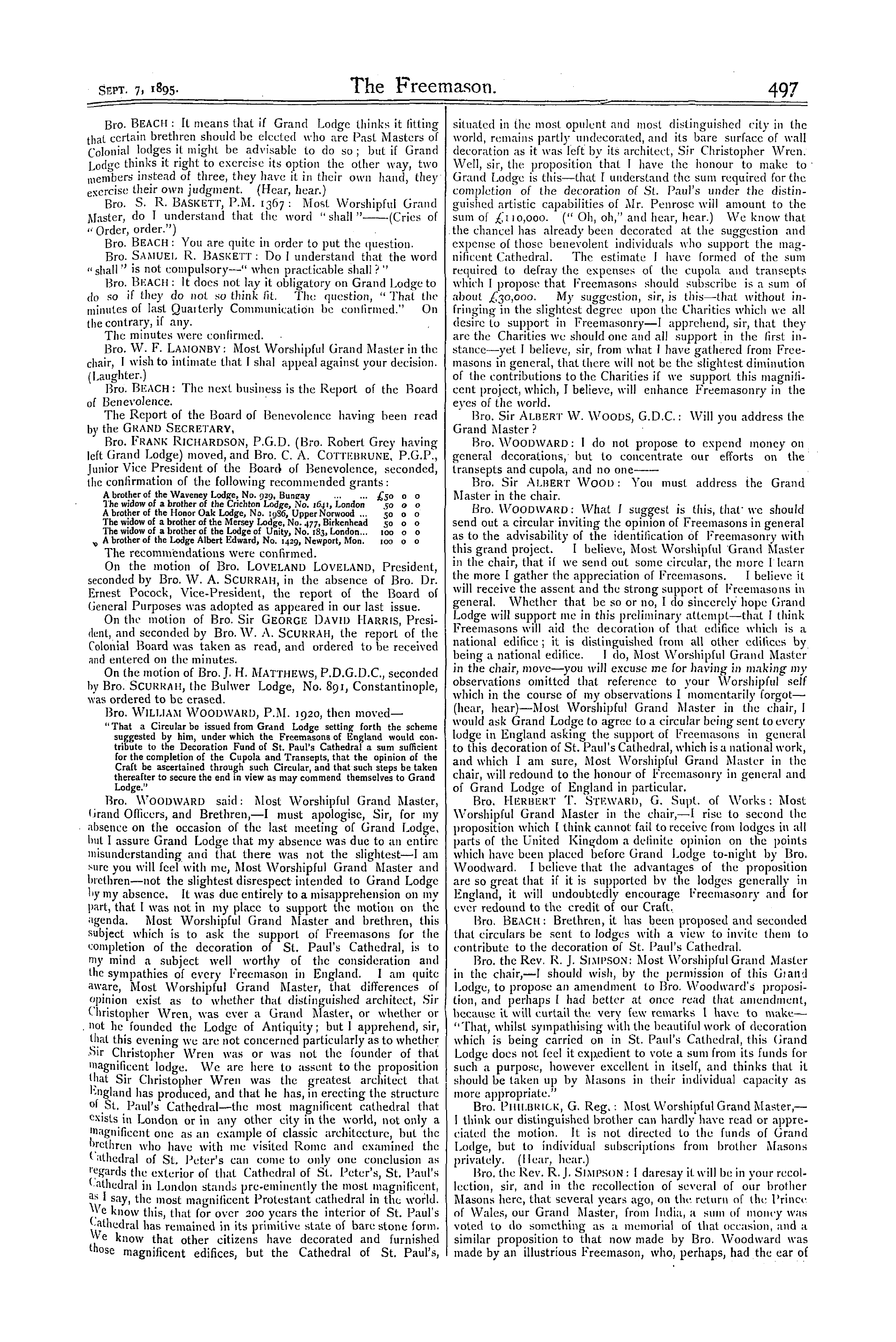
Bro . BEACH : What words ? Bro . W . F . LAMONBY : " When practicable . " What does it mean ? [ The words referred to occur in Art . 283 , Book of Constitutions : " When practicable , three members of the Board shall t > Past Masters of Colonial Lodges . " ]






Note: This text has been automatically extracted via Optical Character Recognition (OCR) software.
A "Guide, Philosopher, And Friend."
licly denounced the Bible ( which was upon the altar when he vvas made ) was guilty of no Masonic offence . " The moral he deduces is that " a man who does not put his trust in God , or who does not recognise the Book of the Law , is not only not fit to be
made a Mason , but if made , would be an element among us of the most dangerous character . " It is , therefore , " the practical duty of all members , and especially of officers and Committees
of lodges , to make strict inquiry into the character of candidates in this respect , and to accept no doubtful assurance , but to havo satisfactory evidence that they are really ' duly and truly prepared ' to be made Masons . "
So far , there is nothing of an exceptionally novel or distinctive character about Bro . DRUMMOND ' S remarks . As we proceed , however , we lind him launching out into the severest condemnation of the many novelties which have forced their
way into the Masonic creed of the present day in the jurisdiction of many Grand Lodges . Thus , in treating of " Masonic Relief , " he , first of all , reminded those he was addressing that ' * Every Mason is bound to relieve the wants of a distressed
worthy brother according to his ability . " But both private and Grand Lodges have established Charity Funds , and though he is far from denying that "this is in accordance with Masonic
principles , and is wise , " yet he considers one evil has resulted"the sense of individual , obligation to relieve distress has been weakened . " Again , he argues that the creation of these funds and the influence of other Societies whicli have been established
on what he calls " the benefits and dues " system , by weakening our sense of individual responsibility have brought Freemasonry perilous ]) ' near to these other Societies , it being " already the law of several Grand Lodges , " that " only the Mason who pays
dues is entitled to relief from lodge funds or from individual Masons , " while " a few Grand Lodges have gone to the astonishing extent of prohibiting lodges and their members from contributing to the relief of Masons who do not themselves pay
dues . The effects of these and other measures he describes are , in his opinion , "highly injurious to Masonry , " and for these reasons : — " They not only tend to destroy the sense of obligation of the individual Mason to relieve distress and prevent the
exercise of Charity by him , " but they also " prevent the strengthening of the bonds of fraternity which the exercise of Masonic Charity always brings . Love for the Brotherhood grows by its
exercise ; the performance of the duties of Masonry increases our inclination to perform them ; on the other hand , everything which tends to prevent the discharge of such duties weakens the Institution itself . "
The tendency among Masons to permit and even encourage the introduction of innovations has , of course , its due share of attention , and Bro . DRUMMOND is undoubtedly right in his statement that it is more strongly exhibited by the youngest
members of the Craft . " As Masonry , " he says , " is better known , it is better appreciated . The greater one ' s experience , the less his inclination to make changes , and the more he feels that it is not safe to undertake to be wiser than the founders of
an institution that has maintained its existence for so many years , in the storms of adversity as well as in the sunshine of prosperity , and that it is best to continue to build upon the foundations so wisely and enduringly laid . "
In his remarks on the Ritual we need not follow him particularly ; but there is one practice which he strongl y and , in our opinion , most justly condemns— "that of conferring our Degrees
upon ' classes of candidates . Says he : " Thc old usage and , as I believe , the evident meaning of the ritual require that every candidate shall go himself , and alone , through every part of our ceremonies . "
01 the other matters which are considered there is only one to which we think it needful to refer , and that is " Fraternity . " Here , again , Bro . DRUMMOND speaks very emphatically , and proposes one remedy which , we doubt not , will command the
assent of most of our readers . He states it as a matter of fact —not , be it observed , a mere matter of opinion—that " the bonds of Fraternity among the Craft are not so strong as they
once were , or as they were in the earl y days of this Grand Lodge , " and he is convinced "that one cause of our loss in this direction proceeds from the failure of our members to cultivate intimacy with each other . The ritual and old usage contemplate
A "Guide, Philosopher, And Friend."
that the objects of lodge meetings are something more than to transact business and to do work . " He considers that the revival of the old custom of having refreshments at lodge meetings would benefit Masonry . He is also under an apprehension
that many lodges are too large . " It is , " he says , " within our observation that the spirit of brotherhood exists more fully in our smaller lodges . It cannot be otherwise . In many lodges there are very few members who personally know all the other
members—even those who reside in the immediate vicinity of thc lodge . Candidates are admitted who become personally known to very many members when they meet each other for the first time in the Iodge . It is utterly impossible that there
can be any stronger bond of brotherhood in such cases than grows out of Masonic sentiment , unsustained by personal intercourse , and Masons should be such men as personal intercourse attaches more stronglv to each other . "
We regret vve are unable to publish the whole oration ; but what we have quoted and our remarks will show that Bro ' . DRUMMOND is a counsellor whom our Masonic brethren may be proud to follow .
United Grand Lodge Of England.
UNITED GRAND LODGE OF ENGLAND .
The Quarterly Communication of United Grand Lodge of Free and Accepted Masons of England was held on Wednesday at Freemasons' Hall , Great Queen-street . There was a very good attendance of the brethren , notwithstanding the holiday season of the vear . Bro . W . W . B . Beach , M . P ., Prov . G . M .
of Hants and Isle of Wight , occupied the chair , having Bro . Lord Addington , the new Prov . G . M . of Buckinghamshire , as Deputy Grand Master . Bro . the Rev . R . J . Simpson , P . G . C , acted as Senior Grand Warden ; and Bro . the Rev . J . S . Brownrigg , P . G . C , as Junior Grand Warden . Among other
brethren present vvere—Bros . W . M . Stiles , G . Treas . ; Alderman Dimsdale , P . G . Treas . ; Dr . Balfour Cockburn , Prov . G . M . of Guernsey ; Edwd . Letchworth , G . Sec . ; R . Loveland Loveland , President of the Board of General Purposes ; S . Cochrane , Past G . Treas . ; Sir Albert W . Woods ( Garter ) , & c , G . D . C . ; C . E . Keyser , P . G . D ..
Henry Smith , D . P . G . M . West Yorks , P . G . D . ; W . F . Smithson , P . G . D . ; R . Clay Sudlow , P . G . D . ; E . M . Lott , P . G . Org . ; J . E . Le Feuvre , P . G . D . ; W . Lake , Asst . G . Sec . ; J . S . Cumberland , G . Std . Br . ; Henry Maudslay , P . G . D . ; George Lambert , P . G . S . B . ; George Read , P . G . Std . Br . ; F . A . Philbrick , Q . C , G . Reg . ; Rev . C . J . Martyn , P . G . C . ; Rev . H . R . Cooper Smith , D . D ., P . G . C . ; C . E . Keyser , P . G . D . ; and R . Clowes .
Grand Lodge having been opened in form the GRAND SECRETARY read the minutes of the Quarterly Communication of June 5 th , 18 95 . On Bro . BEACH putting the motion— " The . question is that
the minutes of the last Quarterly Communication be confirmed , " Bro . W . F . LAMONBV , P . M . 6 5 6 , rose and said : Most Worship ful Grand Master in the chair , —I rise to move " That the minutes so lar as regards the election of the Colonial Board be not confirmed . "
Bro . BEACH , who remained standing after putting the motion addressing Bro . Lamonby , said : Will you take your seat , please ? ( Bro . Lamonby resumed his seat . ) I understand the question to be raised is that the minutes are not to be confirmed because on < : brother who claims to have been elected should not be so because
he is a member of a Colonial Iodge . Now the Book of Constitutions lays down that it is desirable that one of the members should be so elected , but it does not render it compulsory . When the brethren of Grand Lodge voted on this question they had this matter considered , and if they had thought fit to elect a
brother they might have done so ; but such was not the case ; the ballot did not go in favour of him . Bro . W . F . LAMONBY : At the bottom of the poll . Bro . BEACH : He was at the bottom of the poll . That being
the case , I think it would not be advisable for Grand Lodge to re ' vise its own decision on a former occasion , and therefore 1 cannot allow this question to be put , and I must rule it out 01 order .
Bro . W . F . LAMONBY : May 1 be permitted to ask you , Most Worshipful Grand Master in the chair , the meaning of thos < : words that were not explained at the last Grand Lodge . It " ' intimated at the lodge that they could not be explained till aftc the election .
Bro . BEACH : What words ? Bro . W . F . LAMONBY : " When practicable . " What does it mean ? [ The words referred to occur in Art . 283 , Book of Constitutions : " When practicable , three members of the Board shall t > Past Masters of Colonial Lodges . " ]