-
Articles/Ads
Article MASONIC HISTORY AND HISTORIANS. ← Page 2 of 2 Article "LONG LIVERS." Page 1 of 1 Article "LONG LIVERS." Page 1 of 1 Article THE AMERICAN PAST MASTER'S DEGREE. Page 1 of 1 Article PRESBYTERIANISM AND FREEMASONRY. Page 1 of 1
Note: This text has been automatically extracted via Optical Character Recognition (OCR) software.
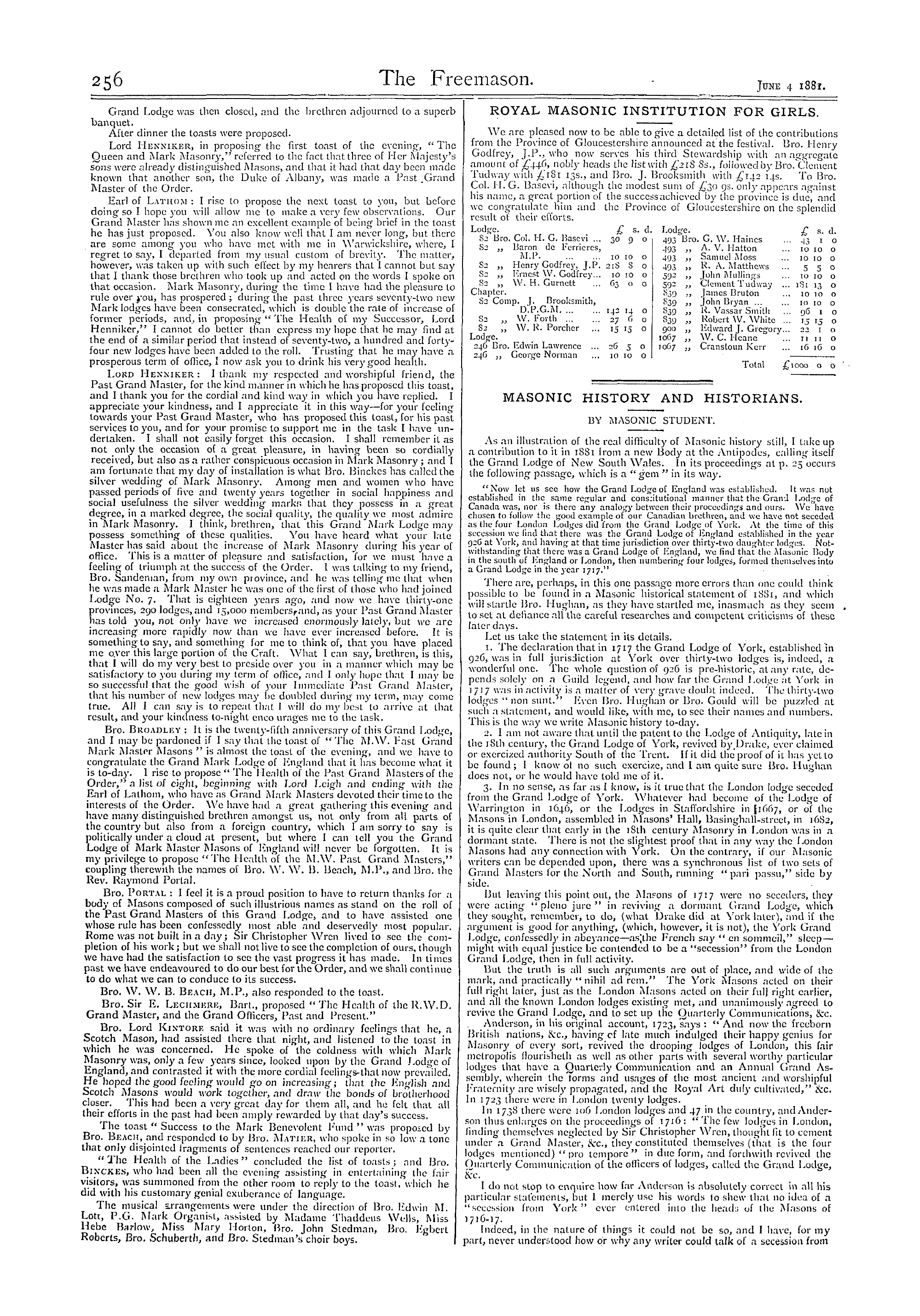
Masonic History And Historians.
York , when there is not the slig htest proof that until the Antiquity Patent York ever claimed , or thought of claiming , any jurisdiction South of the Trent .
The history of all prc-1700 Masonry is in England , unfortunately , veryhazy and doubtful , and unless we are so fortunate some day as to stumble on some genuine Masonic records of the 17 th century , we shall always find a great difficulty in dealing with 17 th century Masonry .
But , at any rate , it is hopeless to attempt to clear up Masonic difficulties , both in history and archaeology , if thus Masonic history is travestied , and the reign of " myth " is to be revived amongst us in 1 S 81 .
"Long Livers."
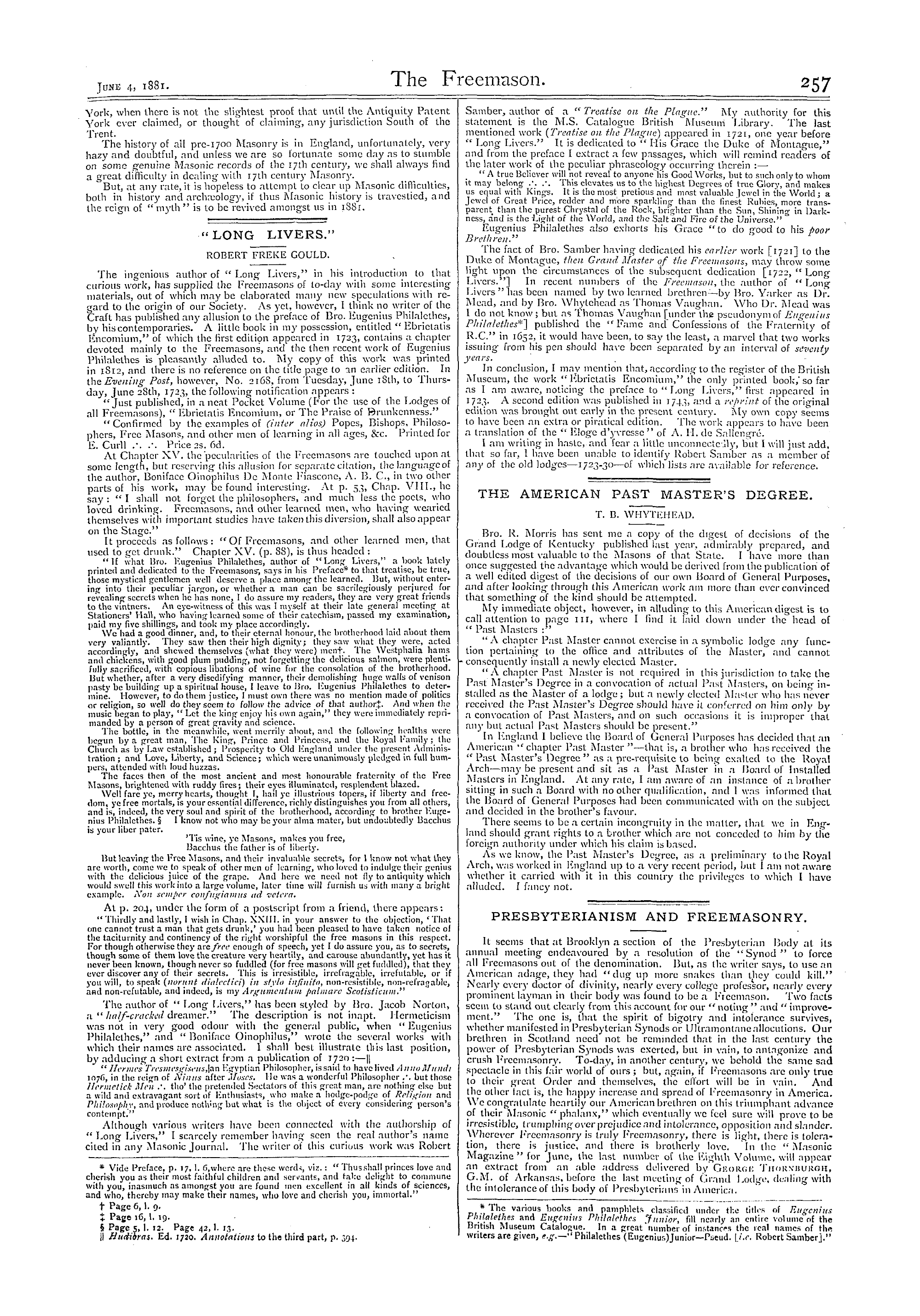
" LONG LIVERS . "
ROBERT FREKE GOULD . The ingenious author of " Long Livers , " in his introduction to that curious work , has supplied the Freemasons of to-day with some interesting materials , out of which may be elaborated many new speculations with regard to the origin of our Society . As yet , however , I think no writer of the Craft has published any allusion to the preface of Bro . Eugcnius Philalcthes ,
by his contemporaries . A little book in my possession , entitled " Ebrictalis Encomium , " of which the first edition appeared in 1723 , contains a chapter devoted mainly to the Freemasons , and the then recent work of Eugenius Philalelhcs is pleasantly alluded to . My copy of this work was printed in 1 S 12 , and there is no reference on the title page to an earlier edition . In the Evening Post , however , No . 216 S , from Tuesday , June iSlh , to ThursdayJune 2 Sth , 1723 , the following notification appears :
, "Just published , in a neat Pocket Volume ( For the use of the Lodges of all Freemasons ) , " Ebrictalis Encomium , or The Praise of Brunkenness . " "Confirmed by the examples of ( inter alios ) Popes , Bishops , Philosop hers , Free Masons , and other men of learning in all ages , & c . Printed for E . Curll . . . ' . Price 2 s . 6 d . At Chapter XV . thc ' pecularities of the Freemasons are touched upon at
some length , but reserving this allusion for separate citation , the language of the author , Boniface Oinophilus De Monte Fiasconc , A . 13 . C , in two other parts of his work , may be found interesting . At p . 53 , Chap . VIII ., he say : " I shall not forget the philosophers , and much less the poets , who loved drinking . Freemasons , and other learned men , who having wearied themselves with important studies have taken this diversion , shall also appear on the Stage . "
It proceeds as follows : " Of Freemasons , and other learned men , that used to get drunk . " Chapter XV . ( p . SS ) , is thus headed : "If what Bro . Eugenius Philalcthes , author of "Long Livers , " a book lately printed and dedicated to the Freemasons ' , says in his Preface * to that treatise , be true , those mystical gentlemen well deserve a place among the learned . But , without entering into their peculiar jargon , or whether a man can be sacrilegiously perjured for revealing secrets when he has none , I do assure my readers , they are very great friends
to the vintners . An eye-witness of this was I myself at their late general meeting at Stationers' Hall , who having learned some of their catechism , passed my examination , paid my five shillings , and took my place accordingly . We had a good dinner , and , to their eternal honour , the brotherhood laid about them very valiantly . They saw then their high dignity ; they saw what they were , acted accordingly , and shewed themselves ( wliat they were ) ment . The Westphalia hams and chickenswith good plum pudding , not forgetting the delicious salmon , were
plenti-, fully sacrificed , ivith copious libations of wine for the consolation of the brotherhood . But whether , after a very disedifying manner , their demolishing huge walls of venison pasty be building up a spiritual house , I leave to Bro . Eugenius Philalcthes to determine . However , to do them justice , I must own there was no mention made of politics or religion , so well do they seem to follow the advice of that author . !' . And when the music began to play , " Let the king enjoy his own again , " they were immediately reprimanded by a person of great gravity and science .
The bottle , in the meanwhile , went merrily about , and the following healths were begun by a great man , The King , Prince and Princess , and the Royal Family ; the Church as by Law established ; Prosperity to Old England under the present Administration ; and Love , Liberty , and Science ; which were unanimously pledged in full bumpers , attended with loud huzzas . The faces then of the most ancient and most honourable fraternity of the Free Masons , brightened with ruddy fires ; their eyes illuminated , resplendent blazed .
Well fare ye , merry hearts , thought I , hail ye illustrious topers , if liberty and freeelom , ye free mortals , is your essential difference , richly distinguishes you from all others , and is , indeed , the very soul and spirit of the brotherhood , according to brother Eugenius Philalcthes . § I know not who may be your alma mater , but undoubtedly Bacchus is your liber pater .
lis wine , ye Masons , makes you free , Bacchus the father is of liberty . But leaving the Free Masons , and their invaluable secrets , for 1 know not what they are worth , come we to speak of other men of learning , who loved to indulge their genius with the delicious juice of the grape . And here we need not fly to antiquity which would swell this work into a large volume , later time will furnish us with many a bright example . A'ou semper confut / iamus ad Vetera .
At p . 204 , under the form of a postscript from a friend , there appears : "Thirdly and lastly , I wish in Chap . XNIII . in your answer to the objection , 'That one cannot trust a man that gets drunk , ' you had been pleased to have taken notice ol the taciturnity and continency of the right worshipful the free masons in this respect . For though otherwise they are free enough of speech , yet I do assure you , as to secrets ,
though some of them love the creature very heartily , and carouse abundantly , yet has it never been known , though never so fuddled ( for free masons will get fuddled ) , that they ever discover any of their secrets . This is irresistible , irrefragable , irrefutable , or if you will , to speak ( uorunt dialectic !) in stylo infinito , non-resistible , non-ref raj able , and non-refutable , and indeed , is my Argumentum palmare Scolisticum . "
The author of " Long Livers , ' has been styled by Bro . Jacob Norton , a " half-cracked dreamer . " The description is not inapt . Hermcticism was not in very good odour with the general public , when " Eugenius Philalelhcs , " and " Boniface Oinophilus , " wrote the several works with which their names are associated . 1 shall best illustrate this last position , by adducing a short extract from a publication of 1720 : —1 |
" Hermes Tresmesgiseus , \ an Egyptian Philosopher , is said to have lived A 11 no Mnndi 107 G , in the reign of Ninus after Moses . He was a wonderful Philosopher . ' . but those Hermetick Men . ' . tho' the pretended Seetators of this great man , are nothing else but a wild and extravagant sort of Enthusiasts , who make a hodge-podge of Religion and Philosophy , and produce nothing but what is the object of every considering person's contempt . "
Although various writers have been connected with the authorshi p of " Long Livers , " I scarcely remember having seen the real author ' s name cited in any Masonic Journal . The writer of this curious work was Robert
* Vide Preface , p . 17 , 1 . 6 , where are these wereh , viz . : " Thusshall princes love and cherish you as their most faithful children and servants , and take delight to commune with you , inasmuch as amongst you are found men excellent in all kinds of sciences , and who , thereby may make their names , who love and cherish you , immortal . " t Page 6 , 1 . 9 . t Page 16 , 1 . 19 . § Page s . ' •' 2- Page 42 . 1- ' . V II fitidibras . Ed . 1720 . Annotations to the third part , p . 394 .
"Long Livers."
Samber , author of a " Treatise on the Plague . " My authority for this statement is the M . S . Catalogue British Museum ' Library . The last mentioned work ( Treatise on the Plague ) appeared in 1721 , one year before " Long Livers . " It is dedicated to " His Grace the Duke of Montague , " and from the preface I extract a few passages , which will remind reacfers of the later work of the peculiar phraseology occurring therein : —
" A true Believer will not reveal to anyone his Good Works , but to such only to whom it may belong . ' . . . This elevates us to the highest Degrees of true Glory , and makes us equal with Kings . It is the most pretious and most valuable Jewel in the World ; a Jewel of Great Price , redder and more sparkling than the finest Rubies , more transparent than the purest Chrystal of the Rock , brighter than the Sun , Shining in Darkness , and is the Light of the World , and the Salt and Fire of the Universe . " Eugenius Philalelhcs also exhorts his Grace "to do frood to his poor Brethren . "
I he fact of Bro . Samber having dedicated his earlier work [ 1721 ] to the Duke of Montague , then Grand Master of the Freemasons , may throw some light upon the circumstances of the subsequent dedication [ 1722 , " Long Livers . " ] In recent numbers of the Freemason , the aulhor of " Long Livers " has been named by two learned brethren—by Bro . Yarker as Dr .
Mead , and by Bro . Whytehead as Thomas Vaughan . Who Dr . Mead was I do not know ; but as Thomas Vaughan [ under the pseudonym of Eugenius Pliilalethes * ~ \ published the " Fame and Confessions of the Fraternity of R . C . " in 1652 , it would have been , to say the least , a marvel that two works issuing from his pen should have been separated by an interval of sevent y years .
In conclusion , I may mention that , according to the register of the British Museum , the work "Ebrictalis Encomium , " the only printed book , ' so far as I am aware , noticing the preface to " Long Livers , " first appeared in 1723 . A second edition was published in 1743 , and a reprint of the ori ginal edition was brought out early in the present century . My own copy seems to have been an extra or piratical edition . The work appears to have been a translation of the " Elog'c d ' yvrcssc " of A . H . de Sallengre .
I am writing in haste ,-and fear a litllc unconnectculy , but I will just add , lhat so far , 1 have been unable to identif y Robert Samber as a member of anj' of the old lodges—1723-30—of which lists arc available for reference .
The American Past Master's Degree.
THE AMERICAN PAST MASTER'S DEGREE .
T . B . WHYTEHEAD . Bro . R . Morris has sent me a copy of the digest of decisions of the Grand Lodge of Kentucky published last year , admirably prepared , and doubtless most valuable to the Masons of that State . I have more than once suggested the advantage which would be derived from the publication of a well edited digest of the decisions of our own Board of General Purposes , and after looking through this American work am more than ever convinced that something of the kind should be attempted .
My immediate object , however , in alluding to this American digest is to call attention to page ill , where I find it laid down under the head of " Past Masters : "
"A chapter Past Master cannot exercise in a symbolic lodge any function pertaining to the office and attributes of the Master , and cannot consequently install a newly elected Master . " A chapter Past Master is not required in this jurisdiction lo take the
Past Master ' s Degree in a convocation of actual Past Masters , on being installed as the Master of a lodge ; but a newl y elected Master who has never received the Past Master ' s Degree should have it conferred on him onl y by a convocation of Past Masters , and on such occasions it is improper lhat any but actual Past Masters should be present . "
In England I believe the Board of General Purposes has decided thai an American " chapter Past Master "—lhat is , a brother who has received the " Past Master ' s Degree " as a prc-requisitc to being exalted to the Royal Arch—may be present and sit as a Past Master in a Board of Installed Masters in England . At any rate , I am aware of an instance of a brother sitting in such a Board with no other qualification , and 1 was informed lhat the Board of General Purposes had been communicated with on the subject and decided in the brother ' s favour .
1 here seems to be a certain incongruity in the mailer , lhat we in England should grant rights to a brother which arc not conceded to him b y the foreign authority under which his claim is based . As we know , the Past Master ' s Degree , as a preliminary to the Royal Arch , was worked in England up lo a very recent period , but I am not aware whether it carried with it in this country the privileges to which I have alluded . I fancy not .
Presbyterianism And Freemasonry.
PRESBYTERIANISM AND FREEMASONRY .
It seems that at Brooklyn a section of the Presbyterian Body at its annual meeting endeavoured by a resolution of the "Synod" to force all Freemasons out of ihe denomination . Bui , as the writer says , to use an American adage , they had "dug up more snakes than they could kill . " Nearly every doctor of divinity , nearly every college professor , nearly every prominent layman in their bod y was found to be a Freemason . Two facts
seem to stand out clearl y from this account for our " noting " and " improvement . " The one is , that the spirit of bigotry and intolerance survives , whether manifested in Presbyterian Synods or Ultramontane allocutions . Our brethren in Scotland need not be reminded that in the last century the power of Presbyterian Synods was exerted , but in vain , to antagonize and crush Freemasonry . To-day , in another century , we behold the same sad
spectacle in this fair world of ours ; but , again , if Freemasons are only true to their great Order and themselves , the effort will be in vain . And the other tact is , the happy increase and spread of Freemasonry in America . We congratulate heartil y our American brethren on this triumphant advance of their Masonic " phalanx , " which eventually we feel sure will prove to be irresistible , Irumpbingoverprejudiceand intolerance , opposition and slander .
Wherever Freemasonry is truly Freemasonry , there is li ght , there is toleration , there is justice , and there is brotherly love . In the "Masonic Magazine " for June , the last number of the Eighth Volume , will appear an extract from an able address delivered b y ' GEORGE TIIORXISURGH , G . M . of Arkansas , before the last meeting of Grand Lodge , dealing with the intolerance of this body of Presbyterians in America .
The various books and pamphlets classified under the titles of Eugenius Philalethes and Eugenius Philalcthes Junior , fill nearly an entire volume ' of the British Museum Catalogue . In a great " number of instances the real names of the writers are given , e . g . — "Philalethes ( Eugenius ) Junior—Pseud , [ i . e . Robert Samber ] . "



Note: This text has been automatically extracted via Optical Character Recognition (OCR) software.
Masonic History And Historians.
York , when there is not the slig htest proof that until the Antiquity Patent York ever claimed , or thought of claiming , any jurisdiction South of the Trent .
The history of all prc-1700 Masonry is in England , unfortunately , veryhazy and doubtful , and unless we are so fortunate some day as to stumble on some genuine Masonic records of the 17 th century , we shall always find a great difficulty in dealing with 17 th century Masonry .
But , at any rate , it is hopeless to attempt to clear up Masonic difficulties , both in history and archaeology , if thus Masonic history is travestied , and the reign of " myth " is to be revived amongst us in 1 S 81 .
"Long Livers."
" LONG LIVERS . "
ROBERT FREKE GOULD . The ingenious author of " Long Livers , " in his introduction to that curious work , has supplied the Freemasons of to-day with some interesting materials , out of which may be elaborated many new speculations with regard to the origin of our Society . As yet , however , I think no writer of the Craft has published any allusion to the preface of Bro . Eugcnius Philalcthes ,
by his contemporaries . A little book in my possession , entitled " Ebrictalis Encomium , " of which the first edition appeared in 1723 , contains a chapter devoted mainly to the Freemasons , and the then recent work of Eugenius Philalelhcs is pleasantly alluded to . My copy of this work was printed in 1 S 12 , and there is no reference on the title page to an earlier edition . In the Evening Post , however , No . 216 S , from Tuesday , June iSlh , to ThursdayJune 2 Sth , 1723 , the following notification appears :
, "Just published , in a neat Pocket Volume ( For the use of the Lodges of all Freemasons ) , " Ebrictalis Encomium , or The Praise of Brunkenness . " "Confirmed by the examples of ( inter alios ) Popes , Bishops , Philosop hers , Free Masons , and other men of learning in all ages , & c . Printed for E . Curll . . . ' . Price 2 s . 6 d . At Chapter XV . thc ' pecularities of the Freemasons are touched upon at
some length , but reserving this allusion for separate citation , the language of the author , Boniface Oinophilus De Monte Fiasconc , A . 13 . C , in two other parts of his work , may be found interesting . At p . 53 , Chap . VIII ., he say : " I shall not forget the philosophers , and much less the poets , who loved drinking . Freemasons , and other learned men , who having wearied themselves with important studies have taken this diversion , shall also appear on the Stage . "
It proceeds as follows : " Of Freemasons , and other learned men , that used to get drunk . " Chapter XV . ( p . SS ) , is thus headed : "If what Bro . Eugenius Philalcthes , author of "Long Livers , " a book lately printed and dedicated to the Freemasons ' , says in his Preface * to that treatise , be true , those mystical gentlemen well deserve a place among the learned . But , without entering into their peculiar jargon , or whether a man can be sacrilegiously perjured for revealing secrets when he has none , I do assure my readers , they are very great friends
to the vintners . An eye-witness of this was I myself at their late general meeting at Stationers' Hall , who having learned some of their catechism , passed my examination , paid my five shillings , and took my place accordingly . We had a good dinner , and , to their eternal honour , the brotherhood laid about them very valiantly . They saw then their high dignity ; they saw what they were , acted accordingly , and shewed themselves ( wliat they were ) ment . The Westphalia hams and chickenswith good plum pudding , not forgetting the delicious salmon , were
plenti-, fully sacrificed , ivith copious libations of wine for the consolation of the brotherhood . But whether , after a very disedifying manner , their demolishing huge walls of venison pasty be building up a spiritual house , I leave to Bro . Eugenius Philalcthes to determine . However , to do them justice , I must own there was no mention made of politics or religion , so well do they seem to follow the advice of that author . !' . And when the music began to play , " Let the king enjoy his own again , " they were immediately reprimanded by a person of great gravity and science .
The bottle , in the meanwhile , went merrily about , and the following healths were begun by a great man , The King , Prince and Princess , and the Royal Family ; the Church as by Law established ; Prosperity to Old England under the present Administration ; and Love , Liberty , and Science ; which were unanimously pledged in full bumpers , attended with loud huzzas . The faces then of the most ancient and most honourable fraternity of the Free Masons , brightened with ruddy fires ; their eyes illuminated , resplendent blazed .
Well fare ye , merry hearts , thought I , hail ye illustrious topers , if liberty and freeelom , ye free mortals , is your essential difference , richly distinguishes you from all others , and is , indeed , the very soul and spirit of the brotherhood , according to brother Eugenius Philalcthes . § I know not who may be your alma mater , but undoubtedly Bacchus is your liber pater .
lis wine , ye Masons , makes you free , Bacchus the father is of liberty . But leaving the Free Masons , and their invaluable secrets , for 1 know not what they are worth , come we to speak of other men of learning , who loved to indulge their genius with the delicious juice of the grape . And here we need not fly to antiquity which would swell this work into a large volume , later time will furnish us with many a bright example . A'ou semper confut / iamus ad Vetera .
At p . 204 , under the form of a postscript from a friend , there appears : "Thirdly and lastly , I wish in Chap . XNIII . in your answer to the objection , 'That one cannot trust a man that gets drunk , ' you had been pleased to have taken notice ol the taciturnity and continency of the right worshipful the free masons in this respect . For though otherwise they are free enough of speech , yet I do assure you , as to secrets ,
though some of them love the creature very heartily , and carouse abundantly , yet has it never been known , though never so fuddled ( for free masons will get fuddled ) , that they ever discover any of their secrets . This is irresistible , irrefragable , irrefutable , or if you will , to speak ( uorunt dialectic !) in stylo infinito , non-resistible , non-ref raj able , and non-refutable , and indeed , is my Argumentum palmare Scolisticum . "
The author of " Long Livers , ' has been styled by Bro . Jacob Norton , a " half-cracked dreamer . " The description is not inapt . Hermcticism was not in very good odour with the general public , when " Eugenius Philalelhcs , " and " Boniface Oinophilus , " wrote the several works with which their names are associated . 1 shall best illustrate this last position , by adducing a short extract from a publication of 1720 : —1 |
" Hermes Tresmesgiseus , \ an Egyptian Philosopher , is said to have lived A 11 no Mnndi 107 G , in the reign of Ninus after Moses . He was a wonderful Philosopher . ' . but those Hermetick Men . ' . tho' the pretended Seetators of this great man , are nothing else but a wild and extravagant sort of Enthusiasts , who make a hodge-podge of Religion and Philosophy , and produce nothing but what is the object of every considering person's contempt . "
Although various writers have been connected with the authorshi p of " Long Livers , " I scarcely remember having seen the real author ' s name cited in any Masonic Journal . The writer of this curious work was Robert
* Vide Preface , p . 17 , 1 . 6 , where are these wereh , viz . : " Thusshall princes love and cherish you as their most faithful children and servants , and take delight to commune with you , inasmuch as amongst you are found men excellent in all kinds of sciences , and who , thereby may make their names , who love and cherish you , immortal . " t Page 6 , 1 . 9 . t Page 16 , 1 . 19 . § Page s . ' •' 2- Page 42 . 1- ' . V II fitidibras . Ed . 1720 . Annotations to the third part , p . 394 .
"Long Livers."
Samber , author of a " Treatise on the Plague . " My authority for this statement is the M . S . Catalogue British Museum ' Library . The last mentioned work ( Treatise on the Plague ) appeared in 1721 , one year before " Long Livers . " It is dedicated to " His Grace the Duke of Montague , " and from the preface I extract a few passages , which will remind reacfers of the later work of the peculiar phraseology occurring therein : —
" A true Believer will not reveal to anyone his Good Works , but to such only to whom it may belong . ' . . . This elevates us to the highest Degrees of true Glory , and makes us equal with Kings . It is the most pretious and most valuable Jewel in the World ; a Jewel of Great Price , redder and more sparkling than the finest Rubies , more transparent than the purest Chrystal of the Rock , brighter than the Sun , Shining in Darkness , and is the Light of the World , and the Salt and Fire of the Universe . " Eugenius Philalelhcs also exhorts his Grace "to do frood to his poor Brethren . "
I he fact of Bro . Samber having dedicated his earlier work [ 1721 ] to the Duke of Montague , then Grand Master of the Freemasons , may throw some light upon the circumstances of the subsequent dedication [ 1722 , " Long Livers . " ] In recent numbers of the Freemason , the aulhor of " Long Livers " has been named by two learned brethren—by Bro . Yarker as Dr .
Mead , and by Bro . Whytehead as Thomas Vaughan . Who Dr . Mead was I do not know ; but as Thomas Vaughan [ under the pseudonym of Eugenius Pliilalethes * ~ \ published the " Fame and Confessions of the Fraternity of R . C . " in 1652 , it would have been , to say the least , a marvel that two works issuing from his pen should have been separated by an interval of sevent y years .
In conclusion , I may mention that , according to the register of the British Museum , the work "Ebrictalis Encomium , " the only printed book , ' so far as I am aware , noticing the preface to " Long Livers , " first appeared in 1723 . A second edition was published in 1743 , and a reprint of the ori ginal edition was brought out early in the present century . My own copy seems to have been an extra or piratical edition . The work appears to have been a translation of the " Elog'c d ' yvrcssc " of A . H . de Sallengre .
I am writing in haste ,-and fear a litllc unconnectculy , but I will just add , lhat so far , 1 have been unable to identif y Robert Samber as a member of anj' of the old lodges—1723-30—of which lists arc available for reference .
The American Past Master's Degree.
THE AMERICAN PAST MASTER'S DEGREE .
T . B . WHYTEHEAD . Bro . R . Morris has sent me a copy of the digest of decisions of the Grand Lodge of Kentucky published last year , admirably prepared , and doubtless most valuable to the Masons of that State . I have more than once suggested the advantage which would be derived from the publication of a well edited digest of the decisions of our own Board of General Purposes , and after looking through this American work am more than ever convinced that something of the kind should be attempted .
My immediate object , however , in alluding to this American digest is to call attention to page ill , where I find it laid down under the head of " Past Masters : "
"A chapter Past Master cannot exercise in a symbolic lodge any function pertaining to the office and attributes of the Master , and cannot consequently install a newly elected Master . " A chapter Past Master is not required in this jurisdiction lo take the
Past Master ' s Degree in a convocation of actual Past Masters , on being installed as the Master of a lodge ; but a newl y elected Master who has never received the Past Master ' s Degree should have it conferred on him onl y by a convocation of Past Masters , and on such occasions it is improper lhat any but actual Past Masters should be present . "
In England I believe the Board of General Purposes has decided thai an American " chapter Past Master "—lhat is , a brother who has received the " Past Master ' s Degree " as a prc-requisitc to being exalted to the Royal Arch—may be present and sit as a Past Master in a Board of Installed Masters in England . At any rate , I am aware of an instance of a brother sitting in such a Board with no other qualification , and 1 was informed lhat the Board of General Purposes had been communicated with on the subject and decided in the brother ' s favour .
1 here seems to be a certain incongruity in the mailer , lhat we in England should grant rights to a brother which arc not conceded to him b y the foreign authority under which his claim is based . As we know , the Past Master ' s Degree , as a preliminary to the Royal Arch , was worked in England up lo a very recent period , but I am not aware whether it carried with it in this country the privileges to which I have alluded . I fancy not .
Presbyterianism And Freemasonry.
PRESBYTERIANISM AND FREEMASONRY .
It seems that at Brooklyn a section of the Presbyterian Body at its annual meeting endeavoured by a resolution of the "Synod" to force all Freemasons out of ihe denomination . Bui , as the writer says , to use an American adage , they had "dug up more snakes than they could kill . " Nearly every doctor of divinity , nearly every college professor , nearly every prominent layman in their bod y was found to be a Freemason . Two facts
seem to stand out clearl y from this account for our " noting " and " improvement . " The one is , that the spirit of bigotry and intolerance survives , whether manifested in Presbyterian Synods or Ultramontane allocutions . Our brethren in Scotland need not be reminded that in the last century the power of Presbyterian Synods was exerted , but in vain , to antagonize and crush Freemasonry . To-day , in another century , we behold the same sad
spectacle in this fair world of ours ; but , again , if Freemasons are only true to their great Order and themselves , the effort will be in vain . And the other tact is , the happy increase and spread of Freemasonry in America . We congratulate heartil y our American brethren on this triumphant advance of their Masonic " phalanx , " which eventually we feel sure will prove to be irresistible , Irumpbingoverprejudiceand intolerance , opposition and slander .
Wherever Freemasonry is truly Freemasonry , there is li ght , there is toleration , there is justice , and there is brotherly love . In the "Masonic Magazine " for June , the last number of the Eighth Volume , will appear an extract from an able address delivered b y ' GEORGE TIIORXISURGH , G . M . of Arkansas , before the last meeting of Grand Lodge , dealing with the intolerance of this body of Presbyterians in America .
The various books and pamphlets classified under the titles of Eugenius Philalethes and Eugenius Philalcthes Junior , fill nearly an entire volume ' of the British Museum Catalogue . In a great " number of instances the real names of the writers are given , e . g . — "Philalethes ( Eugenius ) Junior—Pseud , [ i . e . Robert Samber ] . "