-
Articles/Ads
Article RED, WHITE, AND BLUE. ← Page 2 of 3 Article RED, WHITE, AND BLUE. Page 2 of 3 →
Note: This text has been automatically extracted via Optical Character Recognition (OCR) software.
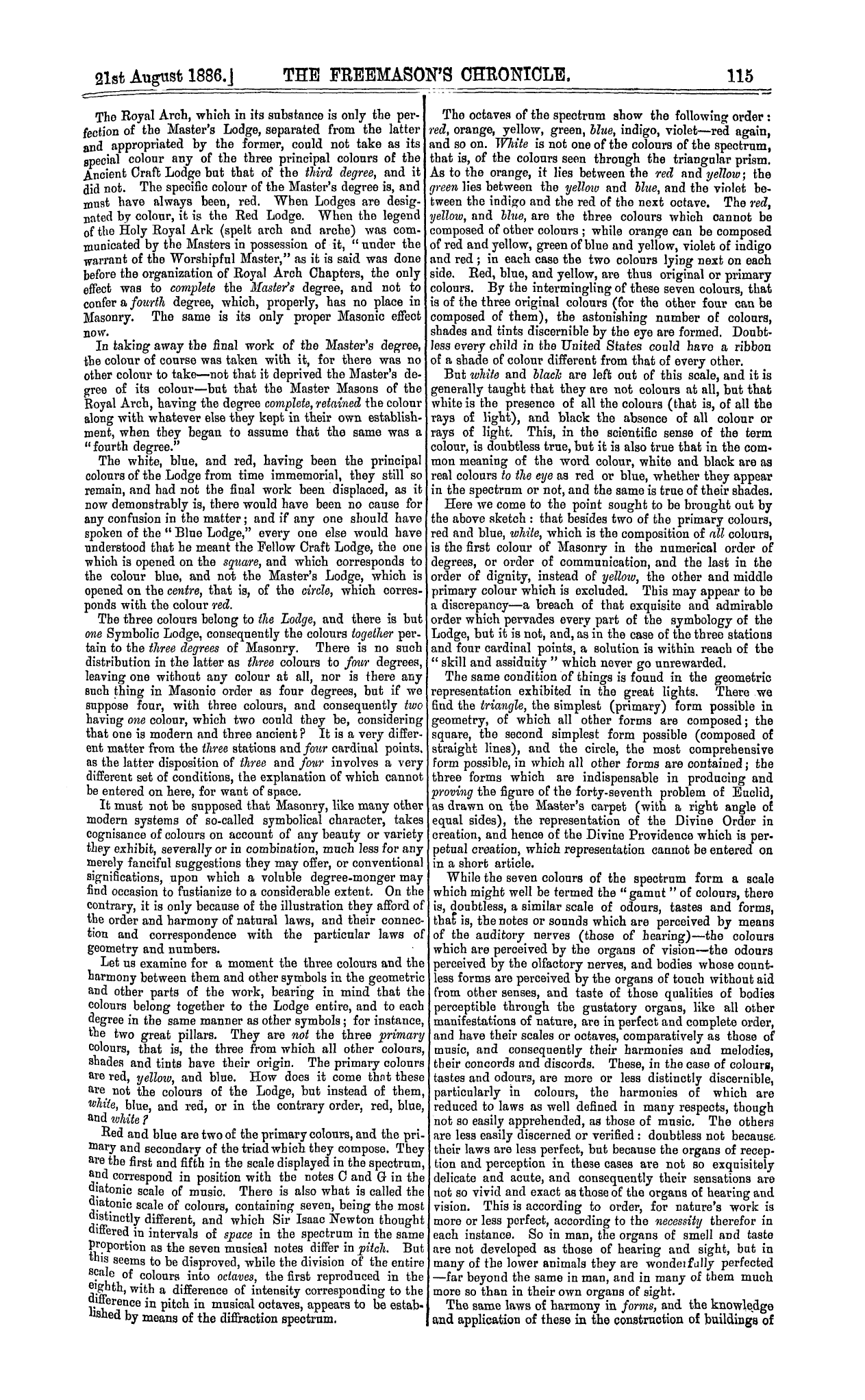
Red, White, And Blue.
The Royal Arch , which in its substance is only the perfection of the Master ' s Lodge , separated from the latter and appropriated by the former , could not take as its special colour any of the three principal colours of the Ancient Craft Lodge but that of the third degree , and it did not . The specific colour of the Master ' s degree is , and
must have always been , red . When Lodges are designated by colour , it is the Red Lodge . When the legend 0 f the Holy Royal Ark { spelt arch and arche ) was comniunicated by the Masters in possession of it , " under the
warrant of the Worshipful Master , as it is said was done before the organization of Royal Arch Chapters , the only effect was to complete the Master ' s degree , and not to confer a fmirth degree , which , properly , has no place in
Masonry . The same is its only proper Masonic effect now . In taking away the final work of the Master ' s degree ,
the colour of course was taken with it , for there was no other colour to take—not that it deprived the Master ' s degree of its colour—but that the Master Masons of the Royal Arch , having the degree complete , retained the colour along with whatever else they kept in their own establishment , when they began to assume that the same was a
" fourth degree . " The white , blue , and red , having been the principal colours of the Lodge from time immemorial , they still so
remain , and had not the final work been displaced , as it now demonstrably is , there would have been no cause for any confusion in the matter ; and if any one should have spoken of the " Blue Lodge , " every one else would have understood that he meant the Fellow Craft Lodge , the one which is opened on the square , and which corresponds to
the colour blue , and not the Master ' s Lodge , which is
opened on the centre , that is , of the circle , which corresponds with the colour red . The three colours belong to the Lodge , and there is but one Symbolic Lodge , consequently the colours together
pertain to the three degrees of Masonry . There is no such distribution in the latter as three colours to four degrees , leaving one without any colour at all , nor is there any such thing in Masonic order as four degrees , but if we
suppose four , with three colours , and consequently two having one colour , which two could they be , considering that one is modern and three ancient ? It is a very
different matter from the three stations and four cardinal points , as the latter disposition of three and four involves a very different set of conditions , the explanation of which cannot be entered on here , for want of space .
It must not be supposed that Masonry , like many other modern systems of so-called symbolical character , takes cognisance of colours on account of any beauty or variety they exhibit , severally or in combination , much less for any
merely fanciful suggestions they may offer , or conventional significations , upon which a voluble degree-monger may find occasion to fustianize to a considerable extent . On the contrary , it is only because of the illustration they afford of the order and harmony of natural laws , and their
connection and correspondence with the particular laws of
geometry and numbers . Let us examine for a moment the three colours and the harmony between them and other symbols in the geometric and other parts of the work , bearing in mind that the
colours belong together to the Lodge entire , and to each degree in the same manner as other symbols ; for instance , the two great pillars . They are not the three primary colours , that is , the three from which all other colours ,
shades and tints have their origin . The primary colours are red , yellow , and blue . How does it come that these are not the colours of the Lodge , but instead of them , white , blue , and red , or in the contrary order , red , blue , and white ?
Red and blue are two of the primary colours , and the primary and secondary of the triad which they compose . They are the first and fifth in the scale displayed in the spectrum , and correspond in position with the notes C and G in the
diatonic scale of music . There is also what is called the diatonic scale of colours , containing seven , being the most distinctl y different , and which Sir Isaac Newton thought differed in intervals of space in the spectrum in the same
proportion as the seven musical notes differ in pitch . But this seems to be disproved , while the division of the entire scale of colours into octaves , the first reproduced in the of
I'flT ' ^ difference intensity corresponding to the ainerence in pitch in musical octaves , appears to be established by means of the diffraction spectrum .
Red, White, And Blue.
The octaves of the spectrum show the following order red , orange , yellow , green , blue , indigo , violet—red again
and so on . White is not one of the colours of the spectrum , that is , of the colours seen through the triangular prism . As to the orange , it lies between the red and yellow ; the green lies between the yellou ) and blue , and the violet
between the indigo and the red of the next octave . The red , yellow , and blue , are the three colours which cannot be composed of other colours ; while orange can be composed of red and yellow , green of blue and yellow , violet of indigo
and red ; in each case the two colours lying next on each side . Red , blue , and yellow , are thus original or primary colours . By the intermingling of these seven colours , that
is of the three original colours ( for the other four can be composed of them ) , the astonishing number of colours , shades and tints discernible by the eye are formed . Doubtless every child in the United States could have a ribbon
of a shade of colour different from that of every other . But white and black are left out of this scale , and it is generally taught that they are not colours at all , but that white is the presence of all the colours ( that is , of all the Tays of light ) , and black the absence of all colour or rays of light . This , in the scientific sense of the term colour , is doubtless true , but it is also true that in the common meaning of the word colour , white and black are as real colours to the eye as red or blue , whether they appear in the spectrum or not , and the same is true of their shades . Here we come to the point sought to be brought out by the above sketch : that besides two of the primary colours , red and blue , white , which is the composition of all colours , is the first colour of Masonry in the numerical order of degrees , or order of communication , and the last in the order of dignity , instead of yellow , the other and middle primary colour which is excluded . This may appear to bo a discrepancy—a breach of that exquisite and admirable order which pervades every part of the symbology of the
Lodge , but it is not , and , as in the case of the three stations and four cardinal points , a solution is within reach of the " skill and assiduity " which never go unrewarded . The same condition of things is found in the geometric
representation exhibited in the great lights . There we find the triangle , the simplest ( primary ) form possible in geometry , of which all other forms are composed ; the
square , the second simplest form possible ( composed of straight lines ) , and the circle , the most comprehensive form possible , in which all other forms are contained j the three forms which are indispensable in producing and
proving the figure of the forty-seventh problem of Euclid
as drawn on the Master ' s carpet ( with a right angle of equal sides ) , the representation of the Divine Order in creation , and hence of the Divine Providence which is perpetual creation , which representation cannot be entered on in a short article .
While the seven colours of the spectrum form a scale which might well be termed the " gamut " of colours , there
is , doubtless , a similar scale of odours , tastes and forms ,
that is , the notes or sounds which are perceived by means of the auditory nerves ( those of hearing)—the colours which are perceived by the organs of vision—the odours perceived by the olfactory nerves , and bodies whose
countless forms are perceived by the organs of touch without aid from other senses , and taste of those qualities of bodies perceptible through tbe gustatory organs , like all other manifestations of nature , are in perfect and complete order ,
and have their scales or octaves , comparatively as those of music , and consequently their harmonies and melodies , their concords and discords . These , in the case of colours , tastes and odours , are more or less distinctly discernible ,
particularly in colours , the harmonies of which are reduced to laws as well defined in many respects , though not so easily apprehended , as those of music . The others are less easily discerned or verified : doubtless not because
their laws are less perfect , but because the organs of reception and perception in these cases are not so exquisitely delicate and acute , and consequently their sensations are not so vivid and exact as those of the organs of hearing and
vision . This is according to order , for nature ' s work is more or less perfect , according to the necessity therefor in each instance . So in man , the organs of smell and taste are not developed as those of hearing and sight , but in
many of the lower animals they are wondeifully perfected —far beyond the same in man , and in many oi them much more so than in their own organs of sight . The same laws of harmony in forms , and the knowledge
and application of these in the construction of buildings of







Note: This text has been automatically extracted via Optical Character Recognition (OCR) software.
Red, White, And Blue.
The Royal Arch , which in its substance is only the perfection of the Master ' s Lodge , separated from the latter and appropriated by the former , could not take as its special colour any of the three principal colours of the Ancient Craft Lodge but that of the third degree , and it did not . The specific colour of the Master ' s degree is , and
must have always been , red . When Lodges are designated by colour , it is the Red Lodge . When the legend 0 f the Holy Royal Ark { spelt arch and arche ) was comniunicated by the Masters in possession of it , " under the
warrant of the Worshipful Master , as it is said was done before the organization of Royal Arch Chapters , the only effect was to complete the Master ' s degree , and not to confer a fmirth degree , which , properly , has no place in
Masonry . The same is its only proper Masonic effect now . In taking away the final work of the Master ' s degree ,
the colour of course was taken with it , for there was no other colour to take—not that it deprived the Master ' s degree of its colour—but that the Master Masons of the Royal Arch , having the degree complete , retained the colour along with whatever else they kept in their own establishment , when they began to assume that the same was a
" fourth degree . " The white , blue , and red , having been the principal colours of the Lodge from time immemorial , they still so
remain , and had not the final work been displaced , as it now demonstrably is , there would have been no cause for any confusion in the matter ; and if any one should have spoken of the " Blue Lodge , " every one else would have understood that he meant the Fellow Craft Lodge , the one which is opened on the square , and which corresponds to
the colour blue , and not the Master ' s Lodge , which is
opened on the centre , that is , of the circle , which corresponds with the colour red . The three colours belong to the Lodge , and there is but one Symbolic Lodge , consequently the colours together
pertain to the three degrees of Masonry . There is no such distribution in the latter as three colours to four degrees , leaving one without any colour at all , nor is there any such thing in Masonic order as four degrees , but if we
suppose four , with three colours , and consequently two having one colour , which two could they be , considering that one is modern and three ancient ? It is a very
different matter from the three stations and four cardinal points , as the latter disposition of three and four involves a very different set of conditions , the explanation of which cannot be entered on here , for want of space .
It must not be supposed that Masonry , like many other modern systems of so-called symbolical character , takes cognisance of colours on account of any beauty or variety they exhibit , severally or in combination , much less for any
merely fanciful suggestions they may offer , or conventional significations , upon which a voluble degree-monger may find occasion to fustianize to a considerable extent . On the contrary , it is only because of the illustration they afford of the order and harmony of natural laws , and their
connection and correspondence with the particular laws of
geometry and numbers . Let us examine for a moment the three colours and the harmony between them and other symbols in the geometric and other parts of the work , bearing in mind that the
colours belong together to the Lodge entire , and to each degree in the same manner as other symbols ; for instance , the two great pillars . They are not the three primary colours , that is , the three from which all other colours ,
shades and tints have their origin . The primary colours are red , yellow , and blue . How does it come that these are not the colours of the Lodge , but instead of them , white , blue , and red , or in the contrary order , red , blue , and white ?
Red and blue are two of the primary colours , and the primary and secondary of the triad which they compose . They are the first and fifth in the scale displayed in the spectrum , and correspond in position with the notes C and G in the
diatonic scale of music . There is also what is called the diatonic scale of colours , containing seven , being the most distinctl y different , and which Sir Isaac Newton thought differed in intervals of space in the spectrum in the same
proportion as the seven musical notes differ in pitch . But this seems to be disproved , while the division of the entire scale of colours into octaves , the first reproduced in the of
I'flT ' ^ difference intensity corresponding to the ainerence in pitch in musical octaves , appears to be established by means of the diffraction spectrum .
Red, White, And Blue.
The octaves of the spectrum show the following order red , orange , yellow , green , blue , indigo , violet—red again
and so on . White is not one of the colours of the spectrum , that is , of the colours seen through the triangular prism . As to the orange , it lies between the red and yellow ; the green lies between the yellou ) and blue , and the violet
between the indigo and the red of the next octave . The red , yellow , and blue , are the three colours which cannot be composed of other colours ; while orange can be composed of red and yellow , green of blue and yellow , violet of indigo
and red ; in each case the two colours lying next on each side . Red , blue , and yellow , are thus original or primary colours . By the intermingling of these seven colours , that
is of the three original colours ( for the other four can be composed of them ) , the astonishing number of colours , shades and tints discernible by the eye are formed . Doubtless every child in the United States could have a ribbon
of a shade of colour different from that of every other . But white and black are left out of this scale , and it is generally taught that they are not colours at all , but that white is the presence of all the colours ( that is , of all the Tays of light ) , and black the absence of all colour or rays of light . This , in the scientific sense of the term colour , is doubtless true , but it is also true that in the common meaning of the word colour , white and black are as real colours to the eye as red or blue , whether they appear in the spectrum or not , and the same is true of their shades . Here we come to the point sought to be brought out by the above sketch : that besides two of the primary colours , red and blue , white , which is the composition of all colours , is the first colour of Masonry in the numerical order of degrees , or order of communication , and the last in the order of dignity , instead of yellow , the other and middle primary colour which is excluded . This may appear to bo a discrepancy—a breach of that exquisite and admirable order which pervades every part of the symbology of the
Lodge , but it is not , and , as in the case of the three stations and four cardinal points , a solution is within reach of the " skill and assiduity " which never go unrewarded . The same condition of things is found in the geometric
representation exhibited in the great lights . There we find the triangle , the simplest ( primary ) form possible in geometry , of which all other forms are composed ; the
square , the second simplest form possible ( composed of straight lines ) , and the circle , the most comprehensive form possible , in which all other forms are contained j the three forms which are indispensable in producing and
proving the figure of the forty-seventh problem of Euclid
as drawn on the Master ' s carpet ( with a right angle of equal sides ) , the representation of the Divine Order in creation , and hence of the Divine Providence which is perpetual creation , which representation cannot be entered on in a short article .
While the seven colours of the spectrum form a scale which might well be termed the " gamut " of colours , there
is , doubtless , a similar scale of odours , tastes and forms ,
that is , the notes or sounds which are perceived by means of the auditory nerves ( those of hearing)—the colours which are perceived by the organs of vision—the odours perceived by the olfactory nerves , and bodies whose
countless forms are perceived by the organs of touch without aid from other senses , and taste of those qualities of bodies perceptible through tbe gustatory organs , like all other manifestations of nature , are in perfect and complete order ,
and have their scales or octaves , comparatively as those of music , and consequently their harmonies and melodies , their concords and discords . These , in the case of colours , tastes and odours , are more or less distinctly discernible ,
particularly in colours , the harmonies of which are reduced to laws as well defined in many respects , though not so easily apprehended , as those of music . The others are less easily discerned or verified : doubtless not because
their laws are less perfect , but because the organs of reception and perception in these cases are not so exquisitely delicate and acute , and consequently their sensations are not so vivid and exact as those of the organs of hearing and
vision . This is according to order , for nature ' s work is more or less perfect , according to the necessity therefor in each instance . So in man , the organs of smell and taste are not developed as those of hearing and sight , but in
many of the lower animals they are wondeifully perfected —far beyond the same in man , and in many oi them much more so than in their own organs of sight . The same laws of harmony in forms , and the knowledge
and application of these in the construction of buildings of